Technique
How to caramelize sugar
Heating sugar until it melts and turns amber, building deep, toasty flavor. Use the wet method for control: add a little water to the sugar, cook over medium heat, don’t stir - swirl the pan.

Step by step
How to caramelize sugar
- Step 1. Put granulated sugar in a heavy, light-colored saucepan. A light color helps you see the caramel change color. Add just enough water to look like wet sand (about ¼ cup per cup of sugar).
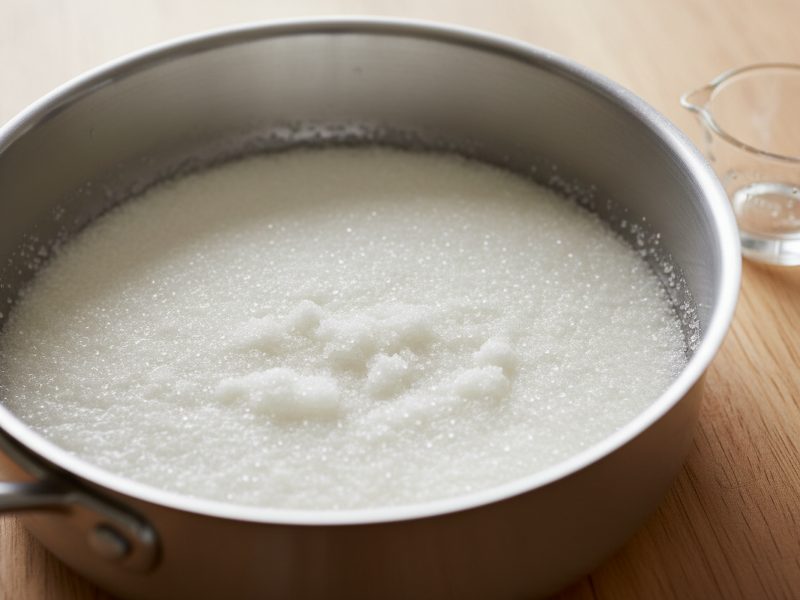
- Step 2. Cook over medium heat without stirring. If crystals form on the sides, brush with water.
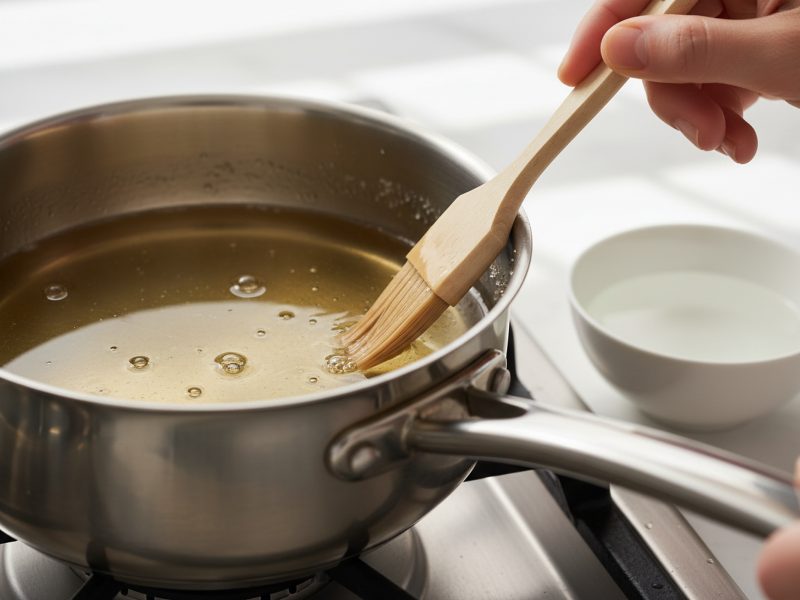
- Step 3. When it starts to color, gently swirl the pan. Keep cooking to a deep amber.
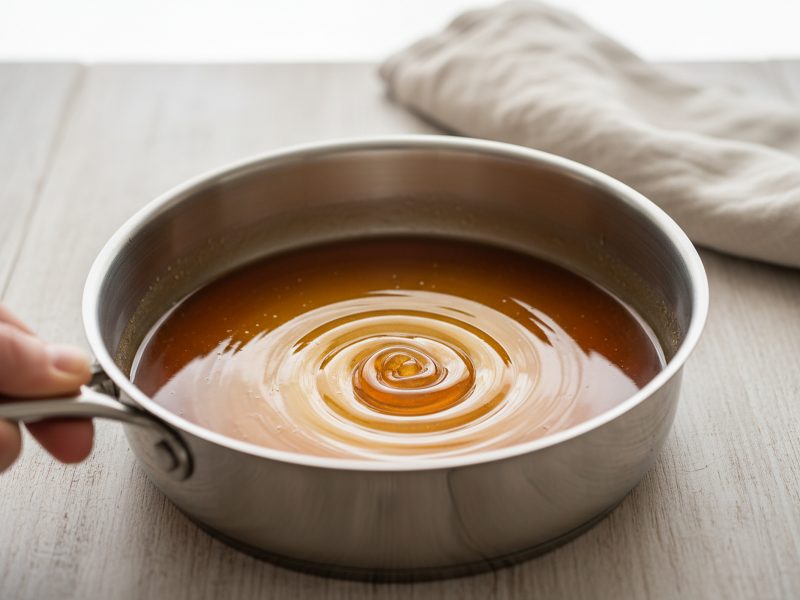
- Step 4. Pull the pan off heat the moment it’s one shade lighter than you want. Use right away or pour into the mold.
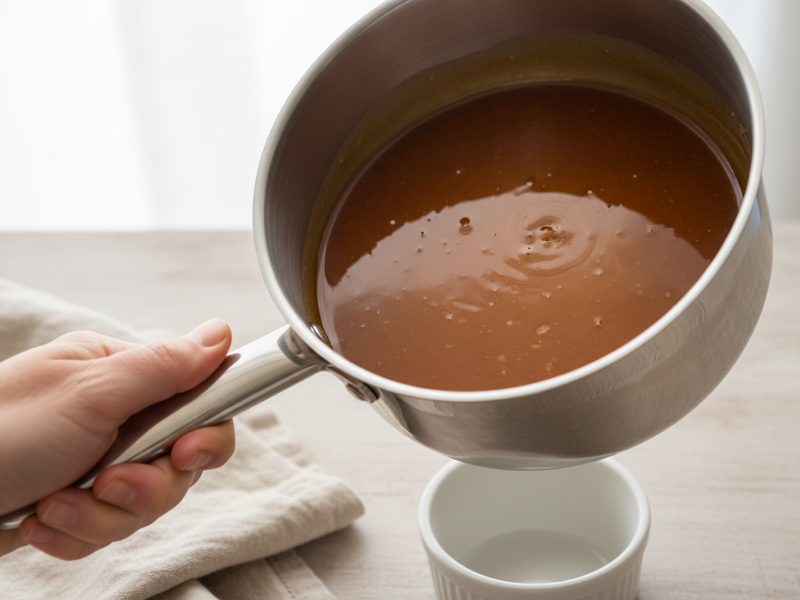


How you know it worked
- Color goes from clear, to light amber, to deep amber (honey to copper).
- Surface looks smooth and glassy - no visible sugar grains.
- Smells nutty and toasty, not sharp or burnt.
- A thermometer reads about 340–350°F (171–177°C) for medium to deep amber.
Troubleshooting
Common mistakes when you caramelize sugar
| What goes wrong | Fix |
|---|---|
| Stirring makes the sugar crystallize and turn grainy. | Don’t stir once the sugar dissolves. Swirl the pan. Brush the sides with water to dissolve any crystals. |
| Heat is too high, so the sugar burns before it colors evenly. | Use medium heat. Watch the color at the edges and swirl to even it out. |
| Caramel seizes or splatters when you add liquid. | Warm the liquid first. Take the pan off heat. Add a little at a time, whisking carefully. Stand back, as the mixture will bubble up and release a lot of steam. |
| Waiting too long to stop the cook; caramel goes from amber to bitter fast. | Pull the pan off heat when it’s one shade lighter than your target. Residual heat will finish it. |
Tools
What you need
Caramelize Sugar recipes
Recipes that use this technique
1 recipe

FAQ
Common questions
How do you caramelize sugar?
Use the wet method for control: Put sugar in a heavy saucepan and add just enough water to look like wet sand. Cook over medium heat without stirring. When it starts to color, swirl the pan until it’s deep amber, then remove from heat. You can also do a dry method: heat a thin, even layer of sugar in a pan, let the edges melt, then gradually stir in more dry sugar until all is melted and amber.
Should I add water when caramelizing sugar?
It’s optional. Adding water (about ¼ cup per cup of sugar) slows the process but makes it more even and forgiving. It helps prevent hot spots and early burning. Dry caramel is faster but easier to scorch.
How can I caramelize sugar without it burning?
Use medium heat in a light‑colored, heavy pan. Don’t stir once dissolved; swirl instead. Watch the color closely - pull it one shade lighter than you want. If using a thermometer, aim for about 340 to 350°F (171 to 177°C) for a classic amber.
How long does it take for sugar to caramelize?
About 5 to 10 minutes for 1 cup on medium heat with the wet method. Time varies with pan size, burner strength, and batch size - watch color, not the clock.
What is the easiest way to caramelize sugar?
The wet method on the stovetop: sugar plus a little water, medium heat, no stirring, just swirl. It gives you more control than the dry method.
Is caramelized sugar unhealthy?
It’s still sugar, so use in moderation. Caramelizing changes flavor and color, not calories. Avoid inhaling smoke if it burns - discard and start over.
How to know when sugar is caramelized?
Look and smell: it turns clear to amber, then deep amber, and smells nutty. A drop on a white plate should look amber. Temperature for medium amber is around 340 to 350°F (171 to 177°C).
How to melt sugar for leche flan?
Make medium amber caramel with the wet method. As soon as it colors, remove from heat and immediately pour into the mold. Tilt to coat the bottom evenly, then let it firm up before adding custard. See Flan for the full flow.
What does "caramelize" mean in the context of cooking?
To heat sugar until it melts and browns, creating new flavors and aromas through browning reactions.
Are caramelized sugar and caramel the same thing?
Often, yes. Caramel is caramelized sugar. For sauces and candies, you usually add cream, butter, or water to caramelized sugar. Plain caramelized sugar hardens as it cools (brittle).
What does "caramelized sugar" mean?
Sugar that has been heated until it melts and turns amber, with a toasty, bittersweet flavor.
How to caramelize sugar correctly?
Use a heavy, light‑colored pan; add a little water; cook over medium heat without stirring; swirl as it colors; stop at deep amber; work carefully with oven mitts - hot caramel sticks and burns.