Ingredient · Chicken
Chicken Thighs
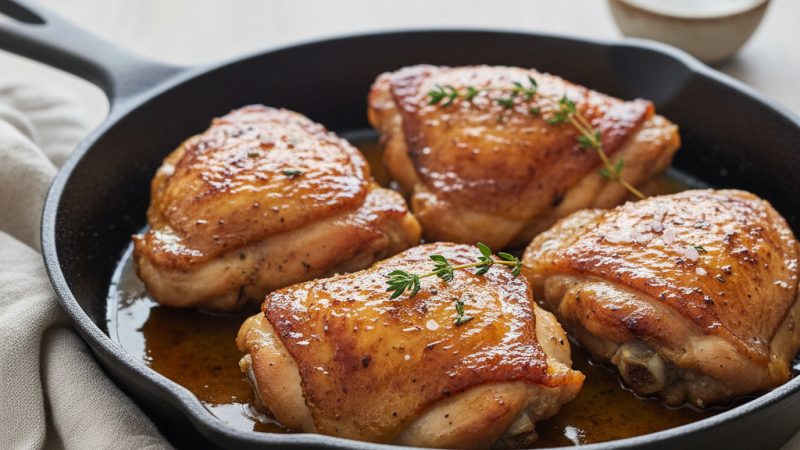
Dark-meat cuts from the upper leg, richer and more forgiving than breasts, so they stay juicy in a hard sear. Cook to 165°F (74°C) for safety; for fall-apart tender, take braises to 175°F to 195°F (79°C to 90°C).

Chicken Thighs recipes
What to cook with chicken thighs
1 recipe

Forms and products
Which chicken thighs should you buy?
| Form | Type | Best for |
|---|---|---|
| Bone in skin on | Preparation | Searing then roasting, grilling, braising; crispiest skin |
| Bone in skinless | Preparation | Braises and stews; less rendered fat |
| Boneless skinless | Preparation | Quick sautés, stir-fries, kebabs; fast to cook |
| Cutlets | Preparation | Chicken piccata, schnitzel, quick pan sauces |
| Frozen | Product | Stock up; thaw safely in the fridge |
Bone-in, skin-on
Most flavorful and flexible. Skin protects meat and renders crisp in dry heat.
Boneless, skinless
Trims faster and cooks quickly. Great for weeknights and cutting into strips or chunks.
Air-chilled
Chilled by cold air, not water. Usually drier skin for better browning and less added water weight.
Buy and store
How to pick and store chicken thighs
At the store
- Choose thighs that look pink and moist, not gray. Avoid packages with strong odor or torn skin.
- For crispy skin, pick bone-in, skin-on and, if you can, air‑chilled. Skin should look dry, not slimy.
- Check size and thickness so pieces cook at the same rate.
- Read labels. “Enhanced” chicken has added broth or a salt solution. This adds sodium, can prevent browning, and may contain allergens.
| How it's kept | Where | About how long |
|---|---|---|
| Raw, unopened | Fridge, coldest shelf | 1 to 2 days |
| Raw, opened | Fridge, in a sealed bag or covered tray | 1 to 2 days |
| Raw, frozen | Freezer, airtight | Up to 9 months |
| Cooked thighs | Fridge, airtight | 3 to 4 days |
| Cooked, frozen | Freezer, airtight | 2 to 6 months |
| Thawed (from frozen) | Fridge | Cook within 1 to 2 days; don’t refreeze unless cooked first |
Food safety. Cook chicken to 165°F (74°C) measured at the thickest part, away from bone. Pink meat near the bone can be safe if it hits 165°F.
Food safety. Use separate boards/knives for raw chicken. Wash hands and sanitize surfaces. Don’t wash raw chicken; splashes spread bacteria.
Food safety. Reheat leftovers to 165°F (74°C). Refrigerate cooked chicken within 2 hours (1 hour if above 90°F).
Food safety. Thaw in the fridge, in cold water changed every 30 minutes, or in the microwave. Never thaw on the counter.
Prep
How to prep chicken thighs
Each technique has one short video. The same clip plays inside every recipe step that uses it.
Techniques
Tools that help
Equipment links may become affiliate links, always labeled as such.
Substitutes
Out of chicken thighs? Use this instead
| Substitute | For 1 thigh-bone-in | What to know |
|---|---|---|
| Chicken Drumsticks | 1 drumstick (about the same weight) | Similar dark meat. Adjust time for shape; still cook to 165°F. |
| Chicken Breast | 4 oz boneless breast for 1 boneless thigh | Leaner and drier. Lower heat and shorter cook; pound for even thickness. |
| Turkey Thighs | 1 equal-weight piece | Similar rich dark meat for braises and roasts. Cook to 165°F. |
| Pork Shoulder | 4 to 6 oz, diced | Good swap in slow braises and stews. Cook pork to 145°F plus a 3‑minute rest (or long-braise until tender). |
| Firm Tofu | 4 to 5 oz, pressed | For stir-fries and saucy dishes. Brown well; season generously. |
Nutrition and allergens
Nutrition per thigh-bone-in
Per thigh-bone-in (170 g)
| Calories | 320 |
| Carbohydrates | 0 g |
| Protein | 29 g |
| Fat | 23 g |
| Sodium | 108 mg (5% DV) |
Calculated from USDA FoodData Central.
Allergens and diets
- Not a major US allergen
Not one of the nine major allergens. Marinades and breading can contain allergens - check labels. - Fodmap: low
Plain chicken is low-FODMAP. Watch marinades, sauces and spice blends.
Flavor pairings
What goes with chicken thighs


FAQ
Chicken Thighs questions
How to get crispy skin on your chicken thighs?
Use bone-in, skin-on. Pat very dry; salt 30 minutes ahead or overnight in the fridge uncovered. Start skin-side down in a lightly oiled hot skillet to render fat, or bake on a wire rack at 425°F. Don’t crowd the pan. Cook until 165°F.
Is a chicken thigh a drumstick?
No. A thigh is the upper part of the leg, attached to the body; a drumstick is the lower leg. Both are dark meat. They cook similarly, but drumsticks are rounder and often take a few more minutes to finish.
How to cook chicken thigh vs breast?
Thighs are fattier and stay juicy with high heat or longer cooks - great for searing, roasting, braising. Breasts are lean and dry out fast - cook quickly over medium heat or poach. Always cook chicken to 165°F; let breasts rest 3 to 5 minutes.
What is the unhealthiest cut of chicken?
“Unhealthy” depends on your goal. Skin-on dark meat (thighs, drumsticks) has more fat and calories than skinless breasts. But thighs are flavorful and forgiving, and fat helps satisfaction. Trim skin or choose skinless if you want less fat.
Should I bake chicken thighs at 350 or 400?
Bake at 400°F to 425°F for crisp skin and juicy meat, about 30 to 45 minutes depending on size. At 350°F they take longer and the skin won’t crisp as well. Whatever the oven temp, cook to 165°F measured at the thickest part.
What is the best way to store chicken?
Keep raw chicken in the fridge 1 to 2 days, on a tray to catch drips. For longer storage, freeze airtight up to about 9 months. Refrigerate cooked chicken 3 to 4 days. Chill all chicken within 2 hours and reheat leftovers to 165°F.
How do you freeze chicken thighs?
For best quality, freeze chicken thighs as soon as you can. You can freeze them in their original packaging for up to two months. For longer storage, transfer them to a freezer bag, press out all the air, and seal. They keep well for up to 9 months.
Can you keep raw chicken thighs in the fridge for 3 days?
No, you should cook or freeze raw chicken thighs within 1 to 2 days. Always store them on the bottom shelf of the fridge, on a plate or in a container, to prevent drips from contaminating other foods.