Technique
How to Check Meat Temperature
Use a food thermometer to read the center of the thickest part of the food. Insert an instant-read thermometer from the side into the thickest spot without touching bone; wait until the number stops rising.

Step by step
How to take the temperature, step by step
How to Check the Temperature · 0:12
- Step 1. Take the food off heat so rising surface heat doesn’t fool the reading.
- Step 2. Insert the probe into the thickest part from the side, avoiding bone, fat, and the pan.
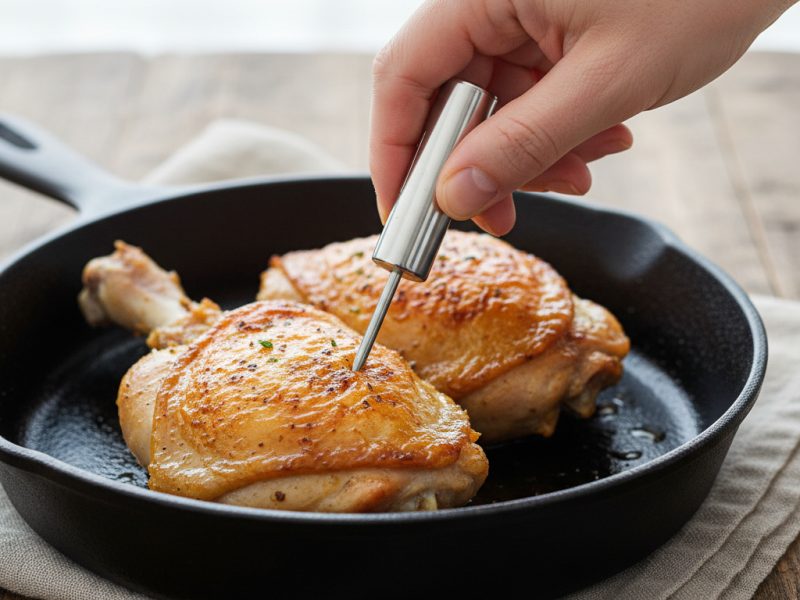
- Step 3. Move the tip slightly to find the lowest reading - that’s the true center temp.
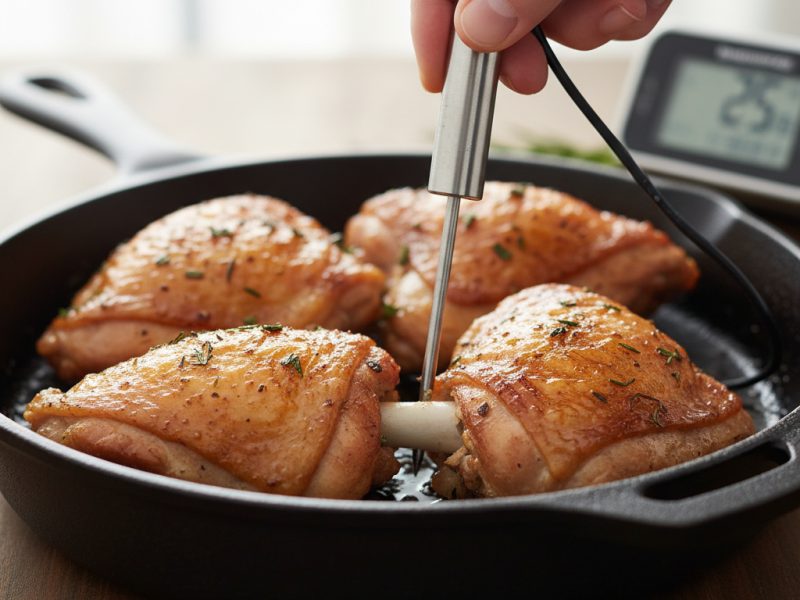
- Step 4. Hold the thermometer steady until the reading on the display stops changing.
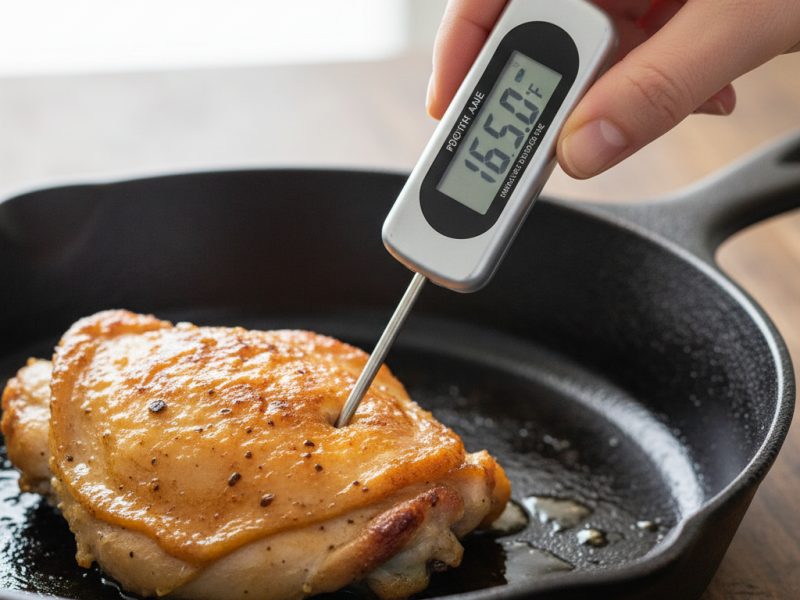
- Step 5. Compare to your target temp and return to heat if it’s low. Clean the probe after.
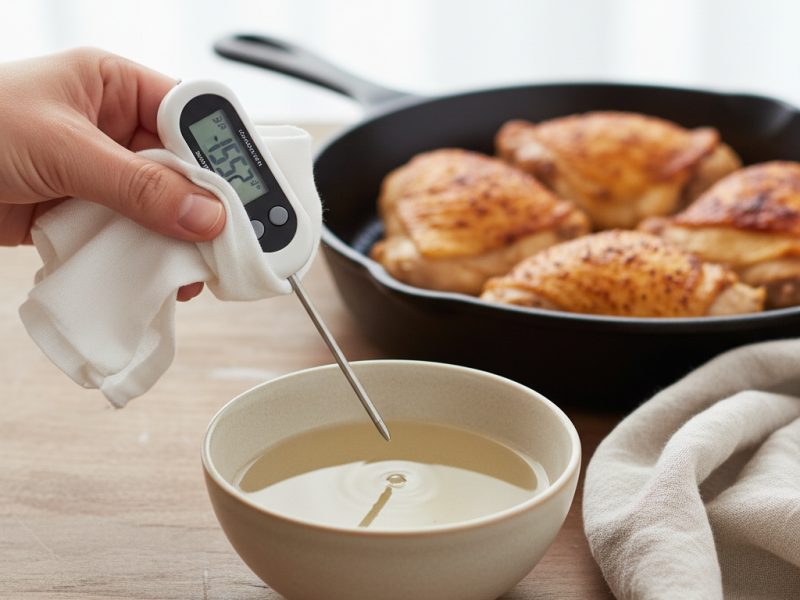


How to Check Meat Temperature recipes
Recipes where the thermometer decides
1 recipe

Guide
Where to put the thermometer
The reading is only as good as the spot you measure. Go for the thickest part of the meat, away from bone, fat and the pan.
- Whole turkey or chicken: the thickest part of the breast, from the side, and the inner thigh near the body without touching bone. Cook until the lowest of the two reads the target.
- Turkey breast or chicken breast: from the side into the center of the thickest end, probe tip in the middle of the meat.
- Roasts and whole tenderloins: into the center of the thickest part, from the end or the side.
- Steaks, chops and burgers: from the side, so the tip sits in the middle of the thickness; a thin cut read from the top gives a false high reading.
- Casseroles and stuffing: the center of the dish.
Pull the probe back a little and watch the number: the lowest reading you find is the true center temperature.
Guide
Which thermometer to use
- Instant-read (digital): the one to own. It reads in 2 to 5 seconds, so you can check several spots fast. Use it for steaks, chops, chicken pieces, fish and quick checks on roasts.
- Leave-in probe with a cable or wireless: stays in the roast or turkey while it cooks and alarms at the target, so the oven door stays shut. Set the alarm 5 to 10°F below the target to allow for carryover.
- Dial (analog) thermometers: slow and often off by several degrees; test them in ice water before you trust them.
- Oven-safe dial thermometers: fine for a large roast, too slow for anything thin.
Guide
Safe minimum internal temperatures (USDA)
A food thermometer is the only way to know food is safe. These are the USDA minimums; measure in the thickest part.
- Poultry (whole, breasts, thighs, ground turkey or chicken): 165°F (74°C)
- Ground beef, pork, lamb and veal: 160°F (71°C)
- Beef, pork, veal and lamb (steaks, chops, roasts): 145°F (63°C), then rest 3 minutes
- Fish and shellfish: 145°F (63°C), or until the flesh is opaque and flakes
- Egg dishes and casseroles: 160°F (71°C)
- Ham, fresh or raw: 145°F (63°C), then rest 3 minutes; reheated cooked ham: 165°F (74°C)
- Leftovers: 165°F (74°C)
Guide
Carryover cooking: when to pull it
Meat keeps cooking after it leaves the heat. The outside is hotter than the center, and that heat keeps moving in while it rests.
- Big roasts and whole birds: the center climbs 5 to 10°F during the rest. A turkey breast pulled at 160°F (71°C) and rested 15 minutes reaches 165°F (74°C).
- Steaks and chops: about 5°F. Pull a medium-rare steak at 130°F (54°C) for 135°F (57°C) after a 5-minute rest.
- Thin cuts, fish and burgers: almost nothing; cook them to the target.
A broil or sear at the end adds a few degrees too. Check once more after the rest if you are unsure, and go back on the heat when the reading is low.
Guide
Test your thermometer for accuracy
An ice-water test takes a minute and works at any altitude.
- Fill a glass to the top with ice, then add cold water and stir. Wait 3 minutes.
- Put the probe in the middle of the ice water without touching the glass.
- It should read 32°F (0°C). If it is off by more than 2°F, recalibrate it (see the manual) or remember the offset. A dial thermometer that cannot be adjusted is due for replacement.
Guide
Why color and juices are not a check
Pink meat near the bone, clear juices or firm flesh do not tell you the temperature. Young poultry can show pink at 165°F, and juices can run clear well before the meat is safe. Use the cues in a recipe to know when to start checking, and the thermometer to decide when it is done.
- Touch test for steaks: useful for doneness between rare and well-done once you have practice, never for safety.
- Fish: opaque flesh that flakes is a fair sign, but a thermometer still settles it at 145°F (63°C).