Technique
How to cover with foil
Covering a pan or dish tightly or as a tent with aluminum foil to trap heat and moisture or prevent over-browning. Use a sheet larger than the dish. Crimp the rim all around for a tight seal, or raise the center into a tent so foil doesn’t touch cheese or sticky toppings.

Step by step
How to cover a dish with foil
- Step 1. Tear a sheet of foil at least 2 inches wider than the dish on all sides.
- Step 2. Set the foil over the dish. For a tight cover, press it to the rim and fold the edges down all around.
- Step 3. For a tent, lift the center into a dome, then crimp the edges to the rim so the foil doesn’t touch the food.
- Step 4. If steam build-up is an issue, poke 1–2 small vents near the corners.
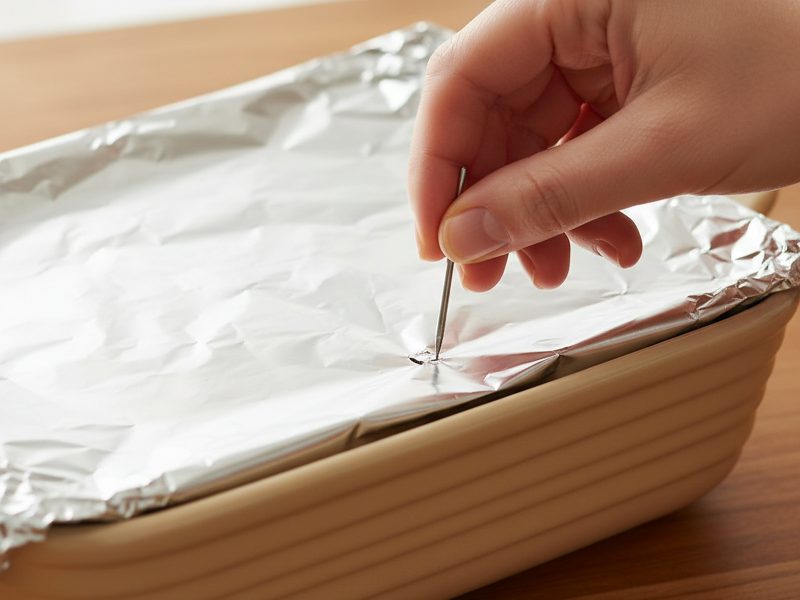
- Step 5. Remove foil with oven mitts, tilting it away from you so steam escapes safely.

How you know it worked
- Foil stays put when you nudge the dish.
- You see steam droplets under the foil after a minute in the oven.
- Tented foil does not stick to melted cheese.
Troubleshooting
Common mistakes when you cover with foil
| What goes wrong | Fix |
|---|---|
| Foil sticks to melted cheese or a sticky topping. | Make a high tent, or mist the foil with oil and keep it off the surface. You can also lay parchment on the food, then foil on top. |
| Cover is loose and leaks moisture. | Use a larger sheet. Double-fold the rim to lock it. Press firmly to the dish’s edge. |
| Sauce boils over under a very tight seal. | Leave a small vent at a back corner, and set the dish on a sheet pan. |
| Foil tears while crimping. | Switch to heavy-duty foil, avoid sharp rims, and fold a thicker edge before crimping. |
| Acidic or salty foods pit the foil and leave gray marks. | Place parchment between the food and foil, or use a lid. |
Tools
What you need
Cover With Foil recipes
Recipes that use this technique
1 recipe

FAQ
Common questions
Can I wrap aluminum foil?
Yes. You can wrap food in foil for the oven, fridge, or freezer. Don’t use foil in the microwave. For long storage with acidic or very salty foods (tomato, citrus, pickles), put parchment between the food and foil to prevent pitting and off flavors.
How do I get a tight seal with aluminum foil?
Pull the foil taut as you place it over the dish. Press from the center out to the edges with a flat hand or a folded towel, then crease the rim firmly all around the dish’s edge.
Does the shiny side go up or down on tinfoil?
Either side. The two sides are the same for cooking. Pick the side you prefer; it doesn’t affect time or browning in a home oven.
How to use aluminum foil to cover food?
Tear a sheet larger than the dish. Set it over the top and crimp the edges to seal. For sticky toppings or cheese, raise the center into a tent so it doesn’t touch. Vent a corner if you need to reduce steam.
Is it okay to cover food with aluminum foil?
Yes. It’s oven-safe and fine for short-term storage. Refrigerate leftovers within 2 hours. Avoid long contact with acidic or very salty foods; line with parchment if storing overnight.
What can I use instead of aluminum foil to cover food in the oven?
Use an oven-safe lid, an inverted sheet pan as a lid, a Dutch oven, a silicone baking lid, or parchment under a lid or second pan. For a casserole, many baking dishes have lids.
What does cover with foil mean?
Place foil over the dish and secure the edges. It can be tight to trap steam or tented to keep foil off the food while still limiting browning.
Does food cook faster if covered in foil?
Usually yes. Covering traps heat and steam, which speeds cooking and keeps moisture in. It also slows browning.
Should I cook covered or uncovered?
Cover when you want moisture and faster cooking (casseroles, braises, rice). Uncover to brown, crisp, or evaporate excess liquid. Many bakes (like Baked Ziti) start covered, then finish uncovered to brown the top.
Is covering with foil the same as a lid?
Functionally similar. A crimped foil cover seals like a lid but isn’t rigid or reusable. A fitted lid is sturdier and easier to remove and replace.
Why do people cover their stove with foil?
To catch spills. It’s not recommended. Foil can block vents or burners and create fire or carbon-monoxide hazards. Use manufacturer-approved liners and keep surfaces clean instead.
When to cover with foil?
Cover with foil when a dish's top is browning too fast, to keep casseroles moist during the first part of baking, to rest meat, to keep food warm off the heat, or to prevent food from drying out when reheating.