Technique
How to dredge
Coat food lightly and evenly with dry ingredients (usually flour) before cooking. Pat food dry, season the flour, coat, then shake off every bit of excess so only a thin veil remains.

Step by step
How to Dredge
How to Dredge · 0:12
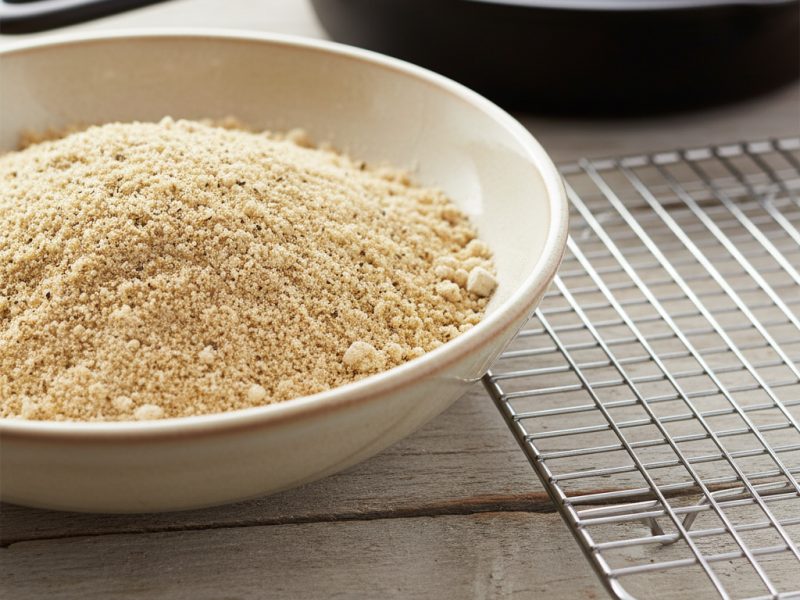
- Step 1. Set up a shallow bowl with seasoned flour and a clean plate or wire rack.
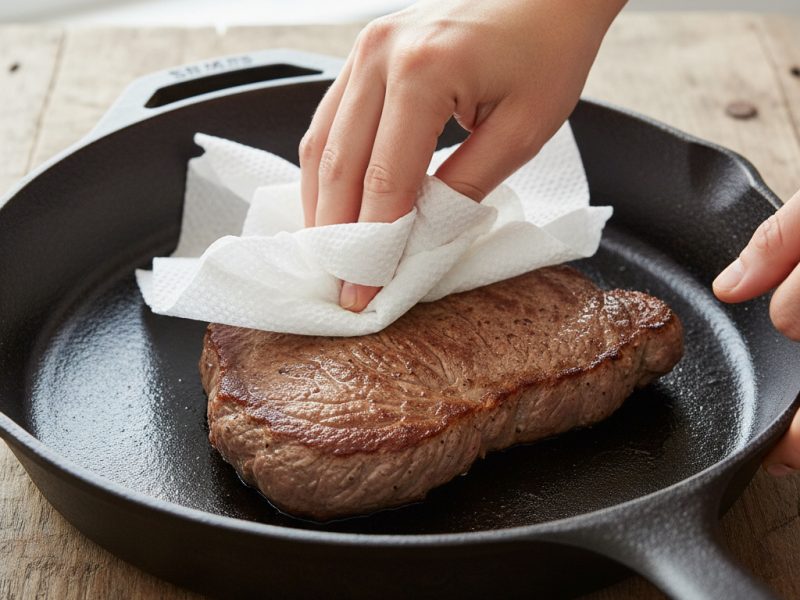
- Step 2. Pat the food very dry with paper towels.
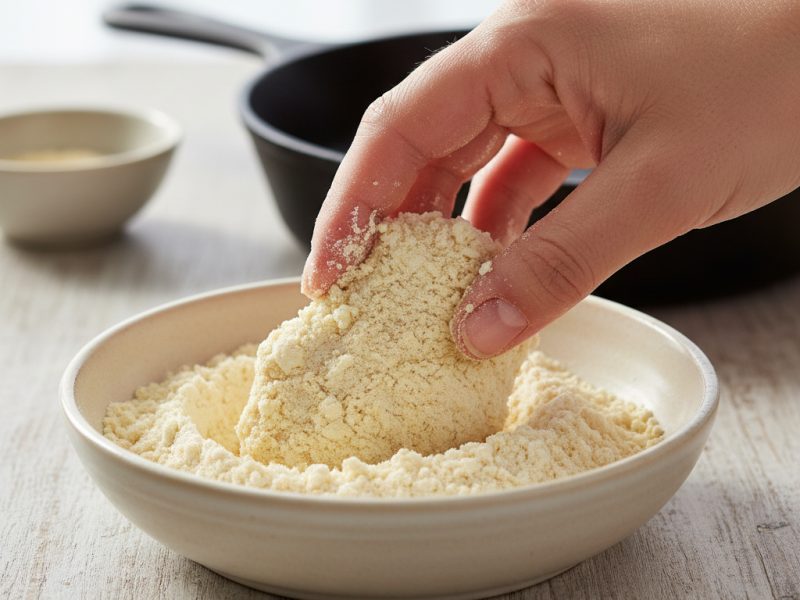
- Step 3. Place a piece in the flour. Press to coat all sides and edges.
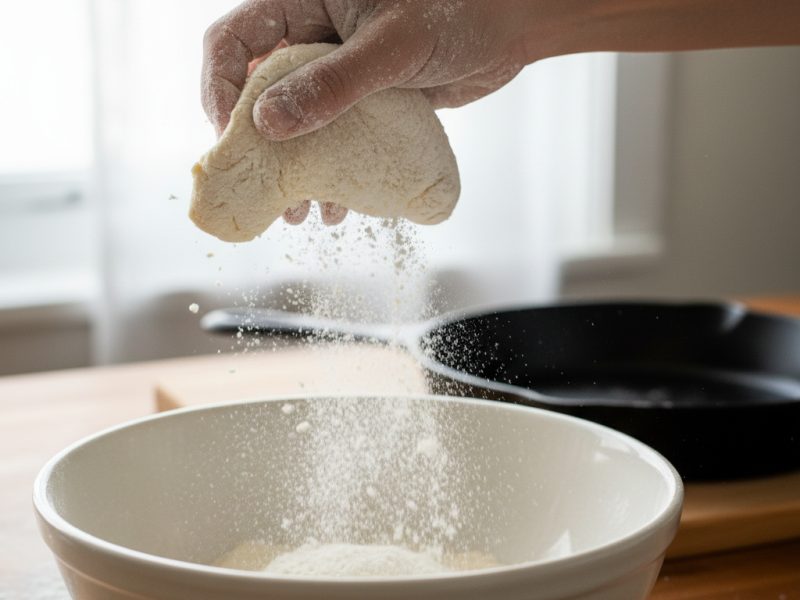
- Step 4. Lift the food and shake it firmly to let excess flour fall back into the bowl. Only a thin, even coating should remain.
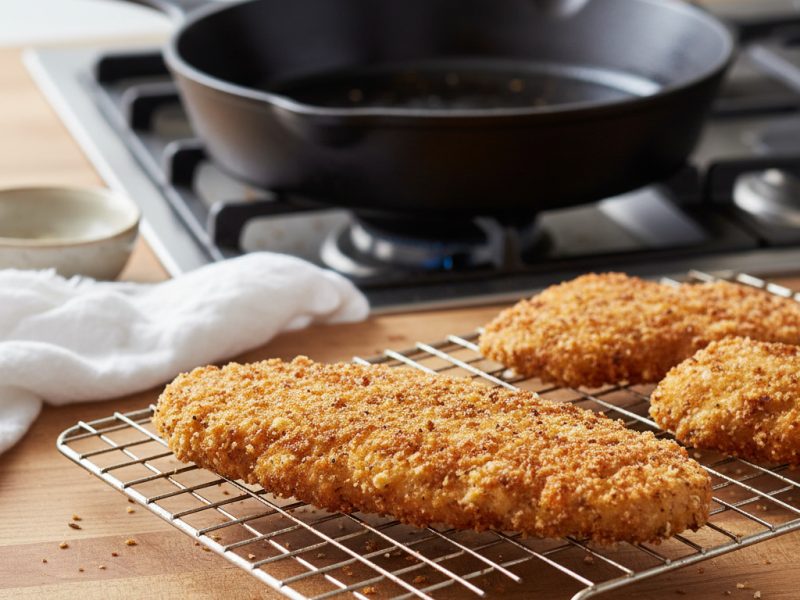
- Step 5. Set on the rack while you finish the rest, then cook in a hot, oiled skillet.


How you know it worked
- The coating is thin, even, and not dusty.
- No visible wet spots or thick clumps.
- Food browns evenly and doesn’t stick badly to the pan.
Troubleshooting
Common mistakes when you dredge
| What goes wrong | Fix |
|---|---|
| You dredge wet food, so the flour turns pasty and peels off. | Blot with paper towels until dry before flouring. |
| You leave on too much flour, and the pan gums up. | Shake firmly. Tap the wrist or knock the piece against the bowl to remove excess. |
| The coating tastes flat. | Season the flour with salt and pepper before you dredge. |
| You dredge too far ahead and the coating gets soggy. | Dredge right before cooking, or hold up to 30 minutes on a wire rack. |
| Your hands cake up with flour and make clumps on the food. | Use one “dry hand” for flouring and the other hand for moving the wet food in and out. |
Tools
What you need
Dredge recipes
Recipes that use this technique
1 recipe

FAQ
Common questions
How do you make a flour dredge?
Use all-purpose flour seasoned with salt and pepper. Start with about ½ cup flour per 1 lb of food. Add optional spices like paprika or garlic powder. Stir well in a shallow bowl so the seasoning is even.
How do you dredge in cooking?
Pat the food dry. Drop it in seasoned flour. Press to coat all sides, then shake off the excess. Set on a wire rack and cook right away in hot oil or butter.
Do you dredge in flour or egg first?
For dredging, flour is first and often the only step. If you’re doing a breaded coating, go flour, then beaten egg, then crumbs. The flour helps the egg stick.
Can you dredge with just flour?
Yes. A light flour coat helps browning and reduces sticking for pan searing or shallow frying. Season the flour and shake off the excess so it doesn’t get pasty.
What can I use in place of flour for dredging?
Cornstarch gives a very light, crisp finish. Rice flour works well and is mild. Gluten-free all-purpose blends also work. Check labels for allergens; wheat is a common one in regular flour.