Technique
How to fold mash
Gently lift and turn mashed potatoes to mix in butter, dairy, and add-ins without overworking them. Warm your butter and cream first. Add in 2 to 3 parts, folding just until combined after each addition.

Step by step
How to fold a mash
- Step 1. Warm your butter, cream, or milk until hot but not boiling.
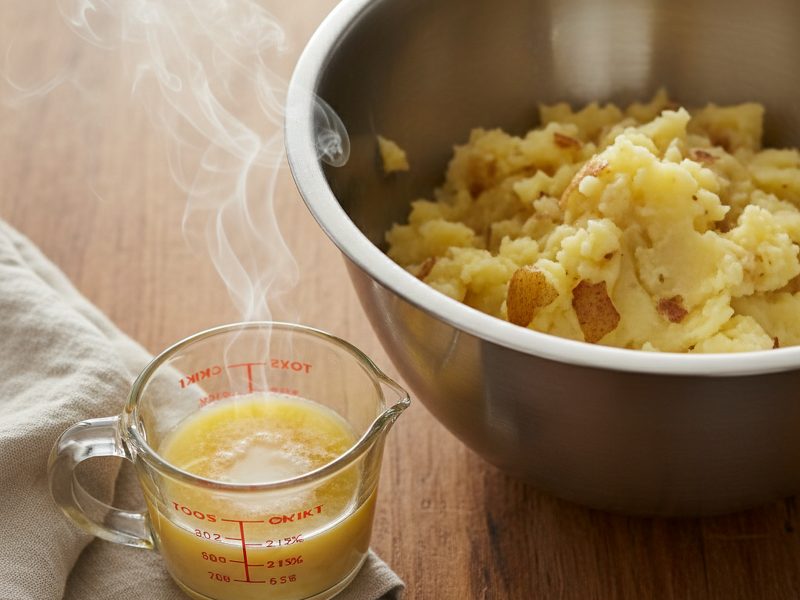
- Step 2. Add about ⅓ of the hot liquid to the cooked, mashed potatoes.
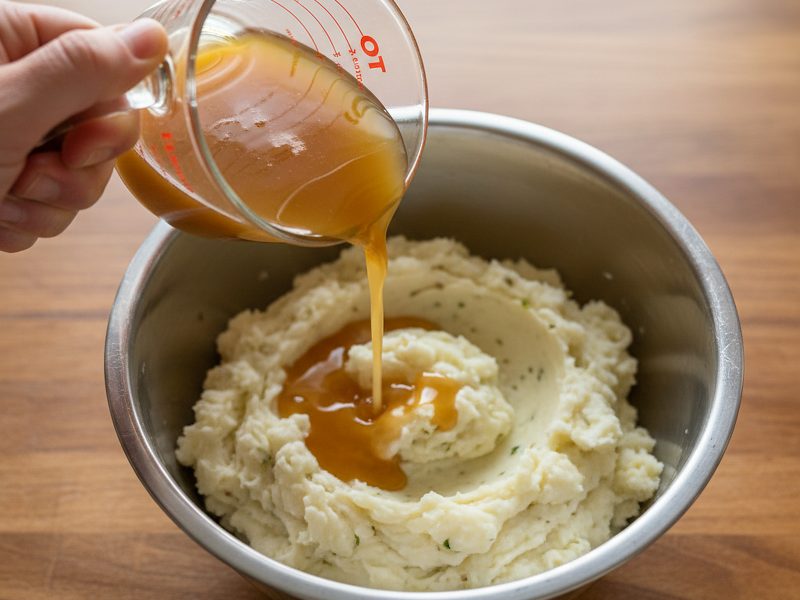
- Step 3. Use a rubber spatula to lift from the bottom and fold over the top. Rotate the pot and repeat.
- Step 4. Add more liquid in batches, folding each time. Stop when smooth and fluffy, not gluey.
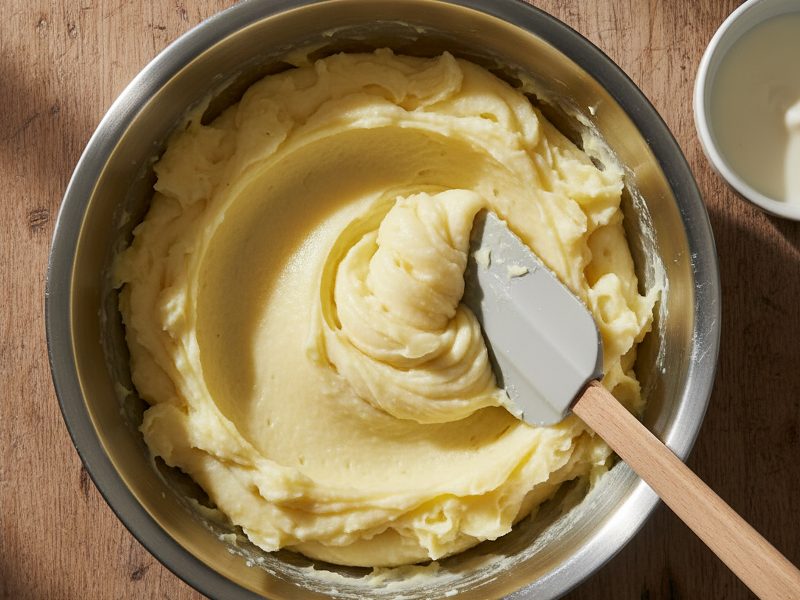


How you know it worked
- Potatoes look fluffy and lightly glossy, with no streaks of butter or cream.
- No gummy, stretchy pull when you lift the spatula.
- Spoon leaves soft ridges that mostly hold their shape.
Troubleshooting
Common mistakes when you fold mash
| What goes wrong | Fix |
|---|---|
| Stirring hard or using a mixer makes potatoes gluey. | Switch to a gentle fold with a rubber spatula and stop as soon as the liquid is incorporated. |
| Adding cold butter or milk makes greasy streaks and uneven texture. | Warm the dairy before adding so it absorbs quickly. |
| Dumping in all the liquid at once makes the mash soupy. | Add liquid in 2 to 3 batches, folding between each. You can always add more; you can’t take it out. |
| Folding in melty cheese over high heat turns it stringy. | Take the pot off the heat and fold cheese in at the end. |
Tools
What you need
Fold Mash recipes
Recipes that use this technique
1 recipe

FAQ
Common questions
What does "fold" mean in cooking?
To fold means to gently combine ingredients by lifting from the bottom and turning over the top, rotating the bowl or pot as you go. You use it to mix without knocking out air or overworking starch.
What does mash mean in cooking?
To mash is to crush cooked food (often potatoes or beans) into a smooth or slightly chunky texture using a masher, ricer, or fork.
Why fold instead of stir?
Folding keeps the texture light and prevents overdeveloping starch. In mashed potatoes it avoids a gluey, pasty result; in batters or whipped cream it preserves air.