Technique
How to grease pan
Coating a pan with a thin, even film of fat so food releases cleanly. Use 1 to 2 tsp oil or softened butter for a 9×13-inch pan. Wipe into a whisper-thin coat with a paper towel; no puddles.

Step by step
How to grease a pan evenly
- Step 1. Pick your fat: butter, oil, shortening, or cooking spray.
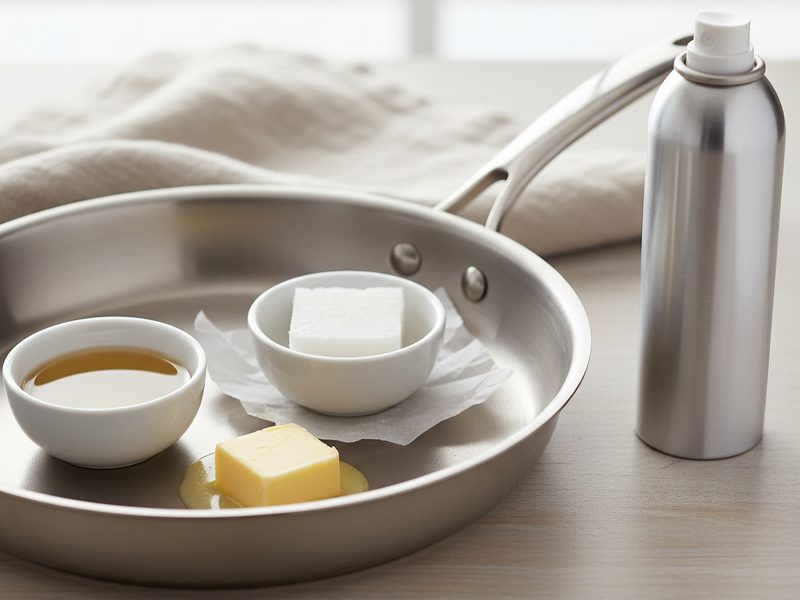
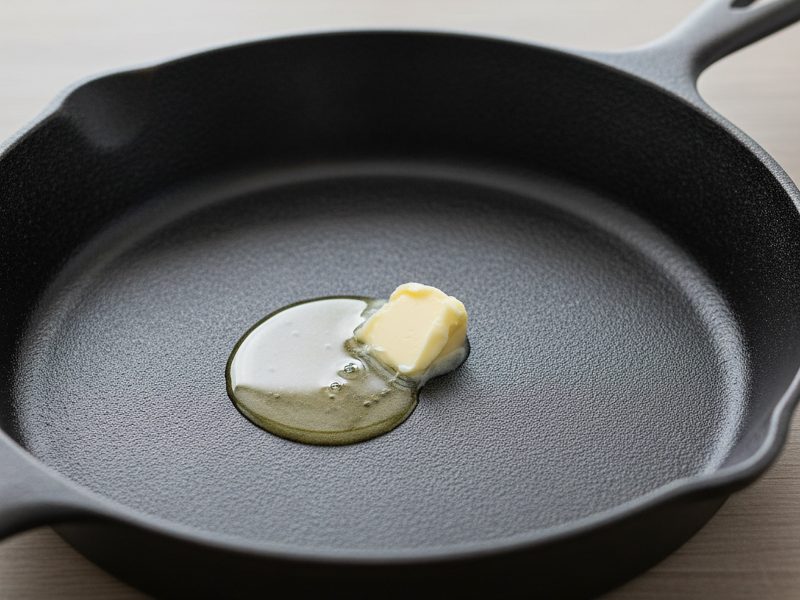
- Step 2. Start with a cool, dry pan. Add a small amount of fat to the bottom.
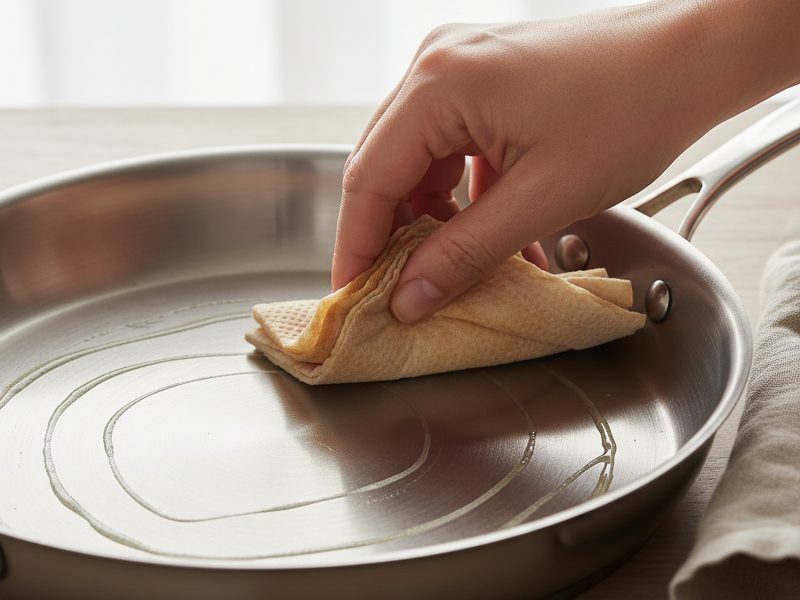
- Step 3. Spread a thin, even film over the bottom, corners, and up the sides with a paper towel or pastry brush.
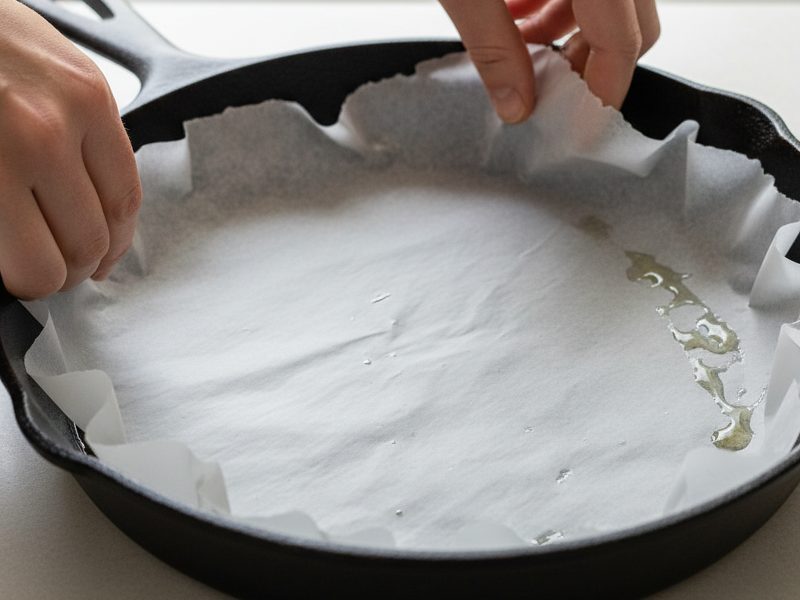
- Step 4. For baking, press in fitted parchment so it sticks to the grease. Grease the parchment if the recipe says so.
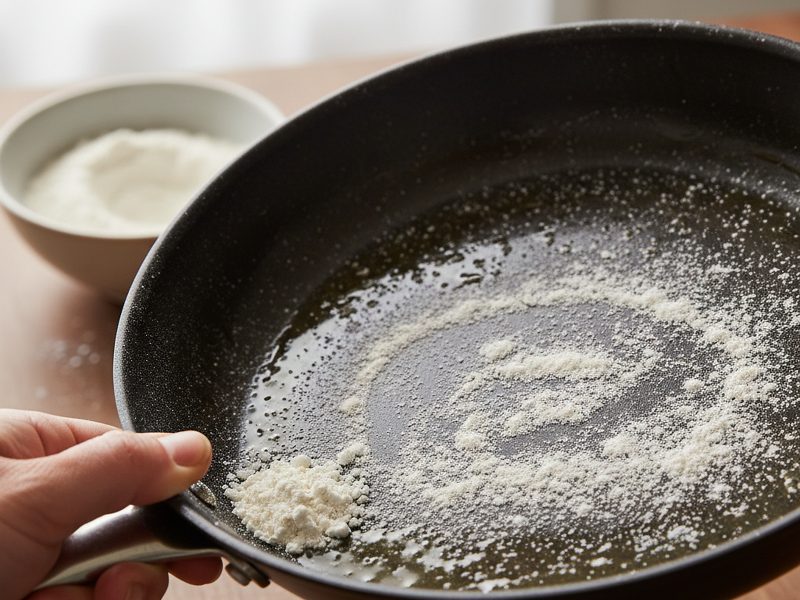
- Step 5. If flouring, add 1 tbsp flour, tilt and tap to coat, then knock out the excess.


How you know it worked
- The surface has a thin, even sheen with no visible puddles.
- Corners and sides feel slick to the touch.
- Parchment sticks flat with no bubbles if used.
- A dusting of flour clings lightly with no bare patches or clumps.
Troubleshooting
Common mistakes when you grease pan
| What goes wrong | Fix |
|---|---|
| Too much grease pools and fries the edges. | Wipe out the excess with a clean paper towel until only a thin film remains. |
| Only the bottom is greased, so food sticks to the sides. | Always coat the corners and sides, especially for casseroles and cakes. |
| Spraying a hot pan creates sticky residue and off flavors. | Let the pan cool, then apply spray or grease before heating. |
| Greasing pans that should stay ungreased (angel food or chiffon cakes). | Leave tube pans for angel food/chiffon ungreased so the batter can climb. |
| Skipping parchment for very sticky batters (brownies, bars). | Line with parchment after greasing, then lightly grease the parchment if the recipe calls for it. |
Tools
What you need
Grease Pan recipes
Recipes that use this technique
1 recipe

FAQ
Common questions
When it says grease a pan, what does that mean?
Coat the entire interior of the pan with a very thin, even layer of fat so food won’t stick. Use butter, oil, shortening, or cooking spray. Wipe it over the bottom, corners, and up the sides; no puddles.
Is it a big mistake if I forgot to grease the pans?
It's usually fixable. Run a thin knife or offset spatula around the edges to loosen. If the bottom is stuck, place the pan on a warm, damp towel for a minute, then try to remove the food again. Using parchment paper is good insurance for future bakes.
Should I grease a nonstick pan?
For baking: usually a light grease or parchment still helps release and browning. For stovetop eggs or pancakes: you can cook with little to no fat, but a small amount improves flavor and even browning. Avoid aerosol sprays that can leave residue; use a dab of oil or butter instead.
Do I have to grease a glass pie pan?
Usually, no. For standard pie crusts, leave glass ungreased so the dough grips and doesn’t slump. For sticky press-in crusts (graham cracker) or casseroles, a very light grease can help. Follow the recipe’s note.
What is 'grease' for a pan?
Grease is any cooking fat used to coat a pan, such as butter, shortening, lard, or oil. Cooking spray also works.
Should I use butter or oil to grease a pan?
Either works. Butter adds flavor and browning but can scorch at high heat. Neutral oils (canola, vegetable) resist burning and spread thinly. Use what the recipe suggests, or choose butter for flavor, oil for higher-heat or ultra-thin coating.
How do you grease a cast iron pan?
For cooking or baking, grease a cast iron pan just as you would any other pan, using a thin layer of oil or shortening. This is different from seasoning the pan, which is a separate process of baking on layers of oil to create a protective, nonstick surface.