Technique
How to knead dough
Working dough to develop gluten so it becomes smooth, stretchy, and holds gas. Use light pressure and a steady rhythm. If dough sticks, lightly flour the counter or wet or oil your hands - don’t keep adding flour.

Step by step
How to knead dough by hand
- Step 1. Combine ingredients and mix until a shaggy dough forms.
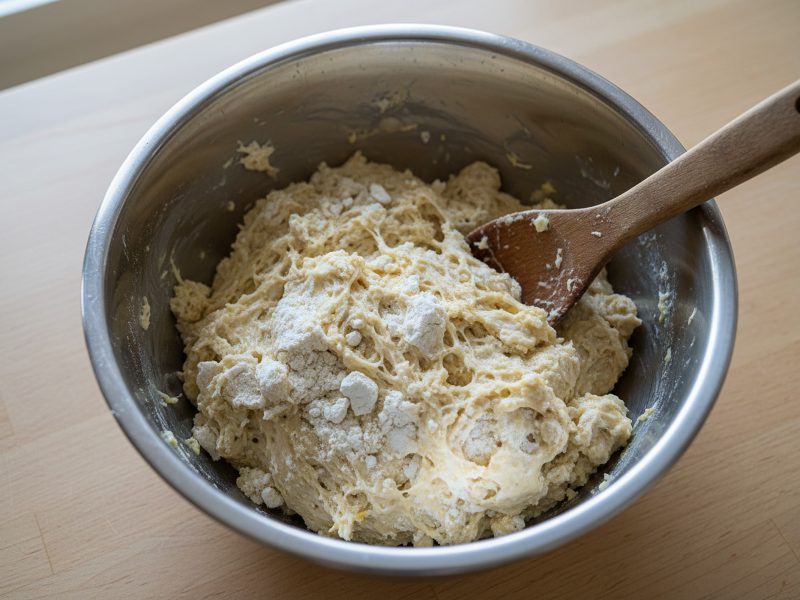
- Step 2. Turn dough onto a lightly floured surface.
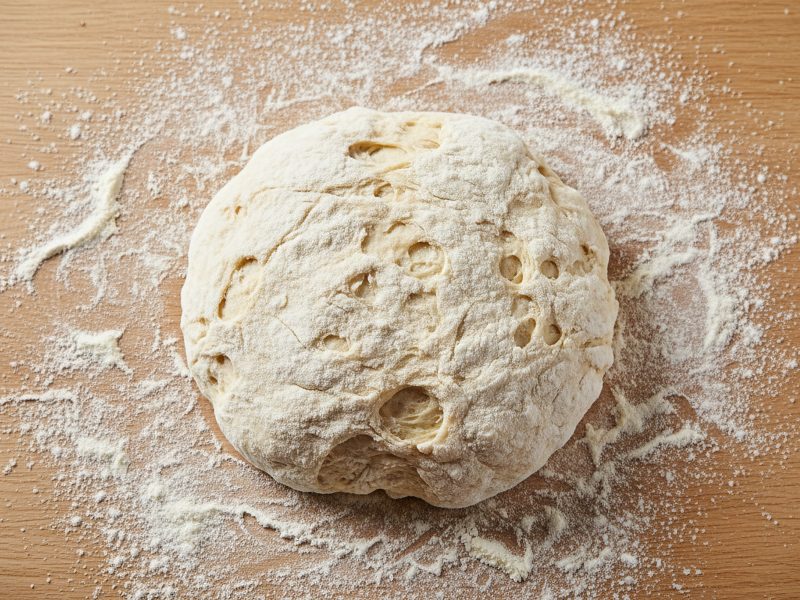
- Step 3. Push the dough down and away with the heel of your hand, fold it in half toward you, then turn it a quarter turn (90°). Repeat this motion in a smooth rhythm.
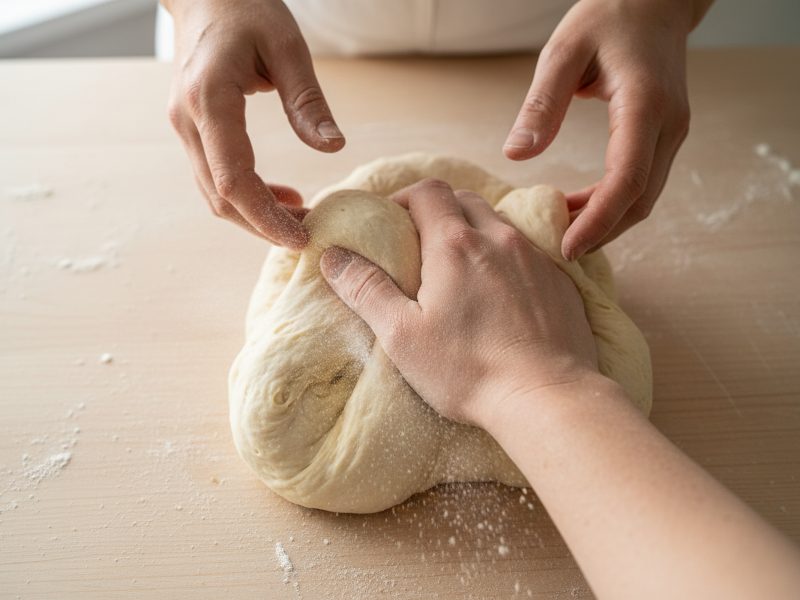
- Step 4. Knead until the dough is smooth, slightly tacky, and springs back.
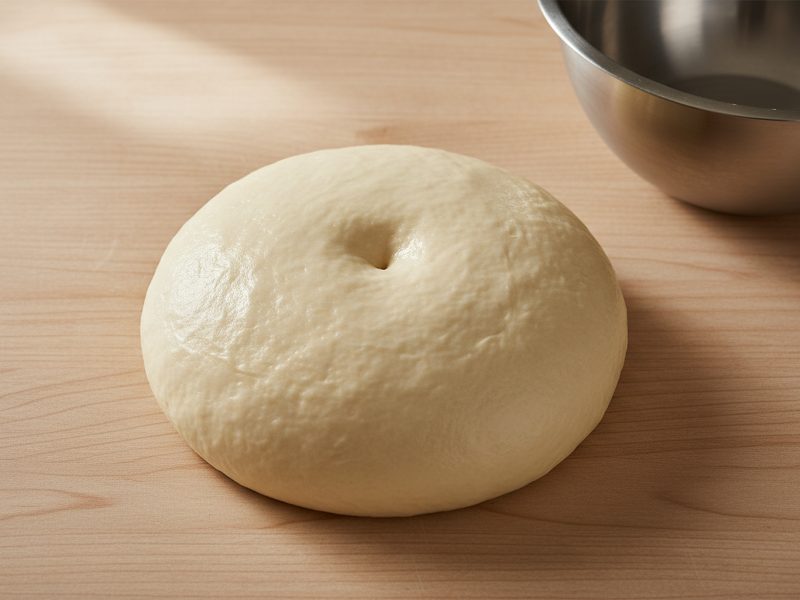
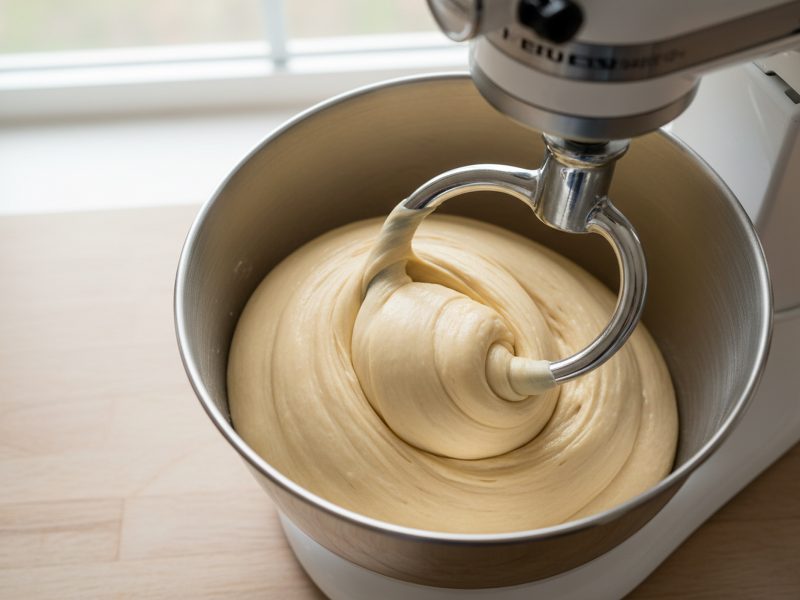
- Step 5. For a mixer: knead on low with a dough hook until smooth and elastic.


How you know it worked
- Dough feels smoother and more elastic.
- It’s slightly tacky but not gluey.
- A small piece stretches thin (windowpane) before tearing.
- A finger poke springs back slowly.
Troubleshooting
Common mistakes when you knead dough
| What goes wrong | Fix |
|---|---|
| Adding lots of flour to stop sticking makes a dense loaf. | Use just a light dusting, or oil/wet your hands and bench. A bench scraper helps move sticky dough. |
| Rough, tearing dough from hard, fast kneading. | Use gentler, rhythmic motions. Let the dough rest 5–10 minutes, then continue. Rest relaxes gluten. |
| Overkneading in a mixer makes tight, tearing dough. | Mix on low speed and check often. Stop when it’s smooth and stretchy; finish by hand if unsure. |
| Cold dough resists stretching. | Let dough warm slightly (10–15 minutes) before kneading, or extend kneading with short rests. |
| Underkneaded dough won’t hold shape and spreads. | Keep kneading until it’s elastic and passes a windowpane or spring-back test. |
Tools
What you need
Knead Dough recipes
Recipes that use this technique
2 recipes


FAQ
Common questions
What are the 7 common bread making mistakes and how do you prevent them?
1) Too much flour: Weigh flour; keep dough slightly tacky; dust lightly, don’t dump flour. 2) Water too hot/cold: Aim for water around 75 to 80°F (24 to 27°C) so your dough ends up near 78°F (26°C). 3) Underkneading: Knead until smooth, elastic, and it windowpanes. 4) Overkneading (mostly in mixers): Mix on low and check often; stop when elastic. 5) Not enough salt: Use the recipe’s salt (about 1.8–2.2% of flour by weight) for strength and flavor. 6) Rushing fermentation: Let dough rise until doubled; watch the dough, not the clock. 7) Overproofing: Do the poke test; if it collapses or won’t spring back, reshape, rest, and proof again.
Is it possible to overwork dough by hand?
Yes, but it’s uncommon. Signs: tight, tough dough that tears instead of stretches and won’t windowpane. Let it rest 15 to 20 minutes and test again. If it still shreds, it’s overkneaded - shape gently and give a shorter final proof.
What does "kneading dough" mean?
It’s working dough by stretching and folding so gluten strands align and strengthen. That lets the dough trap gas and rise with structure.
Is it better to knead dough by hand or mixer?
Both work. Hand: best feel, low risk of overkneading, no gear - takes longer. Mixer: faster and hands-off - watch closely and keep speed low to avoid overkneading and warming the dough. Choose what fits your time and comfort.
How long should you knead dough?
Typical ranges: 8 to 12 minutes by hand; 5 to 8 minutes in a mixer on low. Autolyse or a 10 to 20 minute rest after mixing can cut active kneading time. Go by cues: smooth, elastic, slight tack, and a thin windowpane.
Does dough get tougher the more you knead it?
Up to a point, kneading makes dough stronger and stretchier. If you keep going (especially by mixer), it can get tough and tear easily. Resting relaxes gluten; severe overkneading can’t be fully undone.
What does kneading do to your dough?
It builds and aligns gluten, distributes salt/yeast evenly, traps air, and evens hydration so the dough rises well and bakes with good crumb.
What are five types of dough?
Common examples: lean bread dough (flour, water, salt, yeast), enriched dough (brioche/challah), whole wheat dough, pizza/ciabatta high‑hydration dough, and pastry/shortcrust (knead minimally).
Which is correct, "kneed" or "knead"?
Knead is correct for dough. Kneed refers to knees.
How to tell if dough is sufficiently kneaded?
Use one or two tests: windowpane (a small piece stretches thin and translucent before tearing), smooth surface, and a gentle poke that slowly springs back. The dough should feel elastic, not rough or slack.
How long can you leave dough after kneading?
Let it rise until doubled (about 1 to 2 hours at room temp, depending on dough and temperature). To delay, cover and refrigerate: most bread and pizza doughs hold 12 to 24 hours; some pizza doughs go 48 hours. Enriched doughs usually 12 to 24 hours. If it overproofs, gently degas, reshape, and proof again.