Technique
How to roll dough
Flattening and shaping dough to an even thickness with a rolling pin or your hands. Lightly dust the surface and dough, roll from the center out, and rotate the dough often so it doesn’t stick.

Step by step
How to roll dough evenly
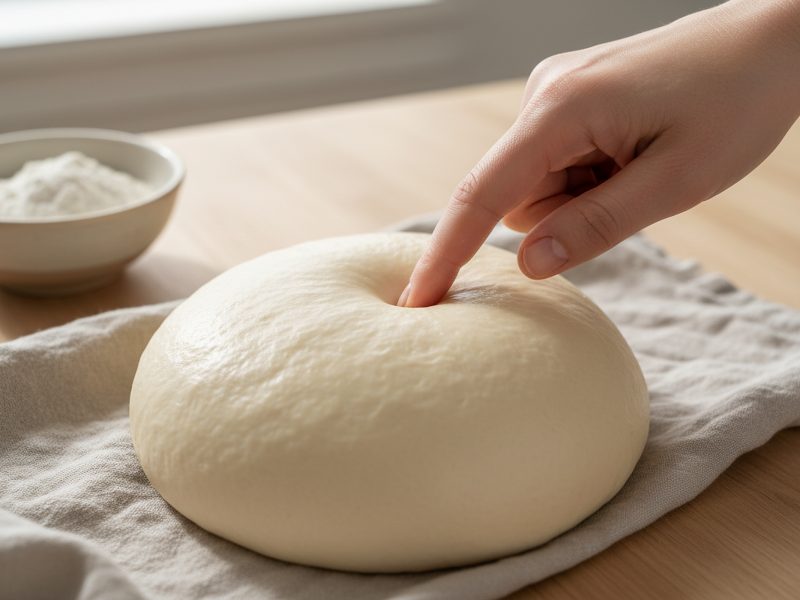
- Step 1. Let the dough rest until relaxed and slightly springy when pressed.
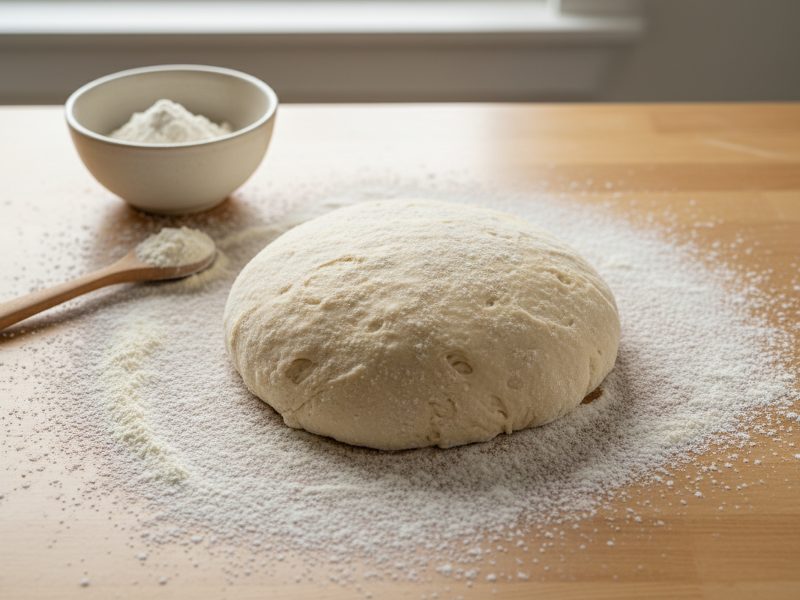
- Step 2. Lightly flour the counter and the dough; keep extra flour nearby.
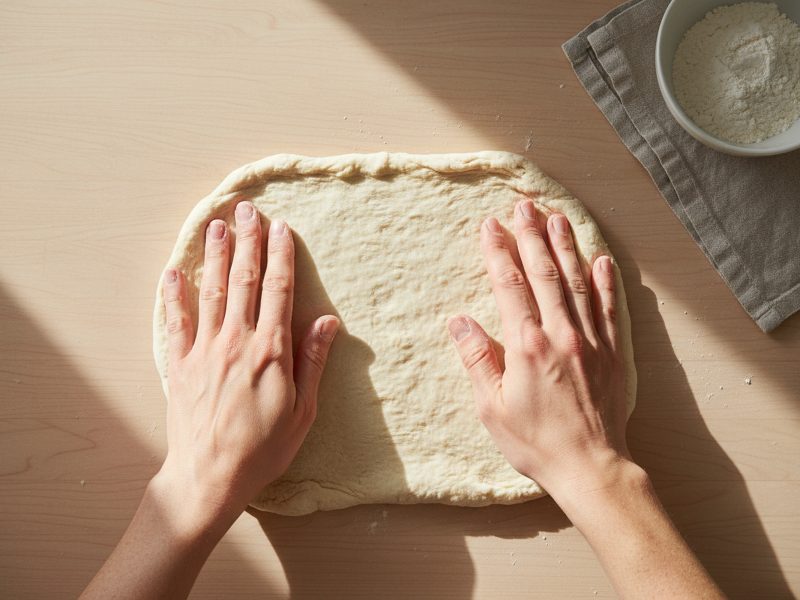
- Step 3. Shape the dough into a flat disk or rectangle with your hands.
- Step 4. With a rolling pin, roll from the center out in short strokes.
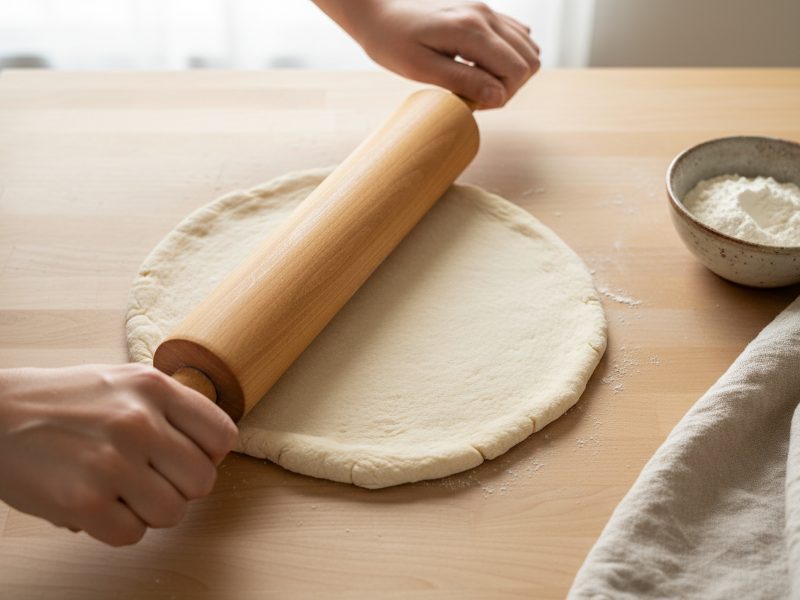
- Step 5. Lift, rotate the dough a quarter turn, dust any sticky spots with a little flour, and keep rolling.
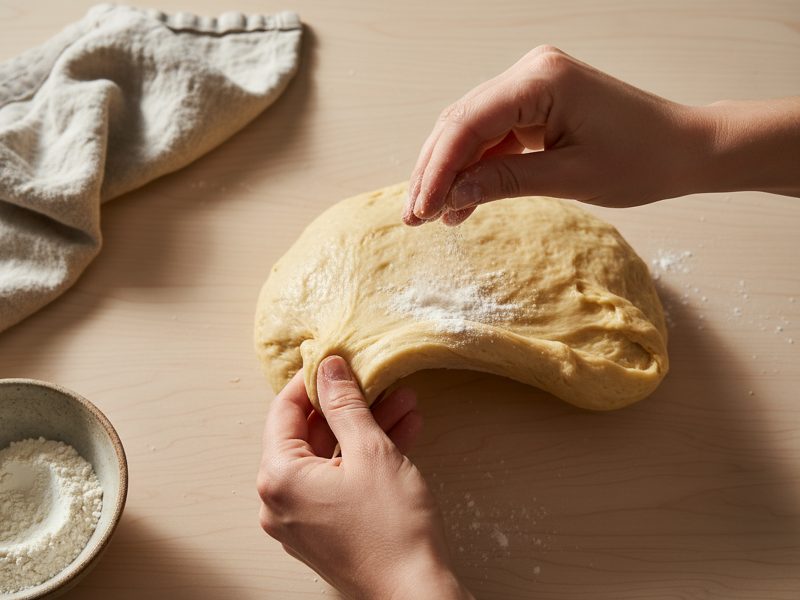
- Step 6. Stop when it’s the size and thickness you need; transfer on parchment if moving it.
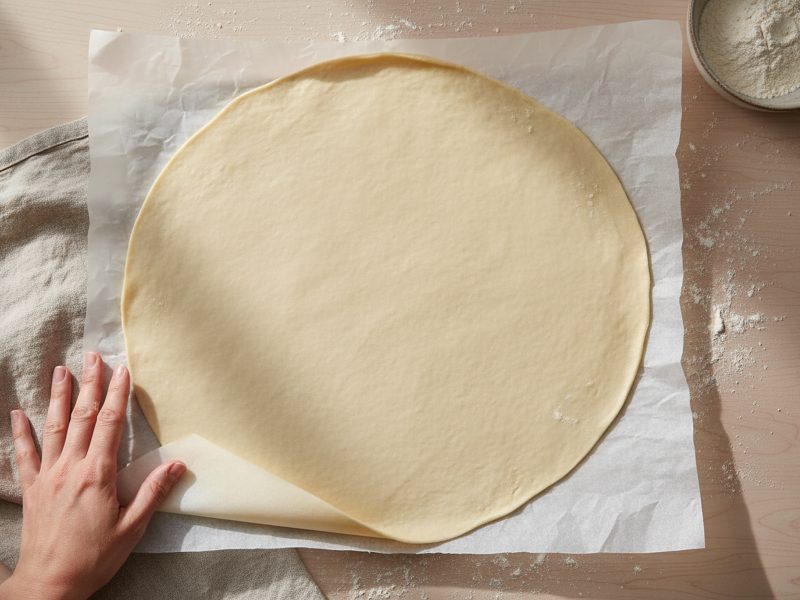


How you know it worked
- Dough moves freely and doesn’t stick to the counter.
- Edges are smooth, not tearing.
- Thickness looks even across the surface.
- The dough holds the target size and shape without shrinking much.
Troubleshooting
Common mistakes when you roll dough
| What goes wrong | Fix |
|---|---|
| Using too much flour makes the dough dry and tough. | Dust lightly - use just enough to prevent sticking. Brush off excess before baking. |
| Rolling cold, tight dough causes cracks and spring-back. | Let it rest covered 10–20 minutes at room temperature until relaxed; for pastry, keep it cool but pliable. |
| Uneven thickness leads to uneven baking. | Roll from the center out, rotate the dough often, and check thickness with your fingers or a ruler. |
| Forcing stuck dough tears it. | Gently lift, dust the counter and underside, and continue. Use a bench scraper to free sticky spots. |
Tools
What you need
Roll Dough recipes
Recipes that use this technique
1 recipe

FAQ
Common questions
How to properly roll out a pizza dough?
Work with room-temperature dough so it stretches easily. Dust the counter lightly or use a light film of oil. Press the center outward with your fingertips, leaving a thicker rim. Lift and stretch over your knuckles or the backs of your hands, rotating as you go. Use a rolling pin only if needed, stopping before the rim so you keep an edge. Aim for ⅛–¼ inch thickness for thin to regular crust. Move it to parchment or a peel before topping.
How do bakeries get their bread so soft?
They use enriched doughs (milk, butter or oil, sugar, and sometimes eggs), proper kneading for a strong but fine crumb, full proofing, and humid baking. Techniques like tangzhong or scalds pre-gelatinize some flour with water to hold moisture. After baking, bread is cooled and stored covered to keep moisture in.
What is the 3:2:1 rule for baking?
It’s a classic pie dough ratio by weight: 3 parts flour, 2 parts fat, 1 part water. It makes a tender, flaky crust when kept cold and handled minimally.
Does it matter if I chill my dough before I roll it into balls?
Yes, for many cookie doughs chilling helps. Cold dough is firmer, spreads less, and the flavors meld. Follow your recipe; as a general guide, chill at least 30 to 60 minutes, or longer for very soft doughs.
How long should you let dough chill?
It depends on the dough: pie dough 1 to 2 hours (up to 2 days) to relax gluten and firm fat; cookie dough 1 hour to overnight; pizza dough can cold-ferment 1 to 3 days for flavor; many bread doughs can be refrigerated during bulk or final proof 8 to 24 hours. Always follow the recipe and cover dough to prevent drying.
Should you refrigerate dough as it rises?
You can. Refrigeration slows fermentation (cold proofing), which improves flavor and makes sticky dough easier to handle. Lightly oil and cover the dough, refrigerate, then let it warm just enough to relax before shaping or baking as your recipe directs.
What does "roll out" mean in cooking?
It means flattening dough to an even thickness with a rolling pin or your hands to reach a target size and shape.
What is a roll of bread?
An individual small loaf, like a dinner roll or sandwich roll. It’s portioned and shaped before baking so each piece bakes quickly and evenly.
Why does bread rise in the oven?
Oven spring. Trapped gases expand and yeast speeds up until about 120°F (49°C), then slows and dies around 140°F (60°C). Steam and expanding gases stretch the dough before the crust sets.
Why let bread sit after baking?
Resting lets the crumb finish setting and moisture redistribute. Slicing too soon releases steam and compresses the crumb, making it gummy. Cool on a rack until just warm before slicing.
What happens if I bake bread at 350 instead of 450?
Lower heat gives a paler, softer crust and less oven spring; it will need more time. Many pan loaves bake at 350 to 375°F (177 to 190°C), while lean hearth breads bake hotter at 450 to 500°F (232 to 260°C) for good crust. Bake until the internal temperature is about 190 to 200°F (88 to 93°C) for sandwich loaves and 205 to 210°F (96 to 99°C) for lean artisan loaves.