Technique
How to Sear Meat
Cook food undisturbed in a hot pan until a brown crust forms. The crust is flavor. Pat food dry and leave it alone for the first few minutes.

Step by step
How to Sear
How to Sear · 0:12
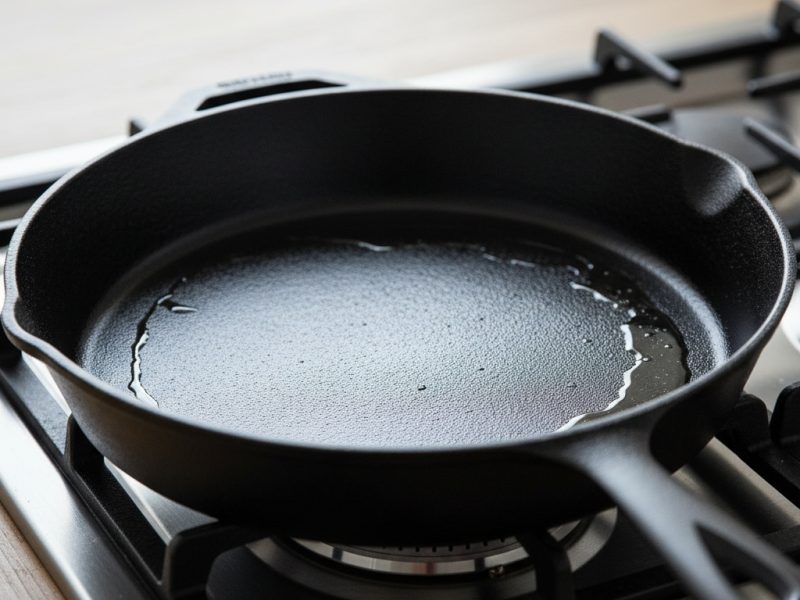
- Step 1. Preheat a heavy skillet over medium-high heat.
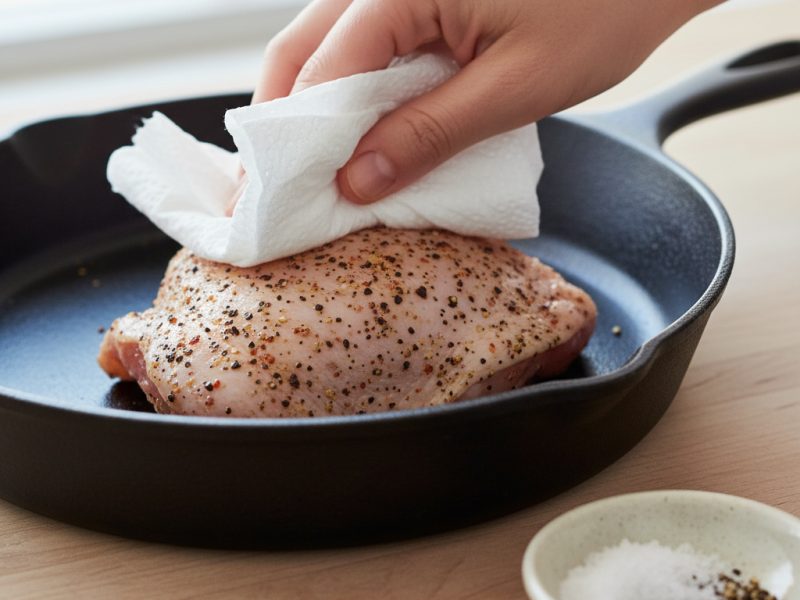
- Step 2. Pat the food dry with paper towels and season.
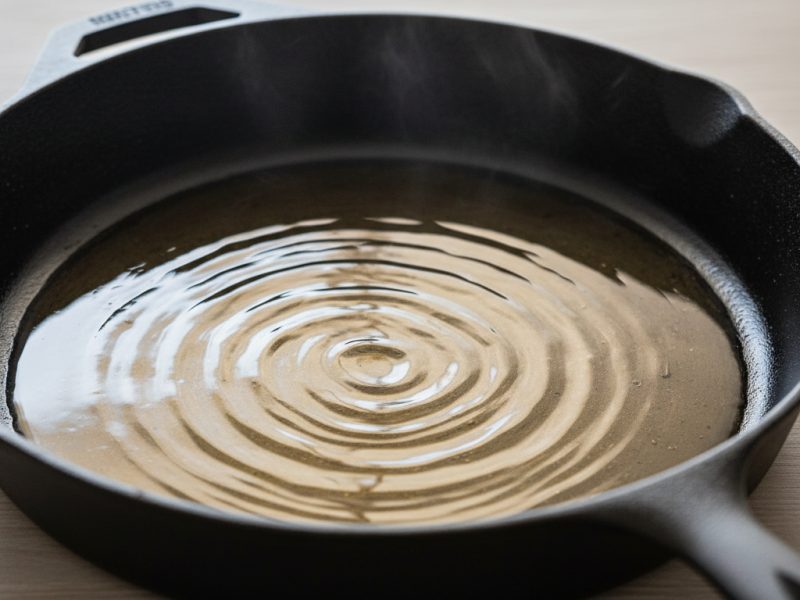
- Step 3. Add a thin layer of high‑heat oil and heat until it shimmers.
- Step 4. Lay the food in the pan (away from you). Press lightly for full contact, then don’t move it.
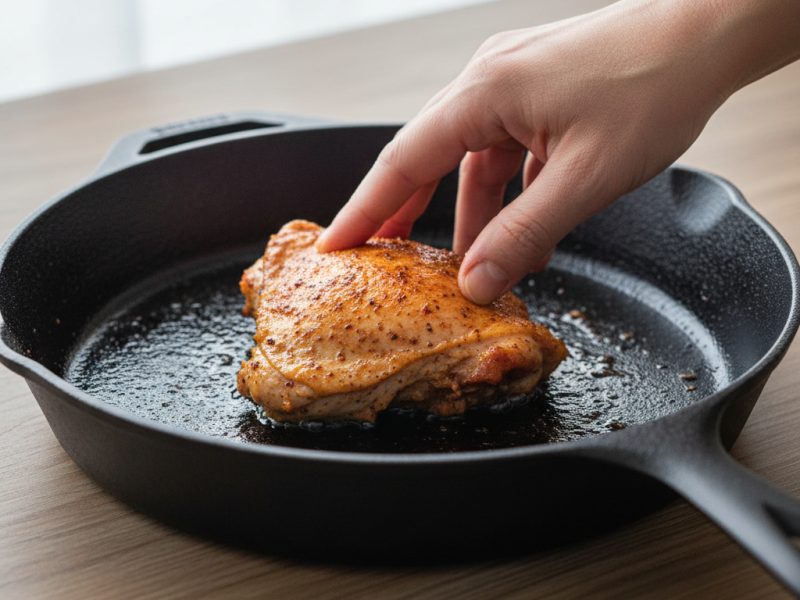
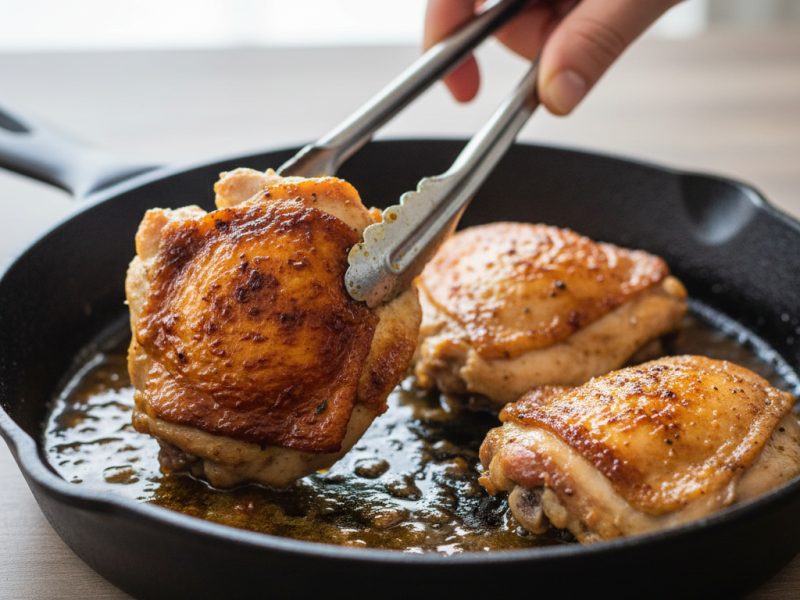
- Step 5. Sear until the underside is deep brown and releases easily, then flip and sear the other side. For thick cuts, lower heat or finish in the oven to your target doneness.


How you know it worked
- Oil shimmers before the food goes in.
- You hear a steady, lively sizzle (not popping smoke).
- The food releases on its own when a crust forms.
- The surface is deep brown with no soggy spots.
- Brown bits (fond) form on the pan.
Troubleshooting
Common mistakes when you sear meat
| What goes wrong | Fix |
|---|---|
| Crowding the pan cools it and steams the food. | Work in batches and leave space between pieces. |
| Wet surfaces won’t brown well. | Pat very dry with paper towels right before searing. |
| Moving the food too soon tears the crust. | Wait until it releases easily before flipping. |
| Using low‑smoke‑point fat burns and turns bitter. | Use high‑heat oil (canola, avocado, peanut, grapeseed). Add butter near the end if you want flavor. |
| Heat too low gives a gray, tough surface; too high burns before browning. | Preheat to medium‑high. Look for shimmering oil and a steady sizzle; adjust as needed. |
| Sugary marinades scorch. | Blot off excess marinade. Add sweet glazes in the last minutes off direct high heat. |
Tools
What you need
How to Sear Meat recipes
Recipes that use this technique
1 recipe

FAQ
Common questions
How long does it take to sear a 1.5 inch steak?
In a very hot cast‑iron pan with a thin film of oil, sear about 2 to 3 minutes per side for a good crust. Then finish to 145°F (63°C) plus a 3‑minute rest (USDA) by lowering the heat or moving the steak to a 400°F (200°C) oven. Use an instant‑read thermometer to check doneness.
Do you sear meat first or last?
Both can work. For pan sauces or thinner cuts, sear first, then finish if needed. For thick cuts, a reverse sear (cook gently to near target temp, then sear at the end) gives even doneness and a great crust.
What is the 3-3-3 rule for searing steaks?
There isn’t a standard rule. Heat, pan, and steak thickness vary too much. Use visual and audible cues instead: shimmering oil, steady sizzle, deep brown crust, easy release, and a thermometer for doneness.
Should you oil a pan before searing steak?
Yes - either lightly oil the pan or lightly oil the steak, not both. Use a high‑heat oil and heat it until it shimmers before the steak goes in.
Does sear mean fully cooked?
No. Searing browns the surface and builds flavor. For safety, cook to the USDA temperatures (steaks and roasts 145°F (63°C) plus a 3‑minute rest; ground meat 160°F (71°C); poultry 165°F (74°C)).
What is the purpose of searing?
Searing creates flavor and texture. The high heat causes the Maillard reaction, a chemical process between amino acids and sugars that creates a deep brown, savory crust on the surface of the food.
Should I sear with butter or oil?
Use a high-smoke-point oil for searing, like canola, avocado, or grapeseed oil. These oils can handle the high heat needed for a good crust without burning. Butter has a low smoke point and will burn and taste bitter. If you want butter flavor, add a pat to the pan during the last minute of cooking.