Technique
How to Season Food
Adding salt and other flavorings so food tastes balanced and lively. Salt first, taste often, and adjust with acid, fat, heat, or a touch of sweetness.

Step by step
How to Season
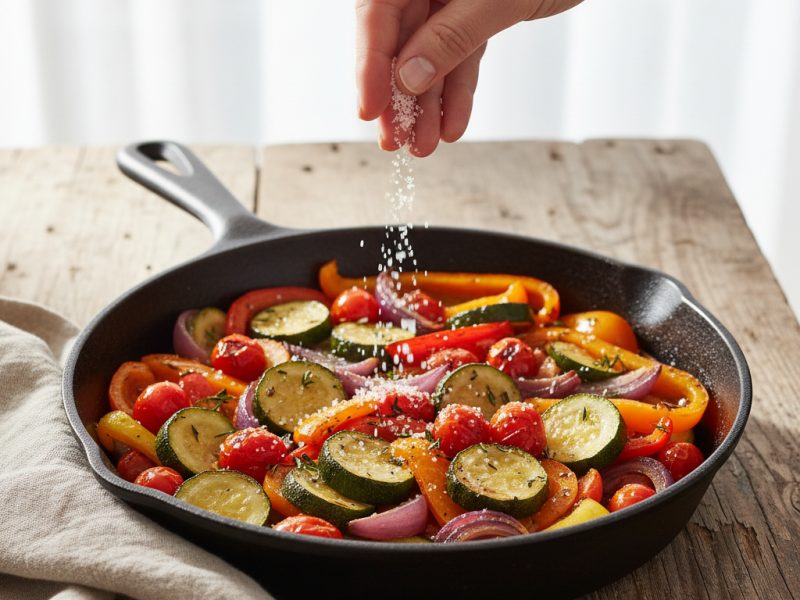
- Step 1. Salt first. Sprinkle kosher salt evenly from about 8–10 inches above the food.
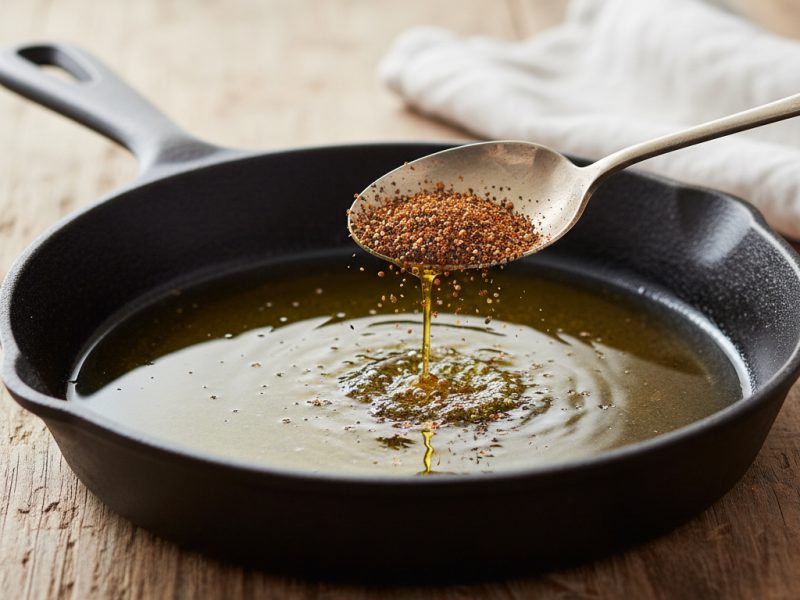
- Step 2. Bloom spices and pepper in a little hot oil, or add to warm fat in the pan.
- Step 3. Taste as it cooks. Add small pinches of salt, then wait a minute and taste again.

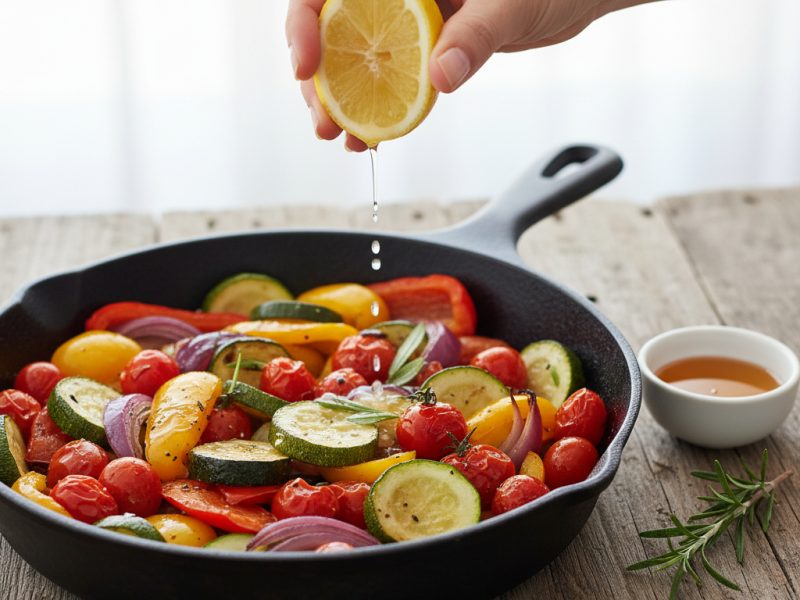
- Step 4. Balance at the end: add acid (lemon or vinegar) if dull; a little sugar or honey if too sharp; more fat if harsh; fresh herbs for brightness.


How you know it worked
- Flavors pop and you don’t notice the salt itself.
- A bite tastes balanced from start to finish, not flat in the middle.
- A squeeze of lemon or a pinch of salt makes the last 5% of difference, not a big rescue.
Troubleshooting
Common mistakes when you season food
| What goes wrong | Fix |
|---|---|
| Salting only at the end, so the inside tastes bland. | Salt earlier and in stages. For meats and veg, salt at least 15–30 minutes before cooking; for soups and sauces, salt as you build flavor. |
| Oversalting a pot at once. | Add something unsalted (more veg, cooked grains, beans), a splash of water or stock, and a little acid. Simmer 2–3 minutes and taste again. |
| Adding spices to a cold dish so they taste raw or dusty. | Toast or warm them briefly in oil or butter before liquid, or add earlier so they can bloom. |
Tools
What you need
FAQ
Common questions
How should you season food?
Use salt first and in stages. Sprinkle evenly, then taste and adjust while cooking. Let spices hit warm oil or fat so they bloom. Finish by balancing: add acid to brighten, fat to soften edges, a touch of sweetness to tame bitterness or heat, and fresh herbs for lift.
How to know if food needs more salt?
Taste a warm spoonful. If it seems flat in the middle or other flavors feel muted, add a small pinch of salt, stir, wait about a minute, and taste again. If a squeeze of lemon suddenly makes it taste right, you were likely close on salt but needed acid.
How does seasoning work?
Salt dissolves surface moisture and moves into food, carrying flavor. It suppresses bitterness and enhances sweetness and aromas. Spices and herbs release fat‑soluble flavors when warmed in oil. Acids make flavors seem brighter; fat rounds sharp edges; sugar balances sour or bitter notes.
What spices should not be used together?
There are no hard bans. Clashing usually comes from too many strong spices at once or heavy hands. Start small, toast or bloom spices, and taste. Pair a few that share a cuisine (cumin + coriander, oregano + chili), and add fresh herbs at the end so they don’t fight with warm spices. Check labels for allergens.