Technique
How to skimming
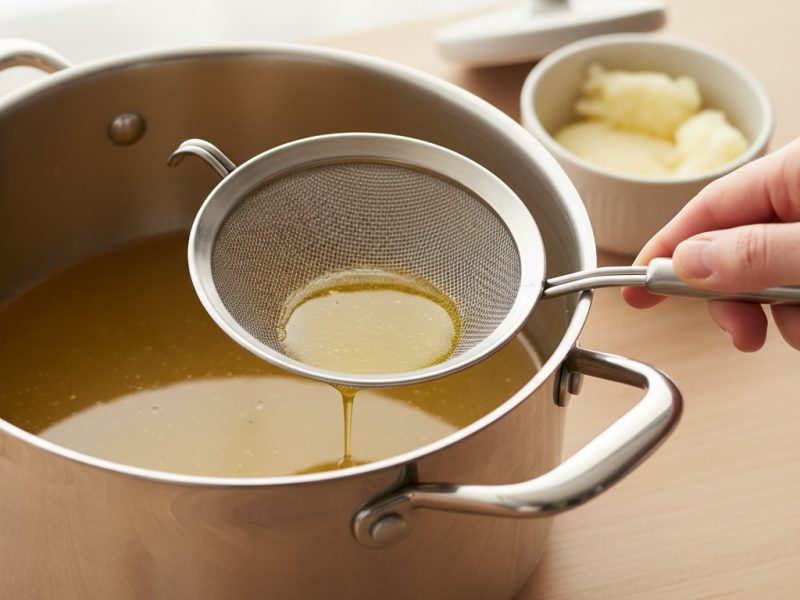
Removing foam, scum, or fat from the surface of a simmering liquid. Keep the pot at a gentle simmer. Sweep a ladle or skimmer just under the surface and wipe between passes.

Step by step
How to Skim Foam and Fat
How to Skim Foam and Fat · 0:12
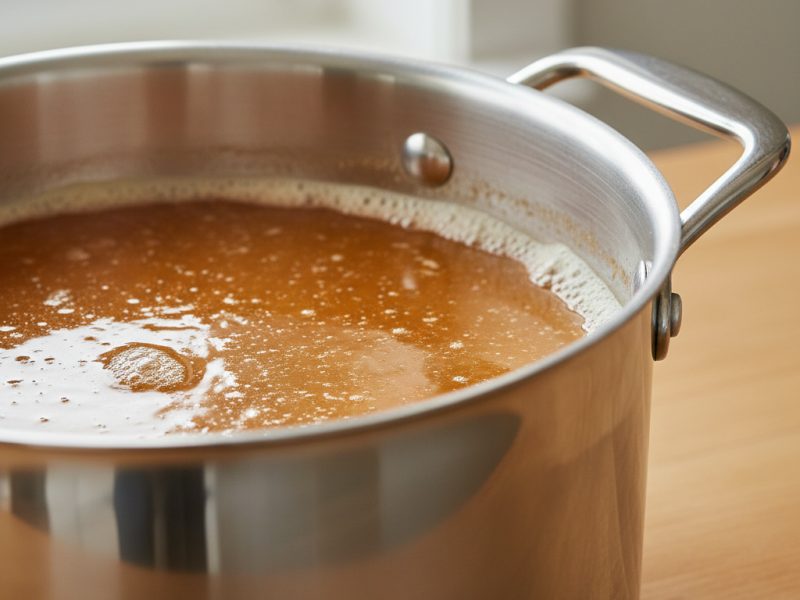
- Step 1. Bring the pot to a gentle simmer - small bubbles, not a rolling boil.
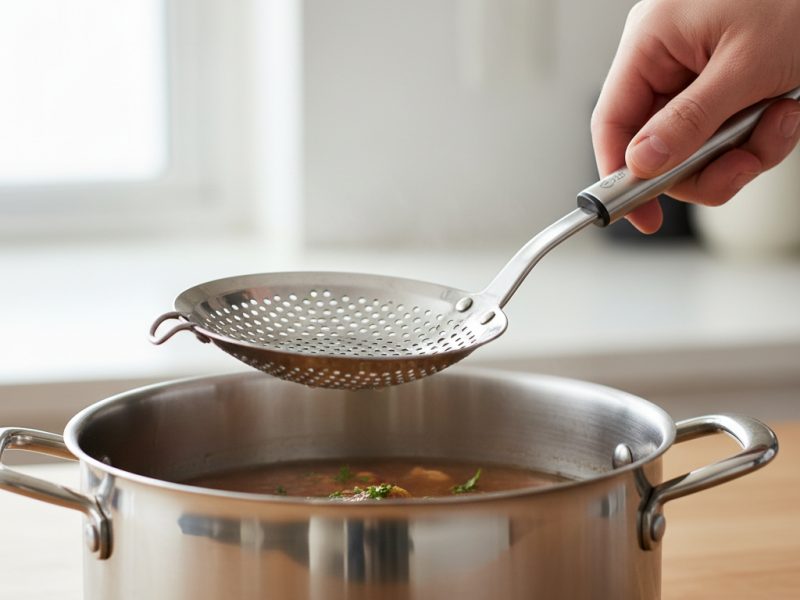
- Step 2. Hold a ladle or skimmer at a shallow angle near the surface.
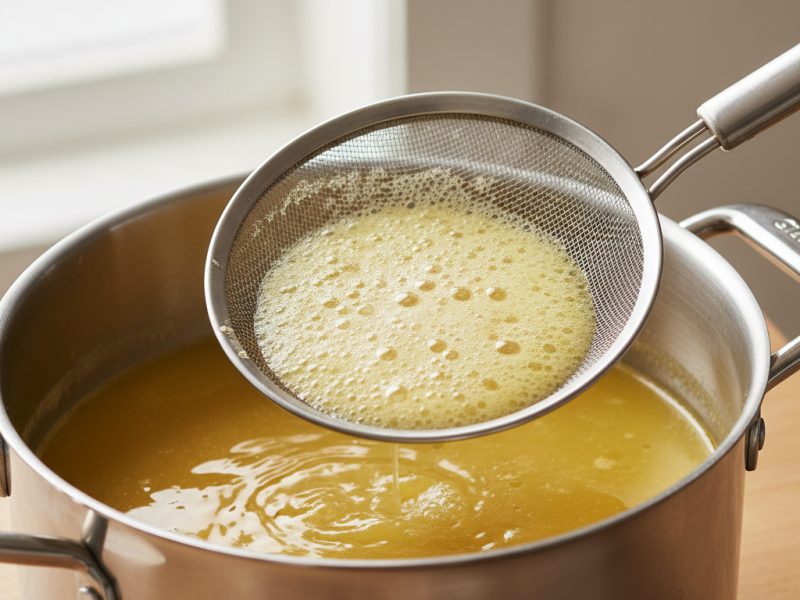
- Step 3. Slide just under the surface to collect foam or fat.
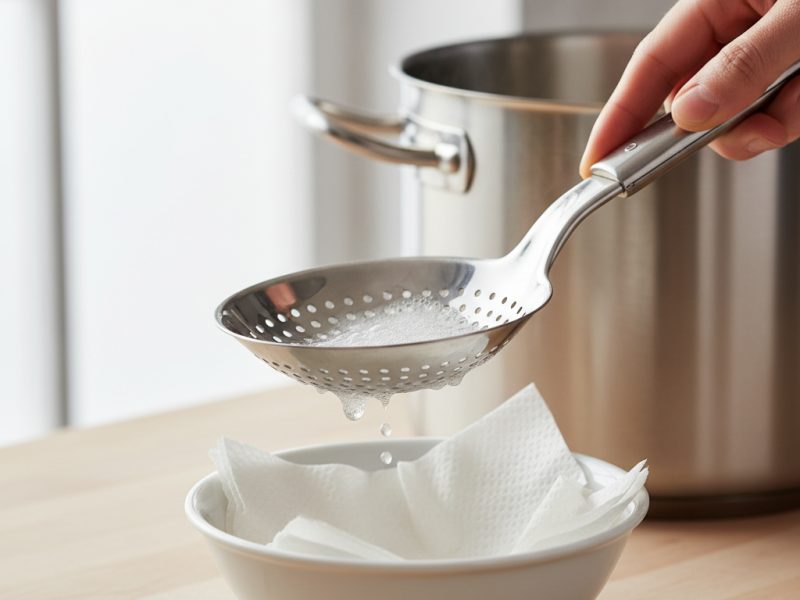
- Step 4. Lift out what you catch and tap or wipe into a bowl or onto a paper towel. Repeat as needed.
- Step 5. Tilt the pot so fat pools in one corner, then skim the pooled layer. For the rest, chill and lift off the solid fat cap.


How you know it worked
- Foam gathers on top and along the edges, then lifts off in pale clumps.
- The surface looks clearer and calmer after a few passes.
- Fat collects in a glossy layer you can gather easily.
Troubleshooting
Common mistakes when you skimming
| What goes wrong | Fix |
|---|---|
| The pot boils hard and scatters scum back into the liquid. | Lower the heat to a gentle simmer so impurities rise and stay on top. |
| Stirring mixes foam back in and clouds the liquid. | Don’t stir while skimming. Let the surface stay calm and skim from the top. |
| Using the wrong tool misses fine particles. | Use a wide ladle or a fine-mesh skimmer; a slotted spoon is too open for foam. |
| You remove too much liquid with the foam. | Tilt the pot and skim in very shallow passes so you take the top layer only. |
| Waiting too long lets foam break up and sink. | Start skimming as soon as foam appears and check every few minutes. |
Tools
What you need
Skimming recipes
Recipes that use this technique
1 recipe

FAQ
Common questions
How do you skim a soup or stock?
Keep the pot at a gentle simmer. As foam or fat rises, sweep a ladle or fine-mesh skimmer just under the surface to collect it. Tilt the pot so fat pools, work in shallow passes, and wipe the tool between scoops.
What kinds of dishes need skimming?
Stocks and broths (like Homemade Chicken Stock), stews and chili, braises, tomato sauce, jams and jellies (foam), and even deep-frying to remove stray crumbs. It also helps when clarifying butter.
Can you freeze stock after skimming?
You don’t freeze the act - you freeze the food after skimming. Cool stock or soup quickly, refrigerate within 2 hours, then freeze. Homemade stock or broth keeps for up to 6 months in the freezer. You can also freeze skimmed fat to cook with later.
How long does skimmed stock last in the fridge?
Skimming doesn’t change safety - storage times do. Refrigerate stock or soup within 2 hours and use within 3 to 4 days. Reheat leftovers to 165°F (74°C). Keep skimmed fat covered in the fridge and use promptly, or freeze.
What are the best tips for skimming?
Gentle simmer, not a boil; start early and skim often; don’t stir; use a wide ladle or fine-mesh skimmer; tilt the pot to pool fat; and for a clean finish, chill and lift off the solid fat cap.