Technique
How to warm dairy
Gently heat milk, cream, or butter until warm but not boiling. Aim for 100–140°F (38–60°C). Heat slowly and stir; stop before it simmers.

Step by step
How to warm milk, cream, or butter
- Step 1. Stovetop: Add the dairy to a small saucepan.
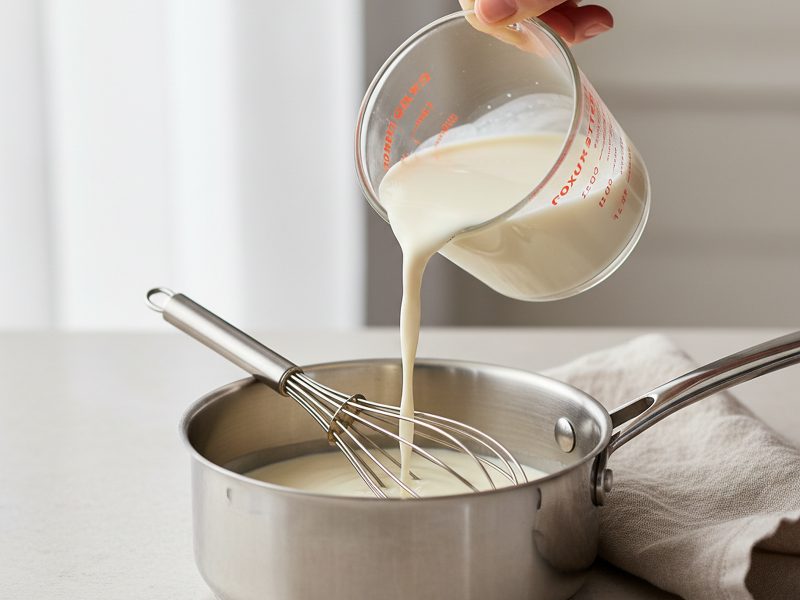
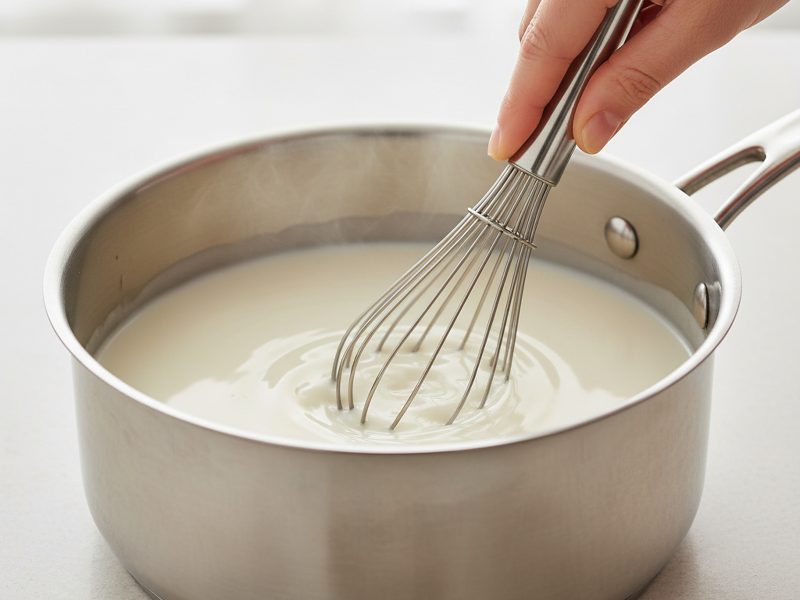
- Step 2. Heat on low. Stir often with a whisk or spatula until wisps of steam appear.
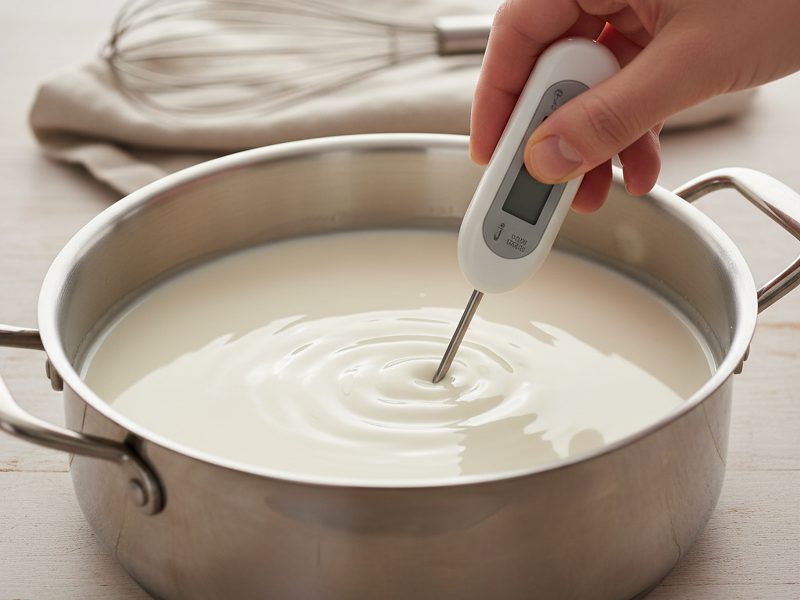
- Step 3. Check the temperature with an instant-read thermometer. Stop at your target.
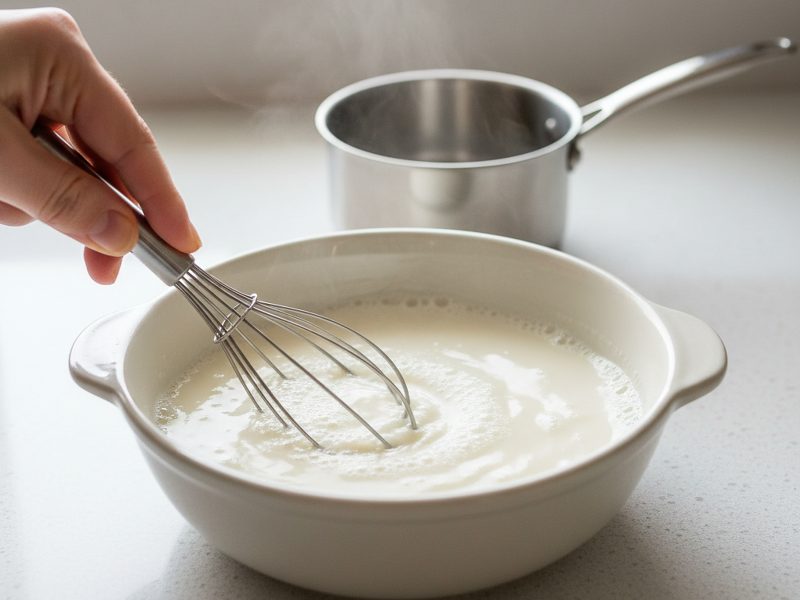
- Step 4. Microwave: Put dairy in a microwave-safe cup or bowl. Heat 20–30 seconds at a time, stirring between bursts, until warm.


How you know it worked
- You see light steam but no bubbling.
- The sides of the pan feel warm, not hot.
- A thermometer reads about 100–140°F (38–60°C).
- Butter is melted and fluid, not browned.
Troubleshooting
Common mistakes when you warm dairy
| What goes wrong | Fix |
|---|---|
| You let the milk boil and it forms a skin or tastes cooked. | Use low heat and stir. Stop when you see light steam. If a skin forms, lift it off. |
| Scorched milk sticks to the bottom. | Use a heavy-bottomed pan, low heat, and keep the dairy moving. Rinse the pan before heating to help prevent sticking. |
| Microwaved milk has hot spots. | Heat in short bursts and stir well each time. Check temperature before serving. |
| Cream splits in hot coffee or sauces. | Warm the cream first and temper it: stir in a little hot liquid to the cream, then add back while stirring. |
Tools
What you need
Warm Dairy recipes
Recipes that use this technique
1 recipe

FAQ
Common questions
How do you warm up milk to drink?
Stovetop: heat milk in a small saucepan over low, stirring, until lightly steaming, 120 to 140°F (49 to 60°C). Microwave: heat in a microwave-safe mug 20 to 30 seconds at a time, stirring between bursts, until it reaches your temperature. Don’t boil.
Can you heat up milk in the microwave to make hot chocolate?
Yes. Use a microwave-safe mug. Heat 20 to 30 seconds at a time, stirring between bursts, until 140 to 150°F (60 to 66°C) or hot to your taste without boiling. Then whisk in cocoa and sugar.
Can I heat up milk from the fridge?
Yes. Cold milk can go straight to a pan or microwave-safe cup. Warm it gently and stir so it heats evenly. Stop before it simmers.
What is the fastest way to warm up breast milk?
Use warm running water or a bowl of warm water, swirling the bottle. Target body temperature, about 98 to 104°F (37 to 40°C). Do not microwave; it can create hot spots and damage nutrients.
What does warm milk mean in baking?
Most recipes mean milk that’s warm to the touch, about 95 to 110°F (35 to 43°C) for yeast. It should feel like a warm bath, not hot. For “scalded milk,” heat to about 180°F (82°C) and cool as directed.
Why do recipes call for warm milk?
Recipes use warm milk for a few reasons. In baking, milk warmed to 95 to 110°F (35 to 43°C) activates yeast. For drinks like hot chocolate, it helps dissolve sugar and cocoa powder. In sauces or when adding to hot coffee, warming milk or cream first prevents it from curdling. And for drinking, many people find a warm glass of milk comforting.
What happens if you don't warm up breast milk?
It is safe for a baby to drink cold or room-temperature breast milk. While most babies prefer it warmed to body temperature, about 98 to 104°F (37 to 40°C), this is a matter of preference, not safety. Always follow safe storage guidelines for breast milk.