Ingredient · Vinegars
Apple Cider Vinegar
Tart, fruity vinegar made by fermenting apple cider. Brightens dressings, quick pickles, slaws and braises. For a balanced vinaigrette, start with 1 part vinegar to 3 parts oil, then salt and adjust to taste.

Apple Cider Vinegar recipes
What to cook with apple cider vinegar
5 recipes


Forms and products
Which apple cider vinegar should you buy?
| Form | Type | Best for |
|---|---|---|
| Filtered | Preparation | Clean, consistent flavor for dressings, slaws and cooking |
| Raw unfiltered | Preparation | Cloudy, fuller flavor; good in dressings, shrubs and marinades. Strands of “mother” are normal |
| Organic | Preparation | When you prefer ingredients from certified organic apples. Available in both filtered and raw/unfiltered forms |
| Powder | Product | Dry rubs, popcorn, snack coatings; adds tang without liquid. Brands vary in strength; not a 1:1 swap with liquid |
| Cleaning vinegar | Product | Not for cooking. Often 6%+ acidity and labeled for cleaning only; skip for food |
Filtered
Clear, consistent acidity (usually 5%). Reliable for most recipes.
Raw/unfiltered (with the mother)
Cloudy, with natural culture. Slightly rounder flavor; common in dressings and drinks.
Flavored blends
ACV mixed with honey, herbs or fruit. Good for sippers; check labels if cooking.
Buy and store
How to pick and store apple cider vinegar
At the store
- Look for 5% acidity for cooking; it’s usually printed on the front label.
- Choose filtered for clean, bright flavor; choose raw/unfiltered for a fuller, apple-y note.
- Avoid bottles labeled “cleaning vinegar” for recipes; it’s stronger and not for food.
- Cloudiness or strands in raw ACV are normal; off smells or mold are not.
| How it's kept | Where | About how long |
|---|---|---|
| Unopened bottle | Pantry, cool and dark | 2+ years; quality gradually fades |
| Opened bottle | Pantry, tightly capped | 1 to 2 years; flavor slowly softens |
| Chilled (optional) | Fridge | Same as pantry; refrigeration isn’t required |
| Homemade vinaigrette | Fridge, sealed jar | About 1 week |
| Quick pickles (refrigerator) | Fridge | About 2 to 3 weeks; follow recipe |
Food safety. Undiluted vinegar can irritate your throat and erode tooth enamel. For drinking recipes, dilute (for example 1 to 2 tsp in a large glass of water), use a straw, and rinse your mouth with water after.
Food safety. ACV can burn skin if used straight. Don’t use it on warts or wounds. For topical uses, talk with a clinician.
Food safety. Large amounts of ACV can affect potassium levels and some medicines (like diuretics and insulin). If you take daily medicines, ask your clinician before using ACV regularly.
Food safety. Cloudiness or sediment (the “mother”) is normal. If you see mold, gas, or smell off/solvent notes, discard the bottle.
Prep
How to use apple cider vinegar
Each technique has one short video. The same clip plays inside every recipe step that uses it.
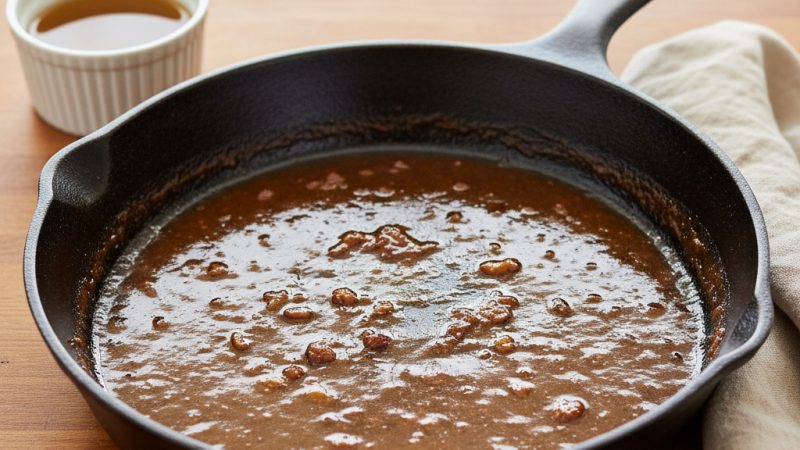
Techniques
Tools that help
Equipment links may become affiliate links, always labeled as such.
Substitutes
Out of apple cider vinegar? Use this instead
| Substitute | For 1 tsp | What to know |
|---|---|---|
| White Wine Vinegar | 1 tbsp | Closest bright, soft acid for dressings and slaws. |
| Rice Vinegar (Unseasoned) | 1 tbsp | Mild and slightly sweet; good in salads and quick pickles. If unseasoned, add a pinch of sugar if desired. |
| Lemon | 1 tbsp juice | Fresh citrus snap in dressings or sauces; slightly less sharp than ACV. |
| Red Wine Vinegar | 1 tbsp | Fruitier and deeper; works in marinades and braises. |
| Distilled White Vinegar | 1 tbsp | Sharper and more neutral; fine for pickles and cleaning up pan sauces. May taste harsher in salads. |
Nutrition and allergens
Nutrition per tsp
Per tsp (5 g)
| Calories | 1 |
| Carbohydrates | 0.0 g |
| Protein | 0 g |
| Fat | 0 g |
| Fiber | 0 g (1% DV) |
| Sodium | 0.3 mg (1% DV) |
| Vitamin C | 0 mg (1% DV) |
Calculated from USDA FoodData Central.
Allergens and diets
- Not a major US allergen
Not one of the nine major allergens. Vinegar may contain or declare sulfites; people sensitive to sulfites should check labels. - Vegan
- GlutenFree
Distilled and cider vinegars are generally gluten-free; flavored products can add gluten - check labels. - Fodmap: low
Vinegar has negligible FODMAPs at typical serving sizes. - Blends
Flavored ACV drinks can include added sugars, honey or juices. Read the label for ingredients and acidity.
Flavor pairings
What goes with apple cider vinegar


FAQ
Apple Cider Vinegar questions
What is the best way to use apple cider vinegar in salad dressing?
Start with 1 part apple cider vinegar to 3 parts oil. Add ½ tsp Dijon per 2 tbsp vinegar to help it emulsify, a pinch of salt, and a little honey or maple to balance. Shake in a jar. Taste and adjust salt, sweetness and acidity.
Can you use apple cider vinegar for quick pickles?
Yes. Use 1 cup apple cider vinegar, 1 cup water, 1 to 2 tbsp sugar, and 1 tbsp kosher salt per pound of vegetables. Bring to a simmer, pour over sliced veg in a jar, cool, then refrigerate. They’re ready in a few hours and keep 2 to 3 weeks.
How much apple cider vinegar should you add to coleslaw?
Use 1 to 2 tbsp per ½ head of shredded cabbage (about 6 to 8 cups), along with 3 to 4 tbsp mayo, 1 tsp Dijon, 1 to 2 tsp sugar, salt and pepper. Toss, let it sit 10 to 15 minutes, then adjust to taste.
Can you make buttermilk with apple cider vinegar?
Yes. Stir 1 tbsp apple cider vinegar into 1 cup milk. Let stand 5 to 10 minutes until slightly thickened. Use in pancakes, biscuits or quick breads. For dairy-free, use unsweetened soy milk for the best curdling.
Does apple cider vinegar go bad?
It’s very shelf-stable. Unopened and opened bottles keep 1 to 2 years or more in a cool, dark pantry. Cloudiness and sediment are normal. If you ever see mold, gas, or smell off or solvent-like notes, discard it.
Can you substitute apple cider vinegar for white vinegar in recipes?
Often yes, 1:1. Expect a fruitier, slightly softer acid. It’s great in dressings, slaws and marinades. For pickling, you can use it 1:1 if it’s 5% acidity; darker color may tint pale vegetables.