Technique
How to deglaze
Pouring liquid into a hot pan to loosen the browned bits stuck to the bottom. Scrape with a wooden spoon while the liquid bubbles; the bits dissolve into the sauce.

Step by step
How to Deglaze
How to Deglaze · 0:12
- Step 1. Pour off excess fat, leaving about 1 to 2 teaspoons in the hot pan.
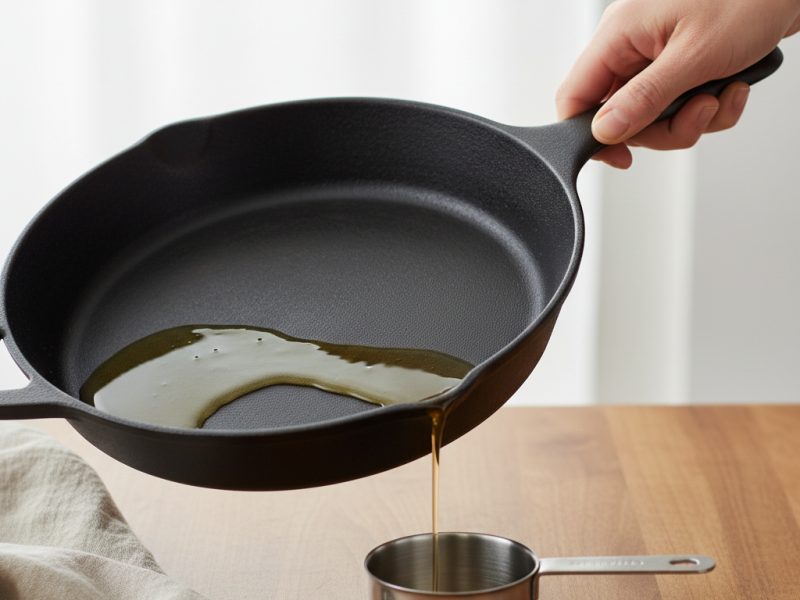
- Step 2. Set heat to medium-high. Add ¼ to ½ cup of liquid.
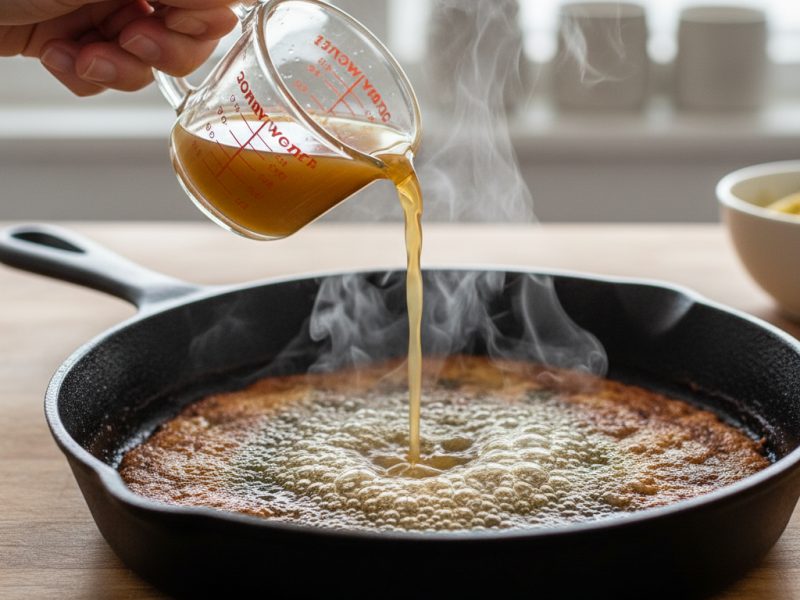
- Step 3. Scrape the browned bits loose as it bubbles.
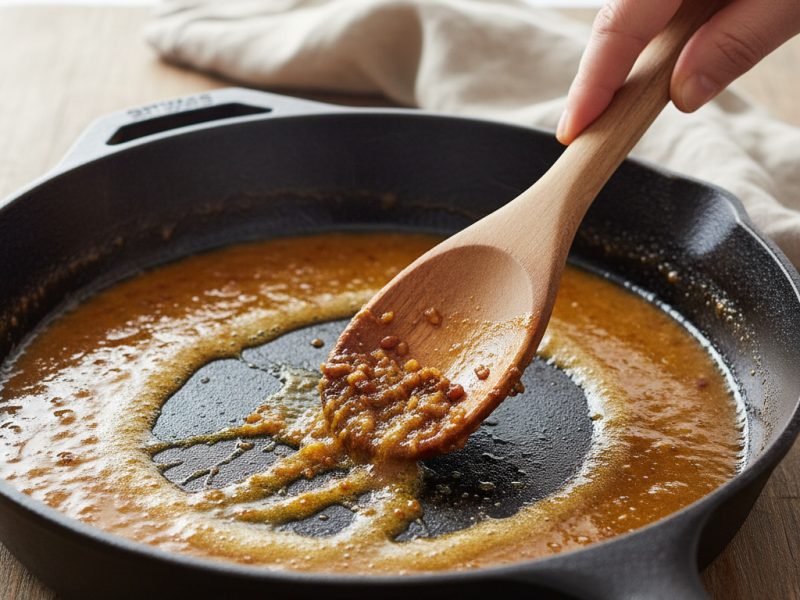
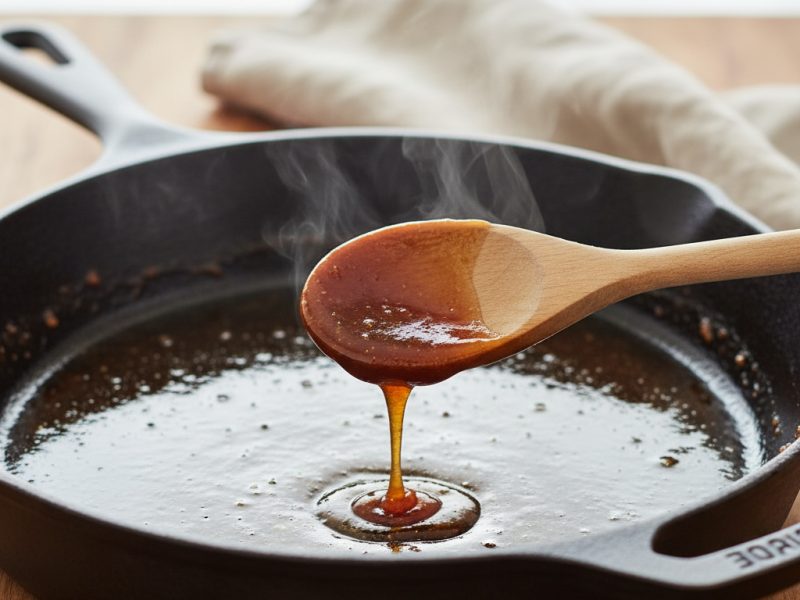
- Step 4. Simmer until slightly reduced and syrupy, then use the sauce or build on it.


How you know it worked
- The bottom of the pan looks clean as you scrape.
- The liquid turns brown and glossy.
- Steam smells like what you just cooked, but richer.
- Your spoon slides smoothly over the pan; no hard crust left.
Troubleshooting
Common mistakes when you deglaze
| What goes wrong | Fix |
|---|---|
| Too much liquid makes a thin, bland sauce. | Start with ¼ cup. Reduce until it lightly coats a spoon, then add more if needed. |
| Adding spirits over an open flame flares up. | Take the pan off the burner, add the alcohol, then return to the heat. |
| Black, burnt bits taste bitter. | If the fond is black, wipe the pan out and start fresh with new fat before deglazing. |
| Milk curdles when used to deglaze. | Use stock, water, wine, or juice to deglaze. Add dairy after reducing, off heat, or use cream instead of milk. |
| Nonstick pans give little fond to deglaze. | Use a stainless steel or cast iron pan, which creates more fond. Avoid scraping nonstick pans, as it can damage the surface. |
Tools
What you need
Deglaze recipes
Recipes that use this technique
2 recipes


FAQ
Common questions
How to deglaze a pan with water?
Keep the pan hot over medium-high. Pour in ¼ to ½ cup water, scrape with a wooden spoon to lift the browned bits, and simmer until slightly reduced. Season the liquid with salt, pepper, or a splash of vinegar or lemon to taste.
Can I deglaze with whiskey?
Yes. Remove the pan from the burner first. Add a small splash (1 to 2 tablespoons), scrape, then return to heat and simmer. Keep your face and any flames away - alcohol can ignite.
Can I deglaze with milk?
It’s not ideal. Milk can curdle when it hits a hot pan. Deglaze with stock, water, wine, or juice instead, then finish with cream off heat if you want dairy richness.
What are some good liquids to deglaze a pan?
Water, chicken or beef stock, wine (white or red), beer, dry vermouth, cider, vinegar (red wine, white wine, apple cider), lemon juice, and fruit juices like apple or orange. Match the liquid to the dish.
What is the best thing to deglaze a pan with?
Use what fits the dish. For most meats: stock or water with a splash of wine or vinegar. For chicken piccata: white wine or stock plus lemon. For pan sauces you’ll reduce: stock works best.
Why do people use alcohol to deglaze?
Alcohol helps dissolve flavorful browned compounds and aromatics, adds aroma, and reduces quickly. You don’t need much. Some alcohol remains after cooking, so use stock or water if avoiding it.
Can balsamic vinegar deglaze a pan?
Yes, but dilute it. Use 1 to 2 tablespoons balsamic plus water or stock to make ¼ to ½ cup total. Scrape and reduce until glossy to avoid an overly sharp or syrupy sauce.
What can I use to deglaze a pan if I don't have wine?
Use stock or water. If you want brightness, add a teaspoon or two of vinegar or lemon juice. Scrape and reduce as usual.
How to deglaze a pan after cooking steak?
Pour off extra fat, leaving 1 to 2 teaspoons. Add ¼ to ½ cup stock or water (optional splash of wine or whiskey off heat). Scrape, simmer to reduce, then whisk in 1 to 2 tablespoons cold butter off heat.