Ingredient · Poultry
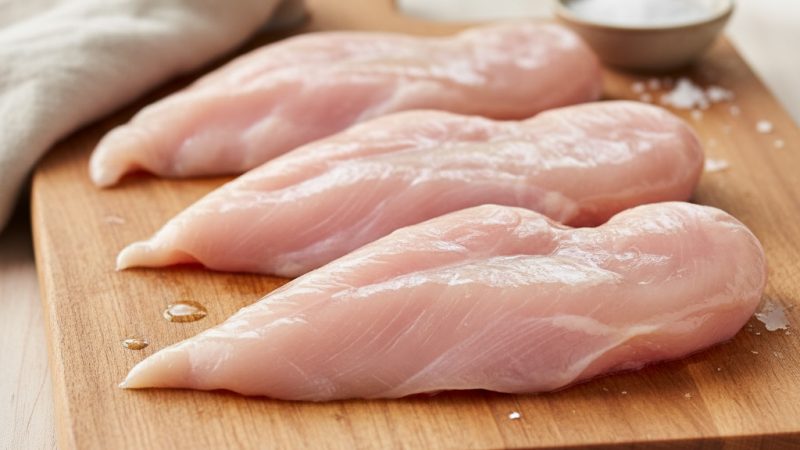
Chicken Breasts
Lean white meat that dries out fast past 165°F (74°C). Pound to an even ¾ inch so it cooks evenly. Pull at 165°F (74°C) and rest 5 minutes.

Chicken Breasts recipes
What to cook with chicken breasts
1 recipe

Forms and products
Which chicken breasts should you buy?
| Form | Type | Best for |
|---|---|---|
| Whole boneless skinless | Preparation | Grilling, baking, pan searing |
| Cutlets | Preparation | Quick sauté, piccata, breaded cutlets. Split horizontally (butterfly) and pound for even thickness |
| Pounded even | Preparation | Even cooking on grill or skillet; juices stay in |
| Thin sliced breasts | Product | Fast weeknight sautés; minimal pounding needed |
| Frozen boneless skinless | Product | Stock your freezer; bake, poach, grill after thawing |
Air-chilled
Chilled by air, not water. Less added water, better browning, and more consistent cooking.
Solution-added / enhanced
Labeled as ‘contains up to X% of a solution.’ Already brined; salt carefully. Higher sodium.
Organic
From chickens raised to USDA organic standards. Cook the same; flavor and size can vary.
Buy and store
How to pick and store chicken breasts
At the store
- Choose breasts that are firm, moist but not slimy, and evenly sized so they cook at the same rate.
- Color should be pink to pale peach with no gray spots. Avoid strong odors.
- Check the label for “thin-sliced,” “air-chilled,” or “contains solution.” That affects salt and cooking.
- For cutlets, pick larger breasts to split cleanly, or buy thin-sliced to save time.
| How it's kept | Where | About how long |
|---|---|---|
| Raw, unopened pack | Fridge, coldest spot (≤40°F) | 1 to 2 days |
| Raw, opened | Fridge, airtight on a tray to catch drips | 1 to 2 days |
| Raw, frozen | Freezer, airtight (remove excess air) | Up to 9 months |
| Cooked | Fridge, airtight | 3 to 4 days |
| Cooked, frozen | Freezer, airtight | Up to 4 months |
| Thawed (from frozen) | Fridge | Cook within 1 to 2 days |
Food safety. Cook chicken breasts to 165°F (74°C) and rest 5 minutes. Use an instant-read thermometer in the thickest part.
Food safety. Keep raw chicken and juices off ready-to-eat foods. Use separate boards and wash hands, knives, and counters with hot soapy water.
Food safety. Do not rinse raw chicken. It can spread bacteria around the sink. Pat dry with paper towels instead.
Food safety. Thaw safely in the fridge, in a sealed bag in cold water (change water every 30 minutes), or in the microwave. Never thaw on the counter.
Prep
How to prep chicken breasts
Each technique has one short video. The same clip plays inside every recipe step that uses it.
Techniques
Tools that help
Equipment links may become affiliate links, always labeled as such.
Substitutes
Out of chicken breasts? Use this instead
| Substitute | For 1 piece | What to know |
|---|---|---|
| Chicken Thighs | 6 oz (about 170 g) boneless skinless thigh | Juicier and more forgiving. Cook to 165°F (74°C). Slightly longer cook time. |
| Turkey Cutlets | 6 oz (about 170 g) | Lean and mild. Cook to 165°F (74°C). Usually thinner; cooks fast. |
| Pork Chops | One thin boneless chop, about 6 oz (170 g) | Good for breaded cutlet dishes. Cook to 145°F (63°C) and rest 3 minutes. |
| Tofu | 6 oz (170 g) extra-firm tofu | Press dry, season well. Plant-based swap for stir-fries and cutlet-style dishes. |
| Cauliflower | One 1-inch-thick cauliflower steak | Vegetarian swap for roasting or pan-searing; different texture and flavor. |
Nutrition and allergens
Nutrition per piece
Per piece (170 g)
| Calories | 180 |
| Carbohydrates | 0 g |
| Protein | 38 g |
| Fat | 3 g |
| Sodium | 112 mg (5% DV) |
Calculated from USDA FoodData Central.
Allergens and diets
- Not a major US allergen
Not one of the nine major food allergens the FDA requires on labels. Some products are marinated or processed; check labels for allergens and added sodium. - Fodmap: low
Plain chicken breast contains no FODMAPs. Watch marinades and sauces.
Flavor pairings
What goes with chicken breasts


FAQ
Chicken Breasts questions
How do you make chicken breasts?
Dry the chicken, season with salt and pepper, and cook to 165°F (74°C). For fast, juicy results: butterfly large breasts into cutlets, pound to ¼ to ¾ inch, sear 3 to 5 minutes per side in a hot oiled skillet, then rest 5 minutes. Sauce the pan if you like.
What goes well with chicken breasts?
Bright, salty, and creamy flavors shine: lemon, capers, garlic, herbs, and butter (think chicken piccata). Sides like roasted potatoes, rice, pasta, or asparagus work well. Add moisture with pan sauces, salsas, pestos, or yogurt-based dressings.
Can you freeze chicken breasts?
Yes. Freeze raw or cooked. Wrap tightly, remove excess air, and label. Raw pieces keep up to 9 months; cooked keeps up to 4 months. Thaw in the fridge, in cold water (sealed bag, change water every 30 minutes), or in the microwave. Never thaw on the counter.
How long does chicken breasts last in the fridge?
Raw chicken breasts keep for 1 to 2 days in the fridge at 40°F or colder. Cooked chicken keeps for 3 to 4 days. Store raw chicken in its original packaging or an airtight container on a plate on the bottom shelf to catch any drips. Store cooked chicken in a separate airtight container. If any chicken smells off, feels slimy, or turns gray, throw it out.
What is the secret to good chicken breasts?
Even thickness and precise temperature. Split thick breasts into cutlets, pound evenly, and use an instant-read thermometer. Season simply, sear in a hot pan, and pull at 165°F (74°C). Rest 5 minutes. Brine or use solution-added packs if you want more cushion.
Can I make chicken breasts ahead of time?
Yes. Cook, cool quickly, and refrigerate 3 to 4 days. Reheat to 165°F (74°C) gently - covered in the microwave, in a warm oven with a splash of broth, or sliced into sauces. Or meal-prep: poach or bake, chill, and slice for salads and sandwiches.