Technique
How to blanch greens
Quickly boiling greens, then shocking in ice water to set color and stop cooking. Use a big pot of heavily salted, rolling-boil water, work in small batches, then chill in an ice bath until cold.

Step by step
How to blanch greens
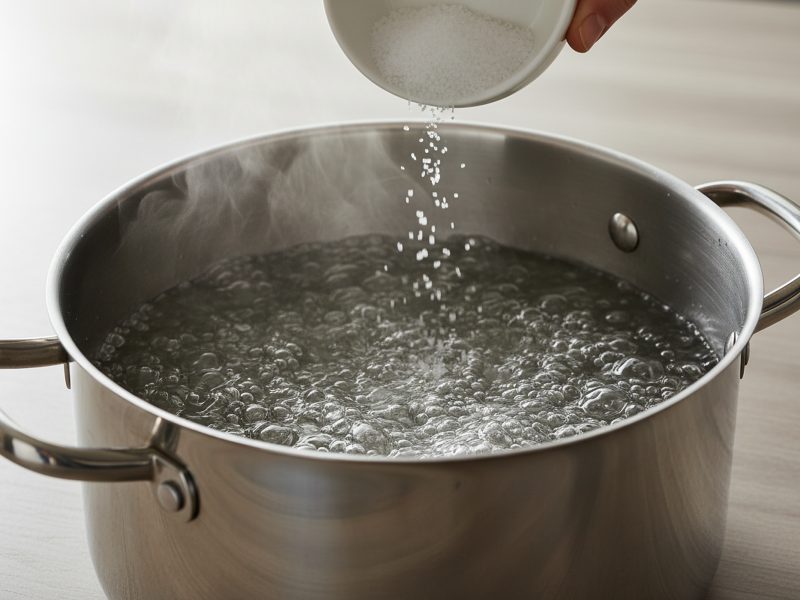
- Step 1. Bring a large pot of well‑salted water to a rolling boil.
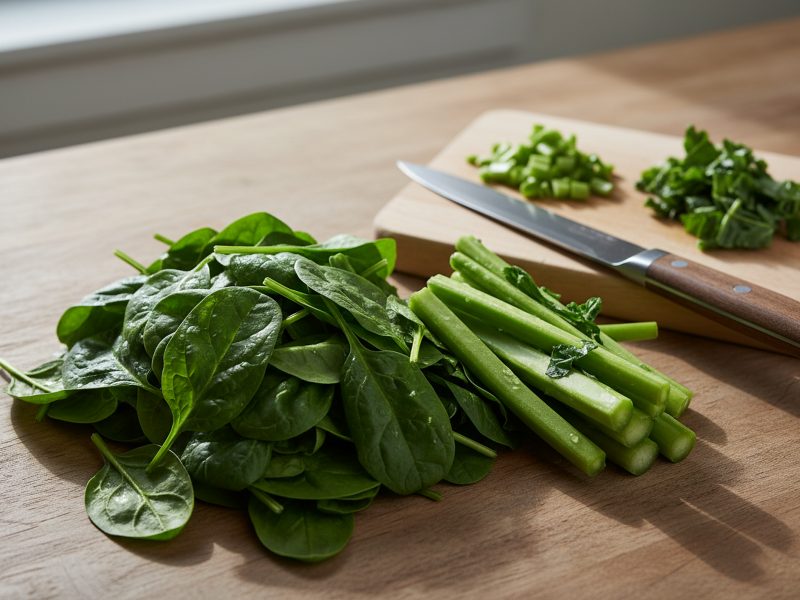
- Step 2. Wash and trim the greens. Separate any thick stems or ribs from the leaves.
- Step 3. Add a small batch to the boiling water; start timing as soon as it returns to a boil.
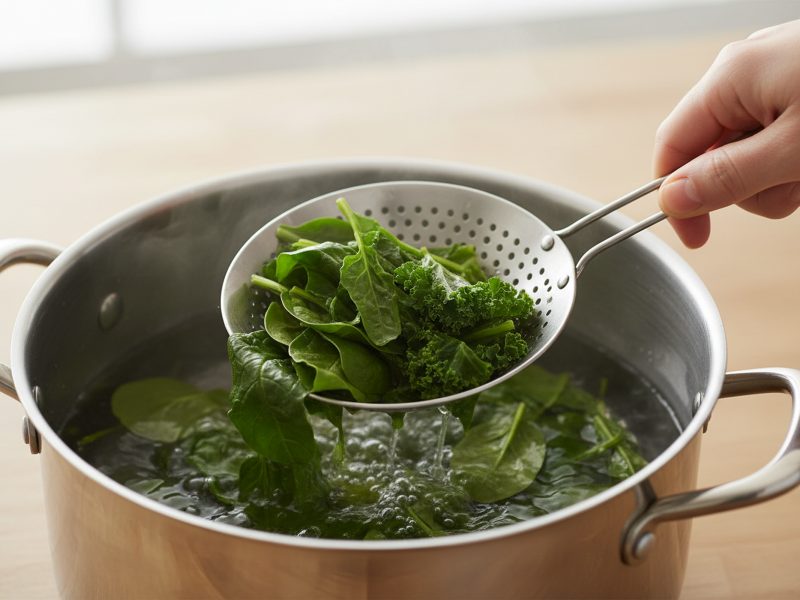
- Step 4. Boil until bright and just tender: spinach 30–45 seconds; kale/collards/mustard or broccoli rabe 1–2 minutes.
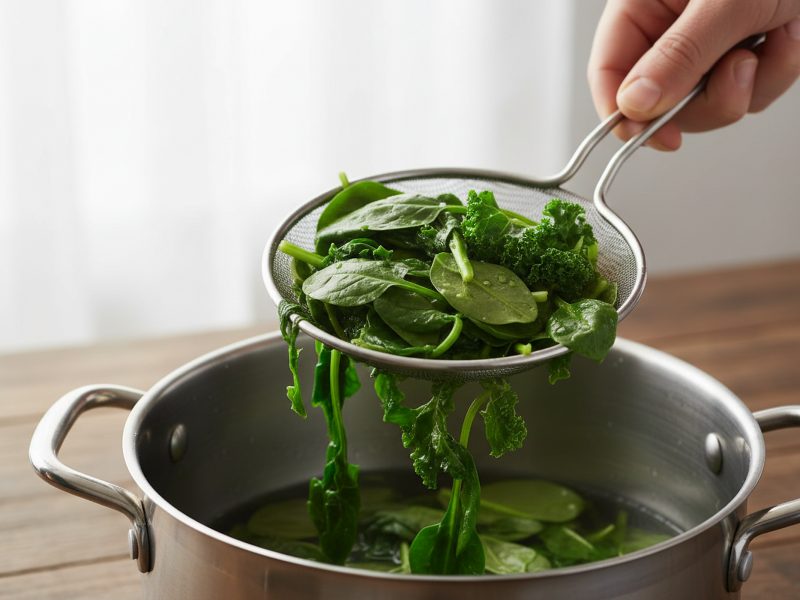
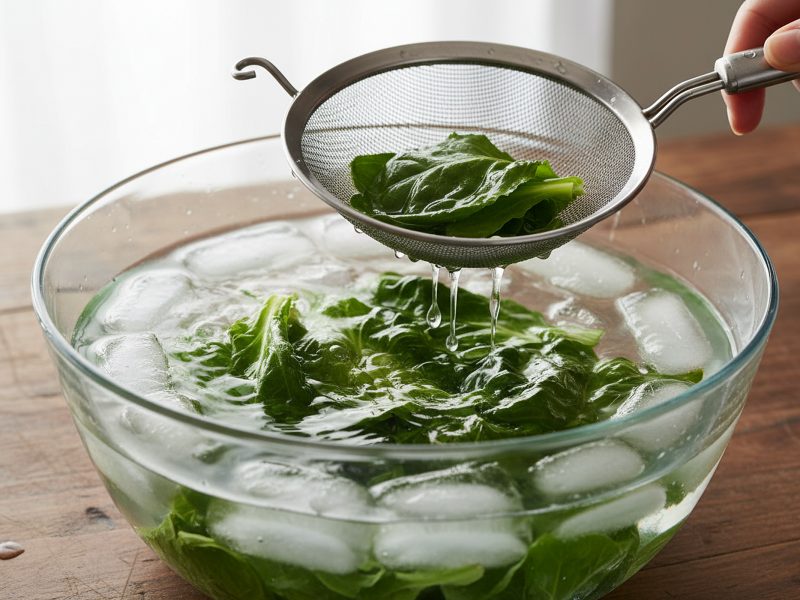
- Step 5. Lift out with a spider or tongs into an ice bath; stir until fully cold.
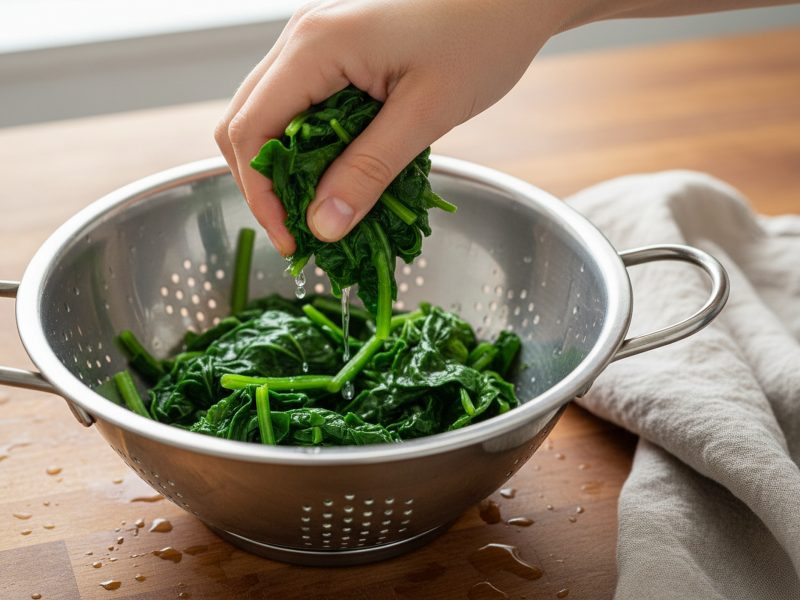
- Step 6. Drain in a colander; squeeze or pat dry before using or freezing.


How you know it worked
- Color turns brighter green.
- Leaves are pliable; stems bend but aren’t mushy.
- Boil returns within about 30–60 seconds after adding greens.
- Greens feel cold in the center after the ice bath.
Troubleshooting
Common mistakes when you blanch greens
| What goes wrong | Fix |
|---|---|
| Overcrowding cools the water and greens turn dull and soggy. | Blanch in small batches so the water stays at a rolling boil. |
| Skipping the ice bath and the greens keep cooking. | Shock in plenty of ice water until fully cold, then drain. |
| Water isn’t salted, so greens taste flat. | Season the water: about 1 tbsp kosher salt per quart of water. |
| Blanching too long makes stems mushy and bitter flavors linger. | Time closely; most hearty greens need 1–2 minutes. Taste a piece and pull as soon as it’s just tender. |
Tools
What you need
Blanch Greens recipes
Recipes that use this technique
1 recipe

FAQ
Common questions
Is blanching kale before freezing necessary?
Yes. Blanching stops enzymes that cause off‑flavors, tough texture, and color loss in the freezer. Boil kale 1 to 2 minutes, ice‑bath until cold, drain, squeeze dry, then pack and freeze.
Do you cook vegetables after blanching?
Blanching is a partial cook. You can eat some blanched veggies as‑is (in salads or crudités), or finish them by sautéing, stir‑frying, or baking. Blanching also preps produce for freezing or peeling.
How to blanch mustard greens for freezing?
Wash well, strip tough stems, and cut. Boil in salted water 1 to 2 minutes until bright and just tender. Transfer to an ice bath until cold, drain, squeeze dry, portion into freezer bags, press out air, label, and freeze (best within 12 months).
What's the best way to blanch vegetables?
Use a large pot of heavily salted, rolling‑boil water; add a small batch; time precisely; move straight to an ice bath; chill fully; drain and dry. This keeps color vivid and texture crisp‑tender.
Do you boil the water first when blanching?
Yes. Bring the water to a hard, rolling boil before adding vegetables. Add in small batches so it returns to a boil quickly.
What vegetables should not be blanched?
Most can be. Very tender salad greens (butter lettuce, spring mix) don’t hold up. Mushrooms and delicate soft herbs aren’t typically blanched for freezing. For peeling tomatoes or peaches, use very brief blanching (10 to 30 seconds).
What does "blanching greens" mean?
Briefly boiling leafy greens, then plunging them into ice water to lock in color, soften fibers, and stop cooking.
How do you blanch in cooking?
Boil salted water, add the food in small batches, cook briefly until just tender or skins loosen, then shock immediately in an ice bath and drain.
What is the disadvantage of blanching?
Some nutrients leach into the water, you need extra equipment (ice bath), and overcooking can make food dull and soft. Timing and batch size matter.
How long does it take to blanch greens?
Spinach and chard leaves: 30 to 45 seconds. Broccoli rabe, kale, collards, and mustard greens: 1 to 2 minutes. Thick stems can take up to 3 minutes - taste to confirm.
Do you put salt in water when blanching vegetables?
Yes. Salt seasons and helps color. Use about 1 tablespoon kosher salt per quart of water. Keep the water at a rolling boil.