Technique
How to boil pasta
Cook dried pasta in plenty of salted boiling water until al dente, then drain. Use 4 qt water and 1 to 1½ tbsp kosher salt per 1 lb pasta. Stir in the first 30 seconds to prevent sticking.

Step by step
How to boil pasta
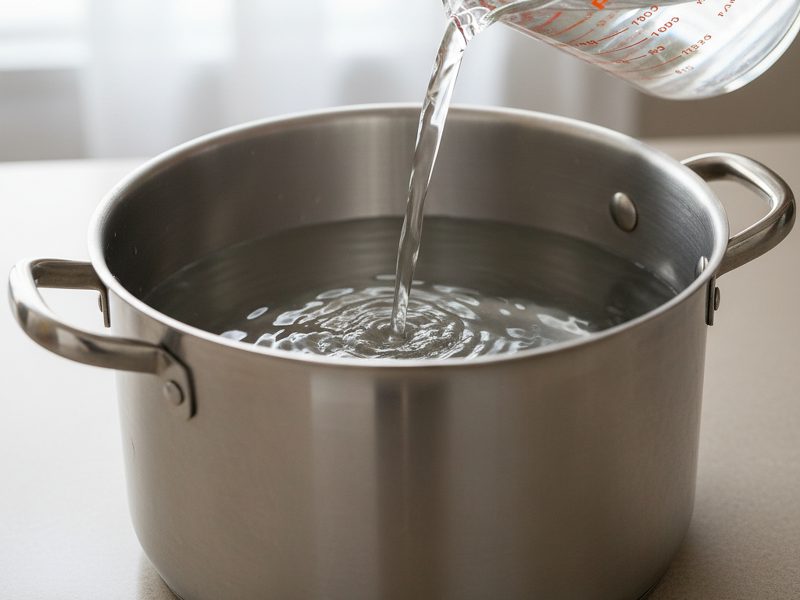
- Step 1. Fill a large large pot with water: about 4 qt per 1 lb pasta (2 to 3 qt for 8 oz). Bring to a rolling boil.
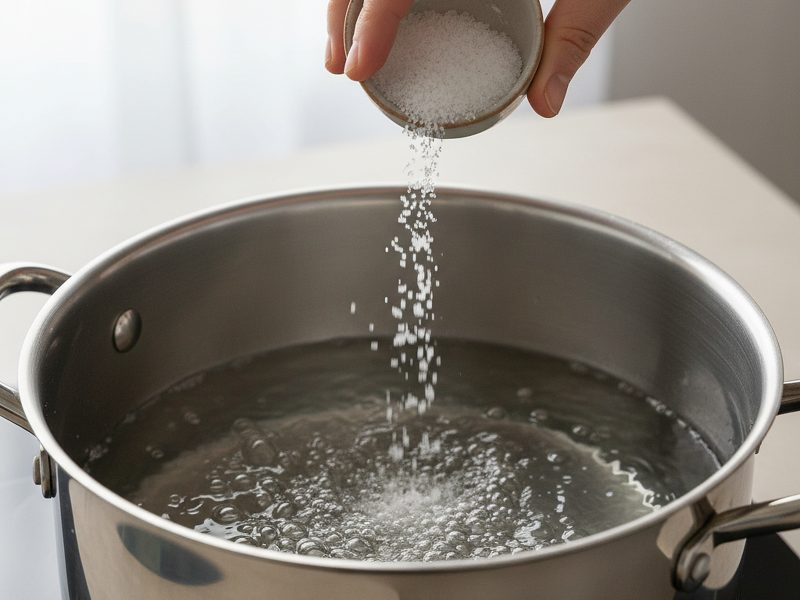
- Step 2. Salt the water well (about 1 to 1½ tbsp kosher salt per 4 qt).
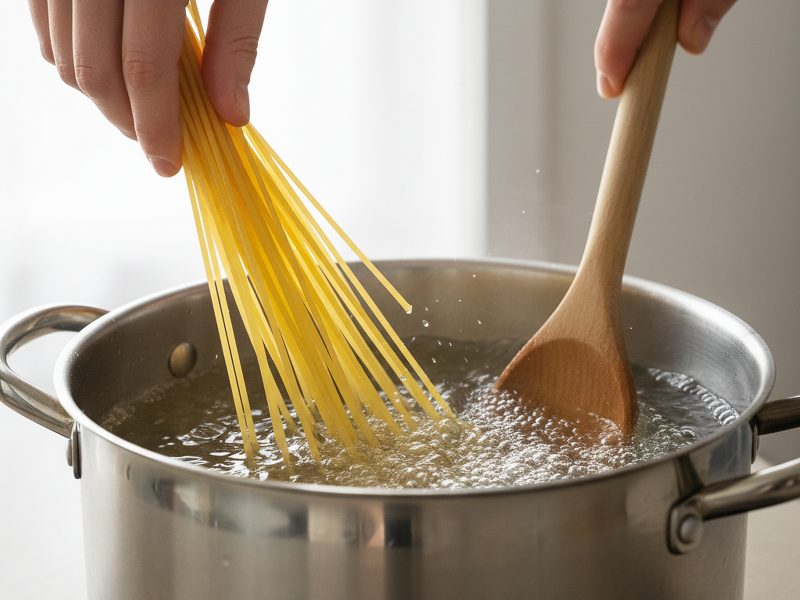
- Step 3. Add the pasta. Stir for 15 to 30 seconds to separate pieces.
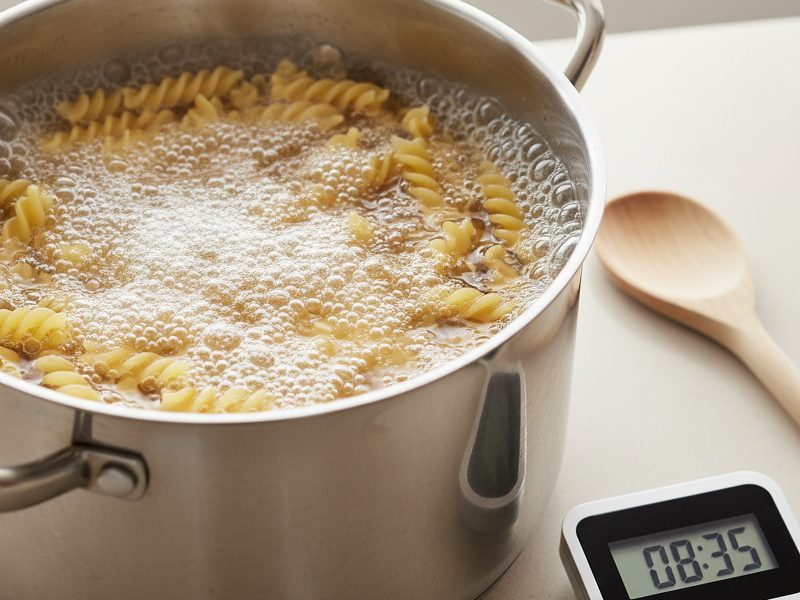
- Step 4. Boil uncovered at a steady rolling boil. Set a timer to the package time minus 1 to 2 minutes.
- Step 5. Taste a piece. When just tender with a light bite, scoop out ½ cup cooking water.
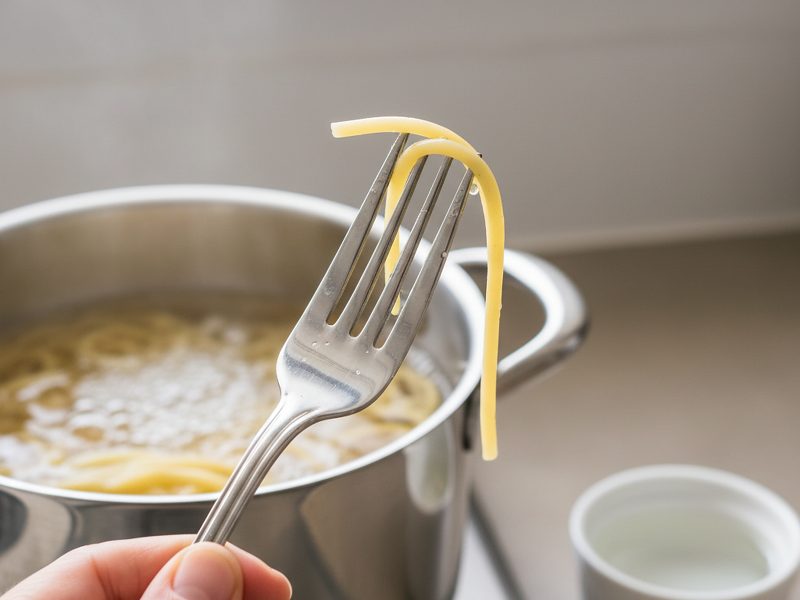
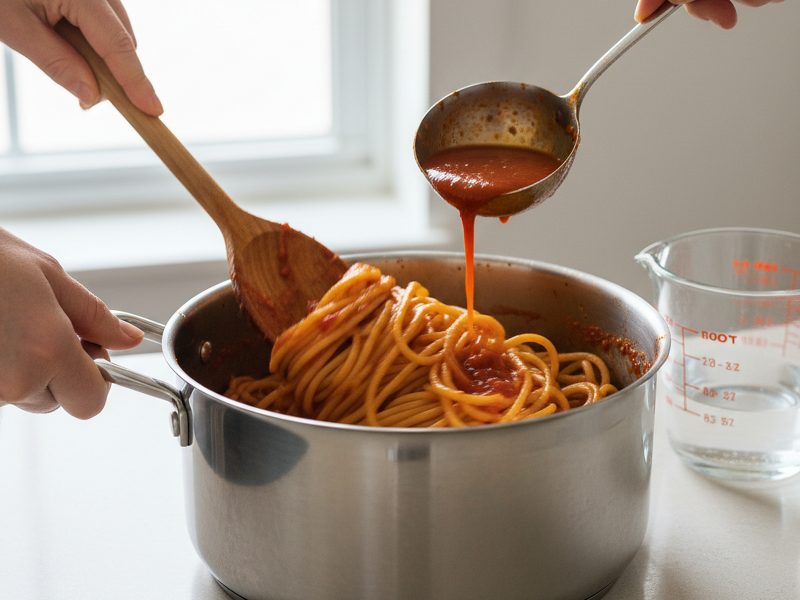
- Step 6. Drain in a colander. Toss with sauce right away, using some cooking water if needed.


How you know it worked
- Water is at a rolling boil: big bubbles breaking the surface steadily.
- Pasta is al dente: tender with a thin, firm bite and no chalky core.
- Water looks starchy; a splash helps sauce cling.
- Salted water tastes pleasantly like the sea.
Troubleshooting
Common mistakes when you boil pasta
| What goes wrong | Fix |
|---|---|
| Adding pasta before the water boils. | Wait for a rolling boil. This prevents gummy, uneven cooking. |
| Not enough water, so pasta clumps and cooks unevenly. | Use at least 4 qt per 1 lb pasta (2 to 3 qt for 8 oz). Stir early. |
| Under-salted water, so pasta tastes flat. | Add 1 to 1½ tbsp kosher salt per 4 qt water. You should taste the salt. |
| Overcooking past al dente. | Start tasting 2 minutes before the package time. Pull when just tender; it will keep softening after draining. |
| Rinsing pasta (when serving with sauce). | Do not rinse. Drain and sauce immediately so starch helps the sauce cling. Rinse only for cold pasta salads. |
| For baked dishes, pasta turns mushy in the oven. | Cook pasta for 2 to 3 minutes less than the package directions for al dente. It will finish cooking in the oven. |
Tools
What you need
Boil Pasta recipes
Recipes that use this technique
1 recipe

FAQ
Common questions
How long should I boil pasta for?
Use the package time as a starting point. Set a timer for 1 to 2 minutes less, then taste. Most dried pasta is al dente at 8 to 12 minutes; thinner shapes cook faster, thicker slower. Pull when just tender with a light bite.
What are the 7 steps to boiling pasta?
1) Boil plenty of water. 2) Salt it well. 3) Add pasta. 4) Stir in the first 30 seconds. 5) Boil uncovered at a steady rolling boil. 6) Taste for al dente and reserve some cooking water. 7) Drain and sauce immediately.
Do I boil pasta on high or low heat?
High heat to reach a boil, then medium-high to maintain a steady rolling boil without boiling over.
Do you put pasta in before the water boils?
No. Add pasta only to water that’s at a rolling boil for even cooking and less sticking.
What is the correct way to boil pasta?
Boil lots of salted water, add pasta, stir early, keep a steady rolling boil, taste for al dente, reserve some starchy water, then drain and sauce right away.
How long should water boil before putting in pasta?
As soon as it reaches a rolling boil, you can add the pasta. There’s no need to boil it for extra time first.
Why do we boil water for pasta?
Boiling keeps the water hot and moving, cooks pasta evenly, prevents sticking, and helps starch gel properly. It also lets you time al dente accurately.
Does pasta go down in calories when cooked?
No. The total calories don’t change. Cooked pasta holds water, so a cup of cooked pasta has fewer calories than a cup of dry pasta, but the same dry amount has the same calories before and after cooking.
What is considered a boil when cooking?
A rolling boil: large bubbles rise and burst continuously across the surface, with visible steam.
How much water for 2 cups of dry pasta?
2 cups of most dry short pasta is about 8 oz. Use 2 to 3 qt of water, salted with about 2 to 3 tsp kosher salt.
How do Italians boil their pasta?
They use plenty of well-salted water, cook to al dente, save some pasta water, then finish the pasta in the sauce for 1 to 2 minutes so it absorbs flavor.
Is 1 cup of dry pasta enough for 2 people?
Usually no, as 1 cup of dry pasta is a single serving. One cup of most short pasta shapes, like penne or macaroni, weighs about 4 ounces. A standard serving is 2 to 4 ounces of dry pasta per person. For two people, use 4 to 8 ounces total (about 1 to 2 cups of short pasta).