Equipment · Utensils
Wooden Spoon
A hardwood stirring spoon that won’t scratch pans and stays cool in your hand. Use a 12-inch wooden spoon for most pots. Hand-wash, dry fast, and oil it so it doesn’t crack.
olive wood/teak/acacia
bamboo
Wooden Spoon recipes
What to make with a wooden spoon
1 recipe

Size
Which size wooden spoon do you need?
| Size | Cooking surface | Fits | Good for |
|---|---|---|---|
| 10-inch | Head about 2 inches wide | small saucepans and skillets up to 2 quarts | 1 serving |
| 12-inch | Head about 2¼ inches wide | everyday pots and pans, 3 to 6 quarts | 4 servings |
| 14-inch | Head about 2½ inches wide | stockpots 6 quarts and up; keeps hand farther from heat | Great for stirring big batches or deep pots. |
Materials
Beech or maple (hardwood), olive wood/teak/acacia or bamboo?
| Compare | Beech or maple (hardwood) | Olive wood/teak/acacia | Bamboo |
|---|---|---|---|
| Heat | Handles high stovetop heat; stays cool to the touch | Handles high heat; dense and durable | Handles stovetop heat; lighter and stiffer |
| Acidic food | Yes; won’t react with acidic foods | Yes | Yes |
| Care | Hand-wash, dry, and oil occasionally. | Hand-wash; dry and oil to prevent cracks. | Hand-wash; dry right away; oil if it feels dry. |
| Best for | Daily stirring, scraping fond without scratching | Heavier, long-lasting spoons | Budget-friendly, light spoons |
Care
How to clean and care for a wooden spoon
Wood
- Hand-wash in hot, soapy water right after use; do not soak.
- Dry immediately with a towel; stand upright to finish air-drying.
- Oil monthly or when dry with food-grade mineral oil or board cream; wipe off excess.
- For odors or stains: scrub with a baking-soda paste or rub with half a lemon and salt, then rinse and dry.
- If the surface feels fuzzy, sand lightly with fine sandpaper, wipe clean, and re‑oil.
- Replace if it cracks, splits, scorches deeply, or stays sticky after cleaning.
Bamboo
- Wash by hand in warm, soapy water, then dry right away.
- Oil if it looks dull or rough to prevent splinters.
- Do not put in the dishwasher or leave in the pot while simmering.
Techniques
Get the most out of your wooden spoon
Each technique has one short video. The same clip plays inside every recipe step that uses it.
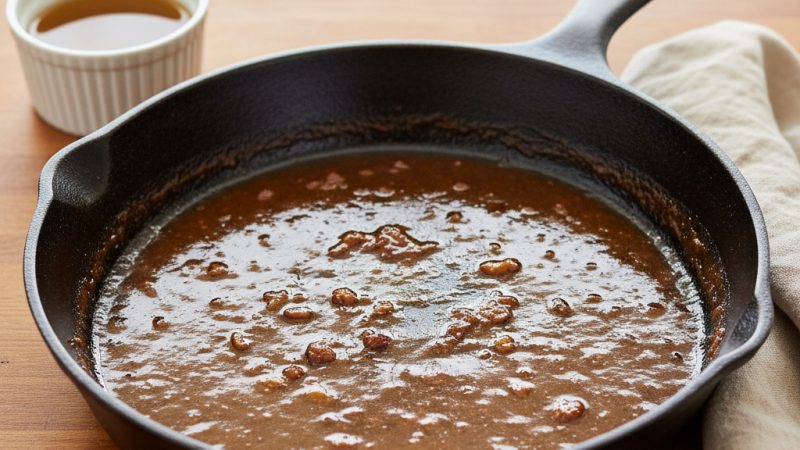
No wooden spoon?
What to use instead of a wooden spoon
| Instead | What changes |
|---|---|
| Silicone spoon or spatula | Heat-safe and gentle on nonstick; more flexible for scraping bowls. |
| Stainless steel spoon | Good for high heat and deglazing; can scratch nonstick and heat the handle. |
| Wooden turner (flat edge) | Better for scraping the bottom and corners of pans. |
| Slotted spoon (stainless or silicone) | Drains liquids; not as good for sauces. |
Buying
What to look for
- Hardwood (beech, maple, olive, teak, acacia) or quality bamboo
- One-piece construction (no glued head) or firmly pinned head
- Smooth, sanded finish with no varnish on the working end
- Comfortable handle; 12-inch length for everyday, 14-inch for deep pots
- Flat edge or corner spoon shape scrapes pan bottoms well
- Food-safe oil finish; no cracks or rough grain
Affiliate links are always labeled. RecipeTag may earn a commission, which never changes what we recommend.
FAQ
Wooden Spoon questions
What is the use of a spoon?
In cooking, you use a spoon to stir, mix, scrape the bottom of a pan, and serve. A wooden spoon does this without scratching cookware or heating up in your hand.
What do you use a wooden spoon for in cooking?
Stir sauces and soups, scrape browned bits when you deglaze a pan, cream butter and sugar, and fold batters. Its blunt edge is gentle on nonstick and enamel.
Can wooden spoons go in the dishwasher?
No. The heat and long soak can crack, warp, or raise the grain. Hand-wash, dry right away, and oil occasionally.
How often should you throw out wooden spoons?
Replace them when they crack, split, stay rough after light sanding, smell bad after cleaning, or have deep scorch marks. Many last years with hand-washing and oiling.
Why do chefs prefer wooden spoons?
They don’t scratch pans, don’t react with acidic foods, stay cool to the touch, and feel sturdy for stirring thick foods. You can also taste and listen for scraping without metal-on-metal noise.
What are the downsides of using a wooden spoon?
You must hand-wash and oil it. It can stain or hold odors if neglected, and it can scorch if left resting in a hot pan. It’s not ideal for very fine scraping in tight corners unless the edge is flat.
What is the best wood for a wooden spoon?
Beech and maple are the best all-around woods for spoons. They are durable, inexpensive, and won't flavor your food. Olive wood and teak are beautiful, dense, and long-lasting, but they cost more.
Related


