Technique
How to brown sausage
Cook sausage in a hot pan until well browned and fully cooked. Don’t crowd the pan. Press it into one layer and let it sit until the underside browns before you stir.

Step by step
How to brown sausage in a skillet
- Step 1. Heat a heavy 12-inch skillet over medium-high until hot.
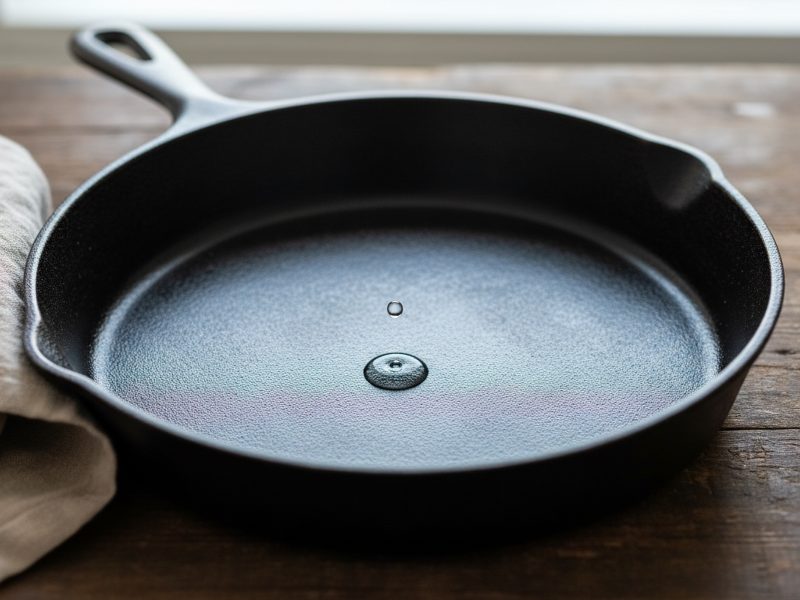
- Step 2. Add sausage. If it’s very lean or the pan is dry, add 1 tsp oil.
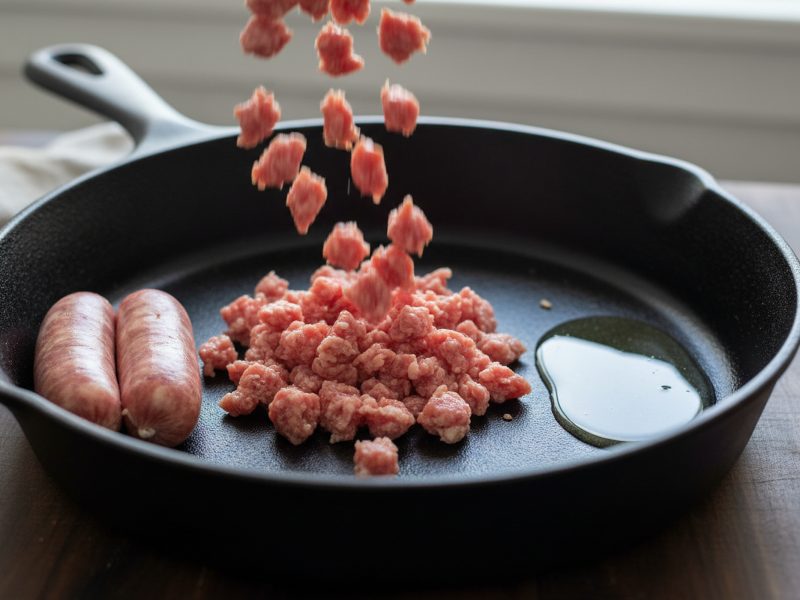
- Step 3. For crumbles: break it up and press into one even layer. For links: keep whole.
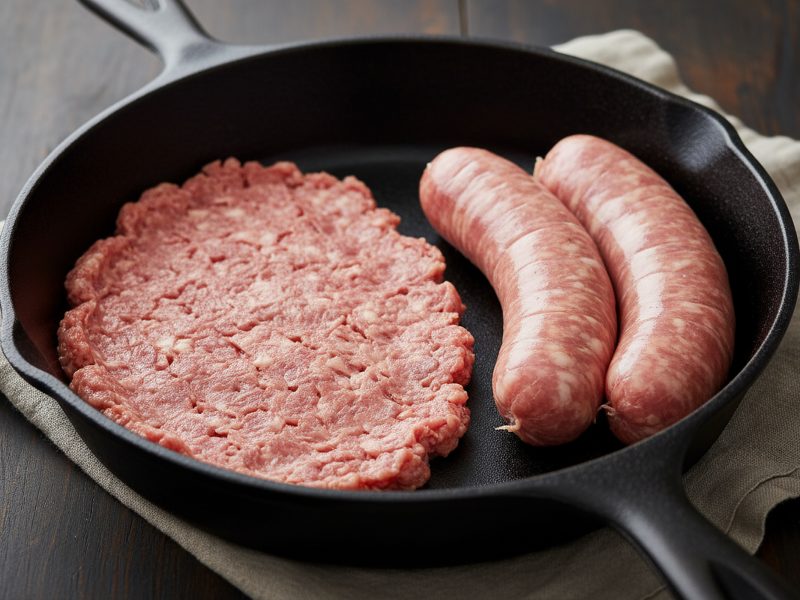
- Step 4. Cook without moving until the bottom browns, 2 to 4 minutes.
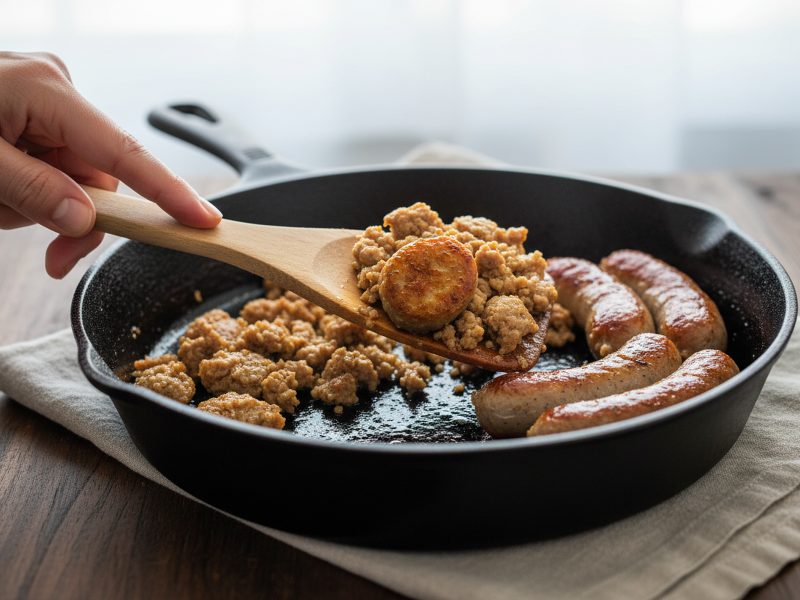
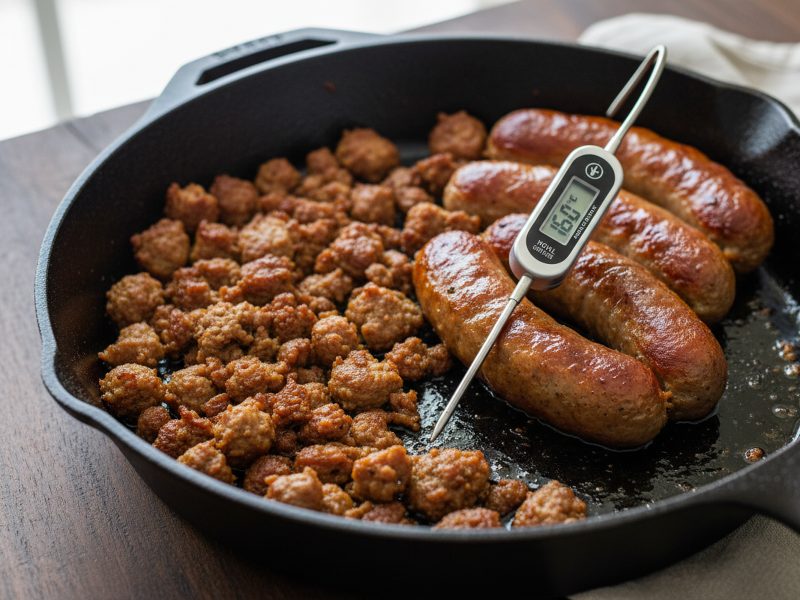
- Step 5. Flip or stir and keep cooking until browned all over and cooked to 160°F (71°C) for pork and beef, or 165°F (74°C) for poultry. Drain extra fat if needed.


How you know it worked
- You hear steady sizzling, not steaming.
- Brown crust forms on the sausage and browned bits on the pan.
- Fat renders into the pan.
- An instant-read thermometer reads 160°F (71°C) for pork or beef sausage, or 165°F (74°C) for poultry sausage.
Troubleshooting
Common mistakes when you brown sausage
| What goes wrong | Fix |
|---|---|
| Crowding the pan steams the sausage and it turns gray. | Cook in batches. Leave space so moisture can escape. |
| Stirring too often prevents browning. | Let it sit in one layer until the underside browns before you move it. |
| High heat burns the outside while the center stays undercooked. | Lower to medium. For links, add 2 tbsp water and cover to finish, then uncover to re-crisp. |
| Piercing links makes them dry and greasy in the pan. | Don’t poke holes. Turn with tongs and cook to 160°F (71°C) for pork or beef, or 165°F (74°C) for poultry. |
| Adding a lot of oil makes the dish greasy. | Sausage has fat. Add only a teaspoon if the pan is dry; spoon off excess fat after browning. |
Tools
What you need
Brown Sausage recipes
Recipes that use this technique
1 recipe

FAQ
Common questions
Do you use oil to brown sausage?
Usually no. Sausage renders its own fat. Start in a hot pan. If it’s very lean or you’re using stainless with no fat, add about 1 teaspoon of oil so it doesn’t stick.
Should you brown sausage before putting in sauce?
Yes. Browning builds flavor and renders excess fat so your sauce isn’t greasy. Then simmer the browned sausage in the sauce.
Can I put raw sausage in sauce to cook?
You can, if you simmer until the sausage reaches a safe internal temperature: 160°F (71°C) for pork or beef, or 165°F (74°C) for poultry. Browning first tastes better and keeps the sauce less greasy.
What should the inside of my sausage look like?
Fully cooked sausage is no longer pink inside and the juices run clear, but color can mislead. Always use an instant-read thermometer. Cook pork or beef sausage to 160°F (71°C) and poultry sausage to 165°F (74°C).
How long is breakfast sausage good for in the fridge?
Per USDA FoodKeeper: raw breakfast sausage keeps 1 to 2 days in the fridge; cooked sausage 3 to 4 days. Reheat leftovers to 165°F (74°C) and refrigerate within 2 hours.