Technique
How to chicken doneness
Knowing when chicken is safely cooked: 165°F (74°C) in the thickest part, checked with an instant‑read thermometer. Insert the thermometer into the thickest part without touching bone. The temperature should reach a steady 165°F (74°C).

Step by step
How to check chicken doneness
- Step 1. Place the chicken on a stable surface or hold with tongs.
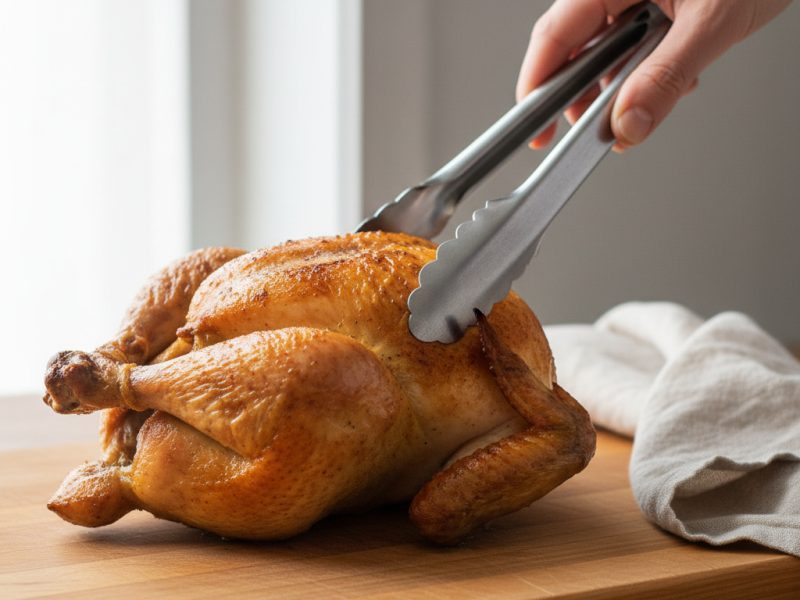
- Step 2. Insert an instant‑read thermometer into the thickest part, avoiding bone.
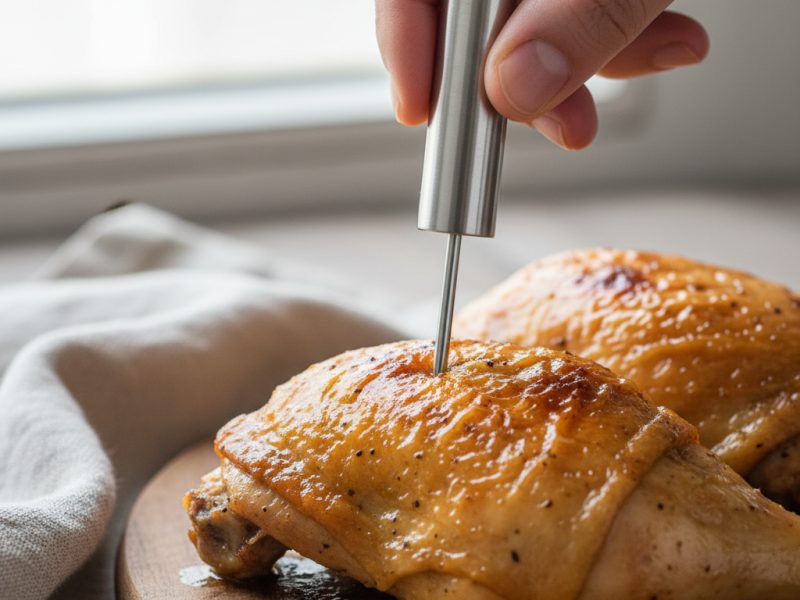
- Step 3. Wait for the reading to steady. Look for 165°F (74°C).
- Step 4. If under 165°F (74°C), return to heat and recheck in a few minutes. Let rest for a few minutes before slicing.
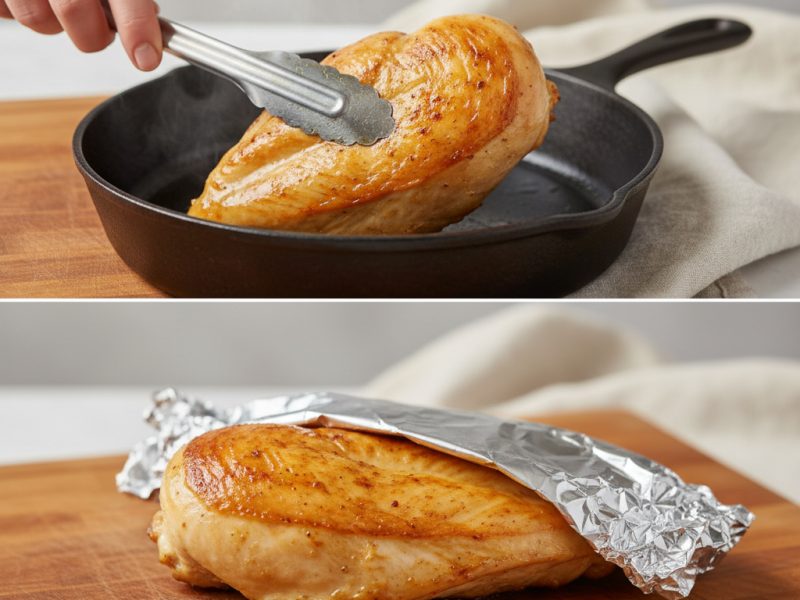


How you know it worked
- Thermometer reads 165°F (74°C) in the thickest part.
- Flesh looks opaque and firm, not glossy or jiggly.
- Juices run mostly clear (a guide only - use the thermometer to be sure).
Troubleshooting
Common mistakes when you chicken doneness
| What goes wrong | Fix |
|---|---|
| Relying on color or clear juices alone. | Use a thermometer. Color can vary and is not a safety check. |
| Touching bone with the thermometer gives a false high reading. | Pull the tip back slightly until you’re in the center of the meat. |
| Testing a thin cutlet from the pan surface side only. | Insert from the side into the center for a true middle reading. |
| Cutting chicken too soon and losing juices. | Let it rest a few minutes off heat so juices settle. |
| Stopping at 160°F and serving right away. | Continue cooking to 165°F (74°C). If you plan for carryover, verify it reaches 165°F before serving. |
Tools
What you need
Chicken Doneness recipes
Recipes that use this technique
1 recipe

FAQ
Common questions
What is the 90/10 rule for chicken?
There isn’t a standard “90/10 rule” for chicken doneness. For safety, go by temperature: cook chicken to 165°F (74°C) in the thickest part.
Is chicken done at 165 or 180?
Chicken is safely done at 165°F (74°C) per USDA. Some cooks take dark meat higher for texture, but safety is reached at 165°F.
Can I pull chicken off at 145?
No for conventional cooking. Poultry should reach 165°F (74°C). Time‑and‑temperature methods like sous vide are different and require specific, verified tables.
What are the signs of undercooked chicken?
Temperature below 165°F (74°C), flesh that’s glossy or translucent, rubbery texture, and juices that look red or very pink. When in doubt, keep cooking and recheck.
Can chicken be undercooked but not pink?
Yes. Color is unreliable. Chicken can look white and still be below 165°F (74°C). Use a thermometer to be sure.
I accidentally ate undercooked chicken. What should I do?
Monitor for symptoms such as nausea, vomiting, diarrhea, or fever. Stay hydrated. If symptoms develop or you’re concerned, contact a healthcare professional.
How to check chicken for doneness without a meat thermometer?
Use the best cues you have: cut into the thickest part - meat should be opaque and firm, juices mostly clear. These are guides only; a thermometer is the reliable method.
How many degrees does chicken raise while resting?
Carryover heat can raise the temperature by about 3°F to 10°F depending on size and cooking method. Thin cutlets may have little to no carryover.
How to tell the difference between undercooked and overcooked chicken?
Undercooked: below 165°F, glossy, soft, slightly translucent. Overcooked: very firm or stringy, dry, often well above 165°F - especially in breast meat.