Technique
How to make roux
Cooking equal parts fat and flour to make a base that thickens sauces and soups. Use equal parts by weight. Stir constantly. Whisk in warm liquid slowly to avoid lumps.

Step by step
How to make a roux
- Step 1. Melt the fat over medium heat.
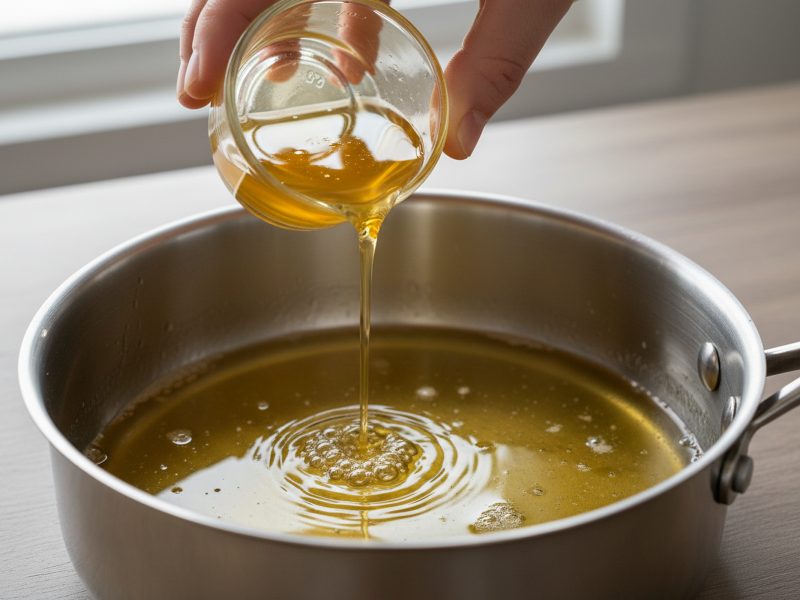
- Step 2. Whisk in the flour until smooth.
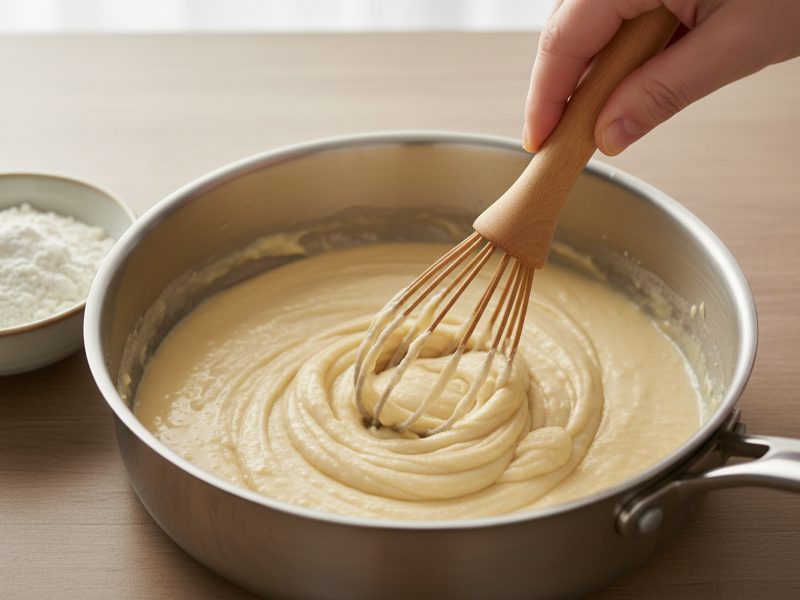
- Step 3. Cook, stirring, to the color you want: white, blond, brown, or dark.
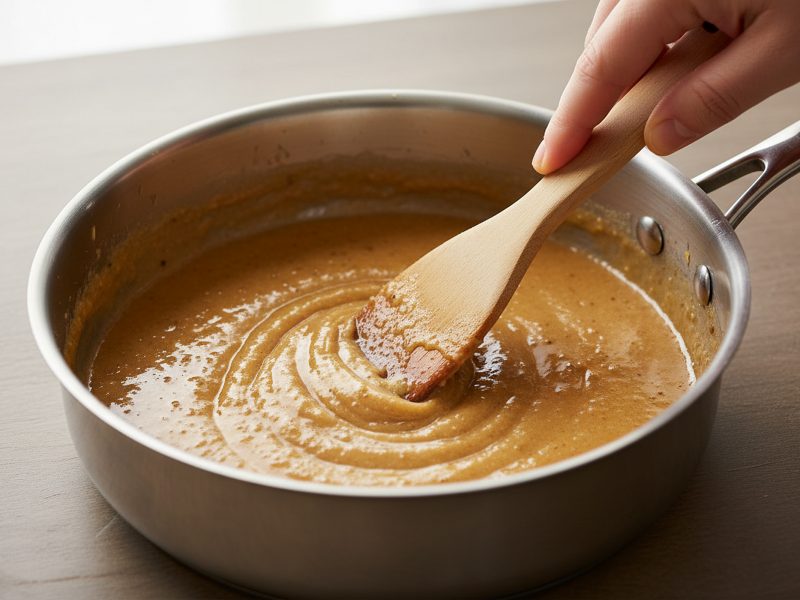
- Step 4. Start your sauce by slowly whisking in warm liquid off the heat.
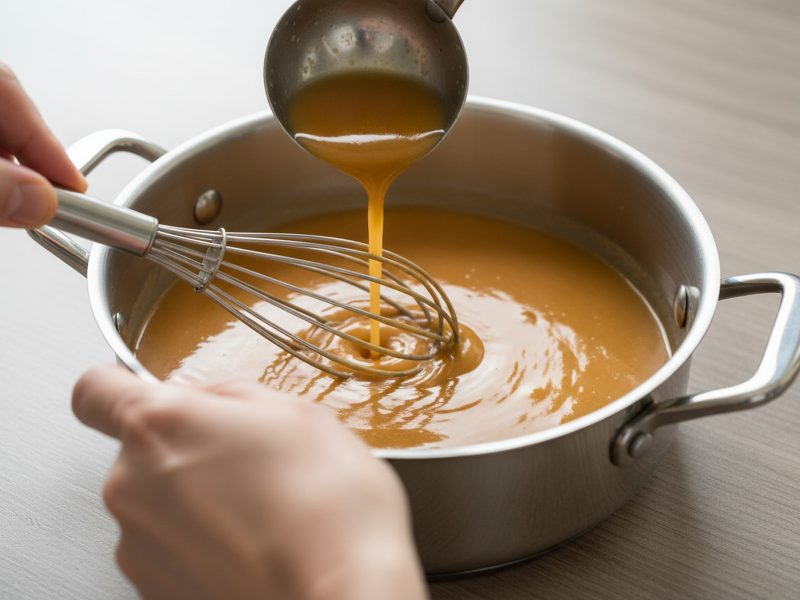


How you know it worked
- Bubbles are steady and the paste looks smooth, not greasy.
- White roux smells like cooked flour; blond smells lightly nutty; brown to dark smells toasty.
- Color is even with no dark specks (not burnt).
- When you add liquid, it thickens smoothly without lumps.
Troubleshooting
Common mistakes when you make roux
| What goes wrong | Fix |
|---|---|
| The roux burns (black specks, bitter smell). | Stop. Discard and start over on medium heat. Stir constantly and use a heavy pan. |
| Lumps form when you add liquid. | Warm the liquid first. Remove the pan from heat, add liquid a little at a time while whisking hard. |
| Greasy, separated roux. | Use equal parts fat and flour by weight. If oily, whisk in a bit more flour and cook to smooth. |
| Raw flour taste in the sauce. | Cook the roux at least 2 to 3 minutes for white, longer for blond/brown, before adding liquid. |
Tools
What you need
Make Roux recipes
Recipes that use this technique
1 recipe

FAQ
Common questions
What is the basic formula for roux?
Equal parts fat and flour by weight. For home cooking, use about 2 tbsp butter and 2 tbsp flour per 1 cup of liquid for medium thickness.
Do you really need a roux for mac and cheese?
If you want a smooth, stable cheese sauce that reheats well, yes - a roux-based béchamel helps prevent graininess and grease-out. You can skip it with melting cheeses and starch from pasta water, but the sauce may be thinner or break.
Is it better to use oil or butter when making a roux?
Butter tastes great and works for white and blond roux. For very dark roux (Cajun/Creole), use oil with a high smoke point (vegetable, peanut) to avoid burning. Clarified butter also helps reduce scorching.
Should I add warm or cold milk to roux?
Warm. Heating milk or stock helps the roux disperse and reduces lumps. Add gradually while whisking, off heat or over low heat.
What is a substitute for roux?
Use a slurry (1 tbsp cornstarch per 1 cup liquid), arrowroot, or beurre manié (equal parts soft butter and flour kneaded, then whisked in at the end). These thicken without cooking flour first.
What's the difference between a roux and a béchamel?
A roux is the thickener, made from equal parts fat and flour. A béchamel is a finished sauce made by whisking milk into a white roux.
What are the different colors of roux used for?
White and blond roux have the most thickening power and a neutral flavor, used for cream sauces like béchamel and gravies. Brown and dark brown roux have a nutty, toasted flavor and less thickening power, used for rich dishes like gumbo and étouffée.