Technique
How to make slurry
Mix starch with cold liquid, then whisk it into hot soup, sauce, or gravy to thicken. Use cold water or broth. Stir the slurry right before you add it. Simmer 1 minute to set the thickness.

Step by step
How to Make a Slurry
How to Make a Slurry · 0:06
- Step 1. Add starch to a small bowl (cornstarch 1:1 with cold water; flour 1:2 with cold water).
- Step 2. Whisk until smooth with no dry spots.
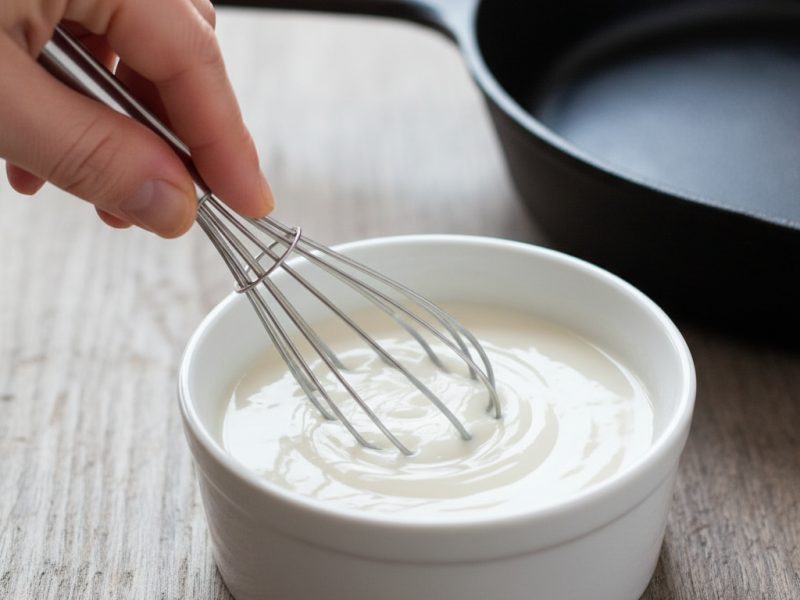
- Step 3. Bring the soup, sauce, or gravy to a simmer.
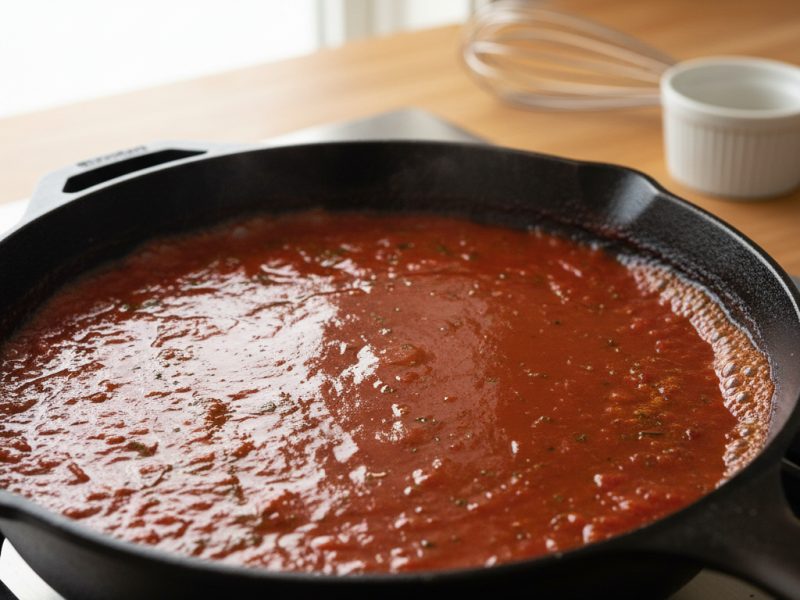
- Step 4. Whisk the slurry again, then drizzle it in while whisking the pot.
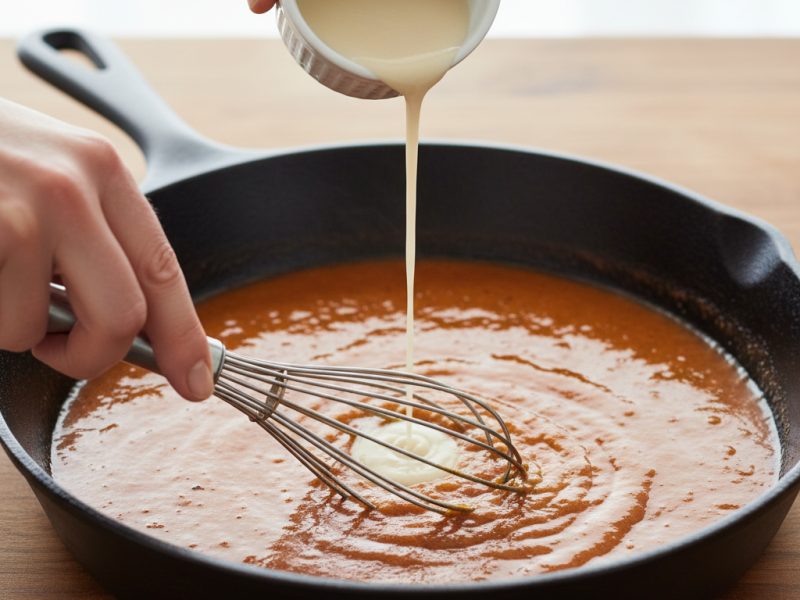
- Step 5. Simmer 1 to 2 minutes until thickened and glossy (flour: 3 to 5 minutes to cook off raw taste).
- Step 6. Adjust: add more slurry for thicker, or a splash of liquid to thin.
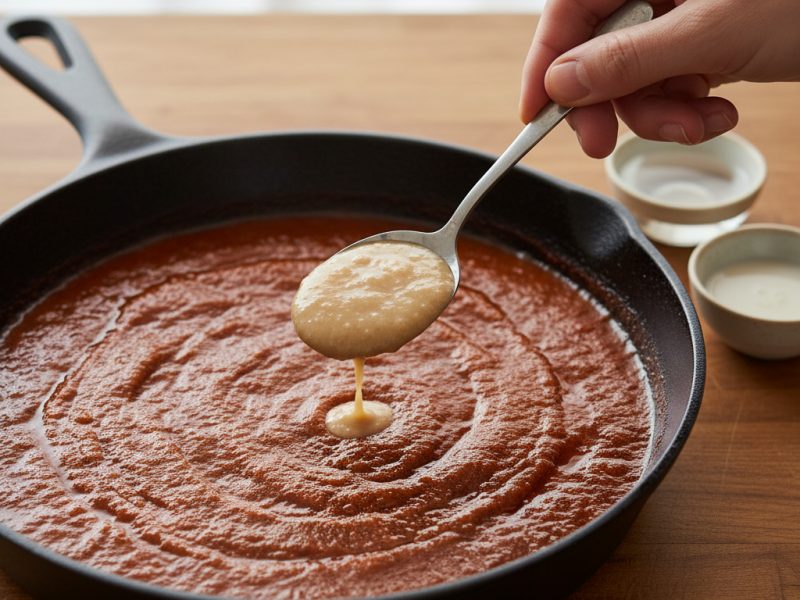


How you know it worked
- Slurry is silky with no lumps.
- The pot returns to a simmer and thickens within 1 to 2 minutes.
- Liquid coats the back of a spoon and leaves a clean line when you swipe a finger.
Troubleshooting
Common mistakes when you make slurry
| What goes wrong | Fix |
|---|---|
| You mix starch with hot liquid and it clumps. | Always make the slurry with cold water or cold broth, then add it to a simmering pot while whisking. |
| The sauce stays thin after adding cornstarch. | Bring it to a full simmer for at least 1 minute; starch needs heat to gel. If still thin, add a little more slurry. |
| Flour slurry tastes raw. | Simmer 3 to 5 minutes after adding flour slurry, whisking, until the flour taste is gone. |
| The sauce turns gluey or dull. | Use cornstarch for a clear, glossy finish. Add it at the end and don’t boil hard for long; prolonged boiling or high acid can thin it. |
Tools
What you need
Make Slurry recipes
Recipes that use this technique
1 recipe

FAQ
Common questions
How do I make a slurry?
Whisk starch into cold liquid, then add to a simmering pot while whisking. Use 1 tbsp cornstarch mixed with 1 tbsp cold water for each cup of liquid you want to thicken. Simmer 1 minute. For flour, mix 2 tbsp flour with 4 tbsp cold water per cup and simmer 3 to 5 minutes.
Can flour and water make a slurry?
Yes. Mix flour with cold water (about 1 part flour to 2 parts water by volume) until smooth, then whisk it into a simmering liquid and cook 3 to 5 minutes to remove the raw taste.
Is a cornstarch slurry 1 to 1?
Yes, by volume. Mix equal parts cornstarch and cold water (for example, 1 tbsp + 1 tbsp), then add to a simmering liquid and cook about 1 minute. Many cooks start with 1 tbsp slurry per cup of liquid and adjust.
Is a slurry better with flour or cornstarch?
Use cornstarch for quick thickening, a clear glossy sauce, and when you add it near the end. Use flour for opaque, velvety gravy or sauces that will simmer longer. Cornstarch thickens about twice as much as flour by volume.
How is slurry made?
Combine a starch (like cornstarch or flour) with cold water or broth and whisk until smooth. Add it to a simmering liquid while whisking, then cook briefly until thickened.
What other starches can I use for a slurry?
You can also use arrowroot, potato starch, or tapioca starch. Use arrowroot as a direct substitute for cornstarch; it creates a clear sauce and freezes well. Potato starch thickens at a lower temperature, so add it at the end of cooking. Tapioca starch is good for glossy pie fillings but can be stringy in sauces.