Technique
How to rest meat
Let cooked meat sit off the heat before slicing so juices thicken and redistribute. Move it to a warm plate, tent loosely with foil, and wait 5–10 minutes for steaks and chops, 15–40 minutes for roasts and whole birds.

Step by step
How to Rest Meat
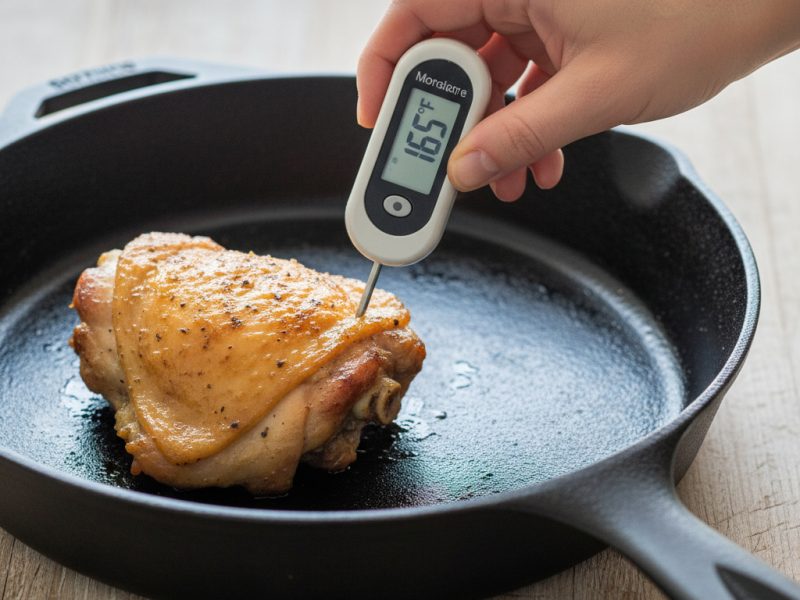
- Step 1. Check doneness with an instant-read thermometer.
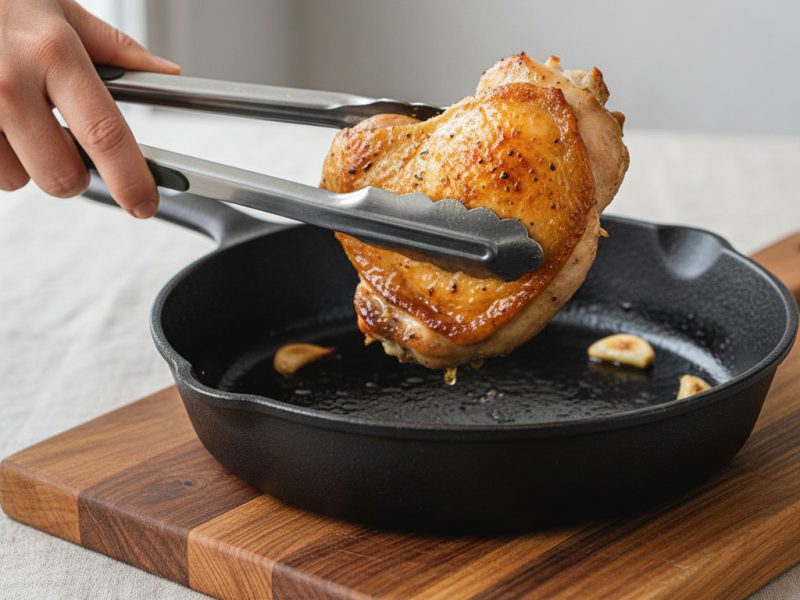
- Step 2. Transfer the meat to a warm plate or board.
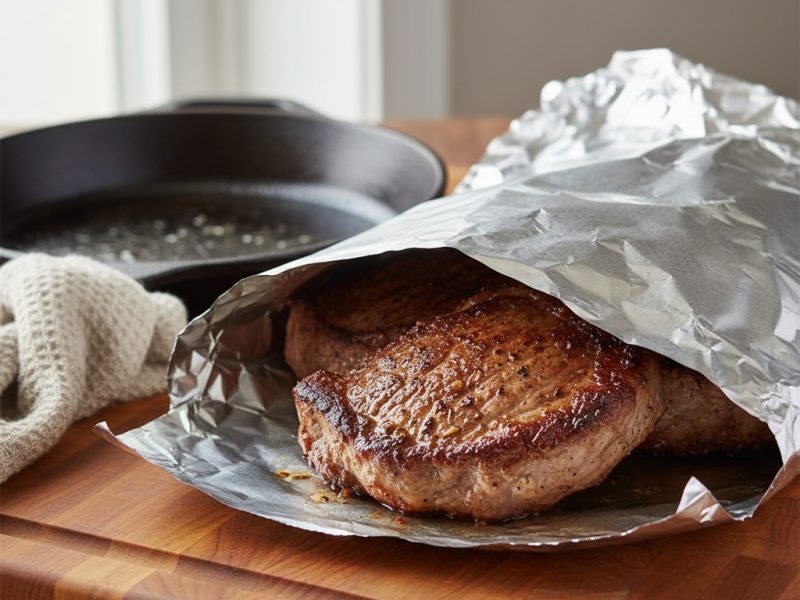
- Step 3. Tent loosely with foil; don’t seal tight.
- Step 4. Let the meat rest. The internal temperature will rise a few degrees from carryover cooking before it starts to fall.
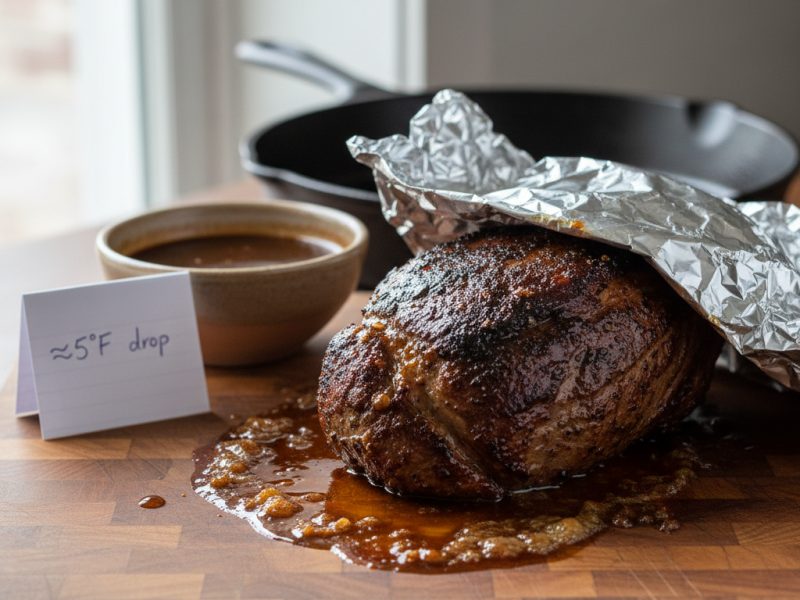
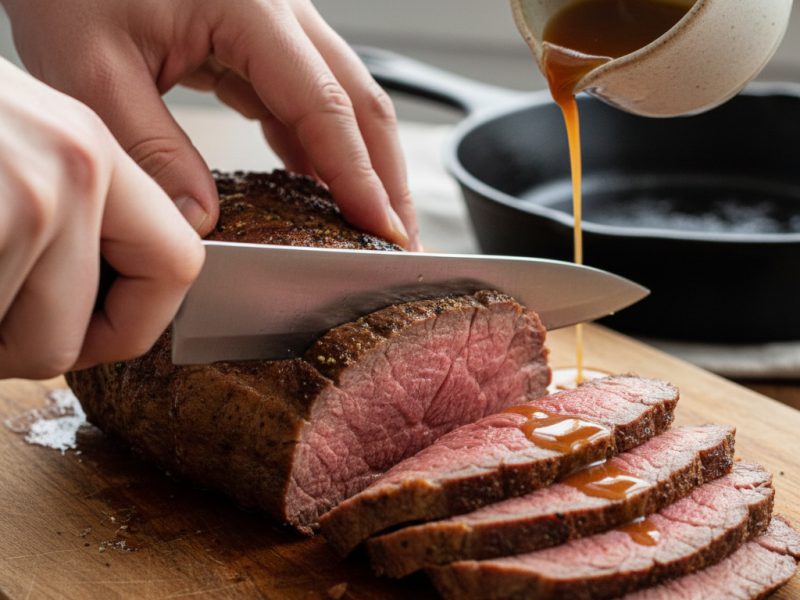
- Step 5. Slice across the grain and serve; pour any board juices over the meat.


How you know it worked
- Cut surface stays moist instead of bleeding out.
- Board juices collect but don’t gush.
- The color looks more uniform from the center to the edge.
- Meat is easier to slice cleanly.
Troubleshooting
Common mistakes when you rest meat
| What goes wrong | Fix |
|---|---|
| Cutting too soon and losing a puddle of juice. | Wait: 5–10 minutes for steaks/chops; 15–20 minutes for small roasts; 20–40 minutes for large roasts or turkey breasts. |
| Wrapping tightly in foil and steaming the crust. | Tent loosely. Leave air gaps so the exterior stays crisp. |
| Resting so long the meat turns cool. | Use a warm plate and a loose foil tent. Follow the recommended resting times; for a steak, this is usually 5–10 minutes. |
| Forgetting the juices on the board. | Pour the collected juices back over the sliced meat or into the sauce. |
Tools
What you need
Rest Meat recipes
Recipes that use this technique
1 recipe

FAQ
Common questions
Why should I rest meat after cooking?
Resting allows the muscle fibers in the meat to relax and reabsorb juices. During cooking, intense heat causes the fibers to tighten and squeeze moisture toward the center of the cut. Giving the meat time to rest lets that moisture redistribute throughout, so less juice runs out when you slice. It also allows for carryover cooking, where the internal temperature continues to rise for a few minutes after being removed from the heat.
What is the best way to rest meat after cooking?
Move it off heat to a warm plate or board. Tent loosely with foil to reduce heat loss without steaming. Time it: 5 to 10 minutes for steaks, chops, and chicken breasts; 15 to 20 minutes for small roasts; 20 to 40 minutes for large roasts or turkey breasts. Slice across the grain and pour over the resting juices.
Can you let your steak rest too long?
Yes. After about 10 to 15 minutes for a steak, it starts to cool and the crust can soften. Aim for 5 to 10 minutes. Keep it on a warm plate with a loose foil tent if your kitchen is cool.
Can you half cook beef then finish later?
No. Never partially cook meat to refrigerate and finish later. This practice can keep the meat in the temperature 'danger zone' (40°F to 140°F), where harmful bacteria can multiply quickly. Always cook meat to a safe internal temperature in one continuous process.
What is the 3-3-3 rule for steaks?
It’s one of many informal timing methods for cooking steak. Because steak thickness, pan heat, and starting temperature all vary, it's not a reliable way to get consistent results. For accuracy, cook to a target internal temperature. The USDA recommends cooking beef steaks to a minimum of 145°F (63°C), which is medium doneness. Many cooks prefer other levels of doneness and pull meat from the heat earlier: 120 to 125°F for rare, 130 to 135°F for medium-rare, or 135 to 145°F for medium. The temperature will rise a few degrees as the steak rests.