Technique
How to simmering
Gently cooking food in liquid just below a boil, with small, steady bubbles (about 185°–205°F/85°–96°C). Keep it gentle. Adjust the burner until you see small bubbles and faint steam, not a rolling boil.

Step by step
How to Simmer
How to Simmer · 0:12
- Step 2. Watch for small bubbles forming at the edges and breaking the surface. Adjust heat to hold that gentle activity.
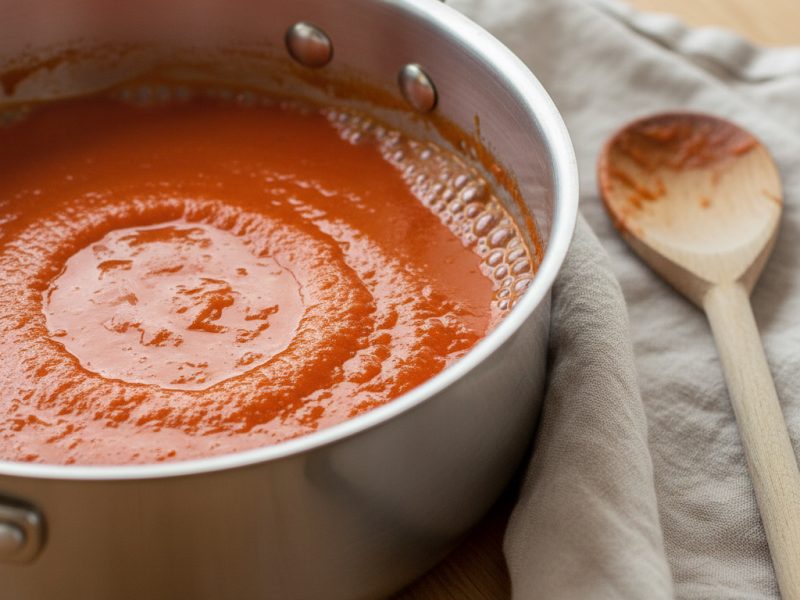
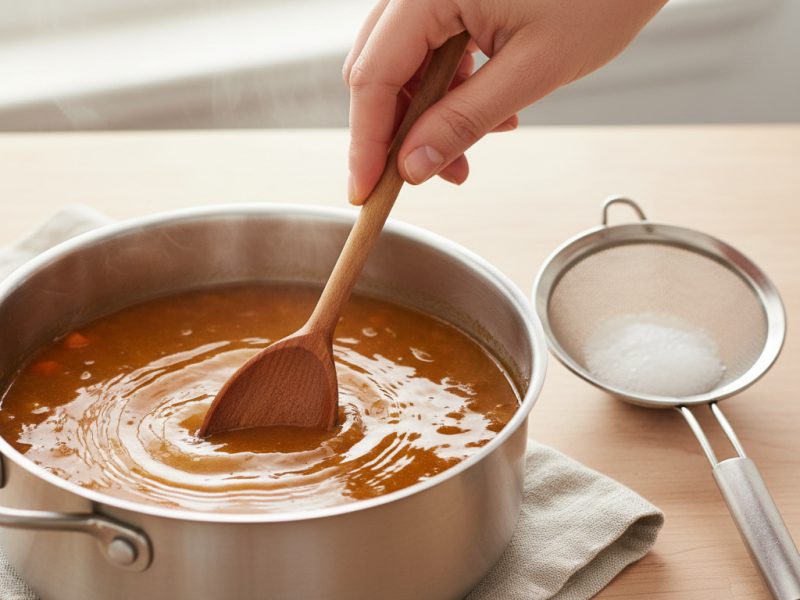
- Step 3. Add the food. Stir occasionally with a wooden spoon to prevent sticking, and skim foam with a skimmer if needed.
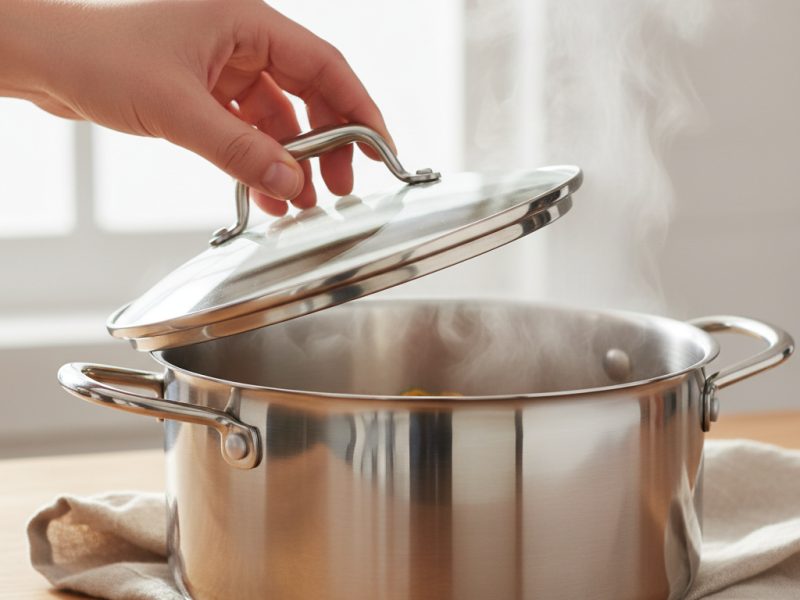
- Step 4. Partially cover with a lid to maintain a steady simmer without boiling over.
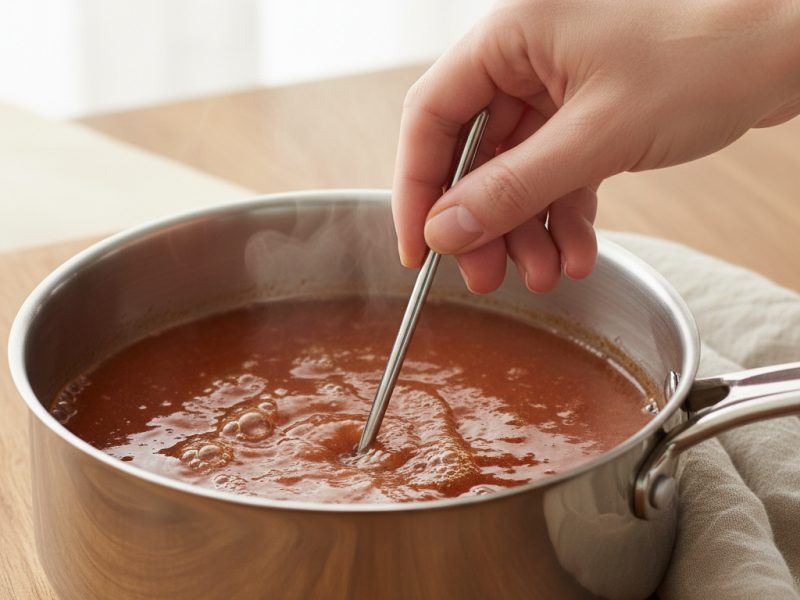
- Step 5. If you need a number, check the liquid with an instant-read thermometer: aim for 185°–205°F (85°–96°C).


How you know it worked
- Small bubbles break the surface every few seconds, mostly around the edges.
- Surface gently ripples; no vigorous splashing.
- Soft, steady sound; light steam rises.
- Thermometer in the liquid reads about 185°–205°F (85°–96°C).
Troubleshooting
Common mistakes when you simmering
| What goes wrong | Fix |
|---|---|
| The pot is boiling hard, not simmering. | Lower the heat and leave the lid ajar. Wait until the bubbles are small and steady. |
| Nothing is moving; the liquid is too cool. | Raise the heat gradually until small bubbles appear and hold. |
| You add cold ingredients and the simmer disappears. | Warm additions first when you can, or add in small amounts. Wait for the simmer to return before you start timing. |
| Food sticks to the bottom early on. | Stir during the first few minutes and after adding starchy items. Use enough liquid to keep food submerged. |
| The pot keeps boiling over with the lid on. | Use a larger pot and crack the lid, or reduce the heat to keep bubbles gentle. |
Tools
What you need
Simmering recipes
Recipes that use this technique
2 recipes


FAQ
Common questions
How do you simmer?
Heat the liquid over medium until you see small bubbles around the edges and light steam. Adjust the burner to keep those gentle bubbles. Add your food, stir occasionally, and cook until done.
What foods are best for simmering?
Simmering is ideal for soups, stews, broths, tomato sauce, beans, braises, grains (like rice or farro), and tougher cuts of meat that need time to get tender.
Can you freeze simmered dishes?
You can’t freeze a technique, but many simmered dishes freeze well. Cool within 2 hours, pack airtight, label, and freeze. Most soups and stews keep 2 to 3 months in the freezer.
How long do simmered dishes last in the fridge?
Most simmered soups and stews last 3 to 4 days in the fridge at 40°F or below. Refrigerate within 2 hours and reheat leftovers to 165°F (74°C).
What is the secret to a good simmer?
Heat control. Hold small, steady bubbles; keep the lid slightly ajar if needed; don’t let it roll to a boil. Skim foam and taste, seasoning as you go.
Can I make simmered dishes ahead of time?
You can make simmered dishes ahead. Many taste better the next day. Cool within 2 hours, refrigerate 3 to 4 days, and reheat to 165°F (74°C).