Equipment · Ovens
Oven
An enclosed appliance that bakes, roasts and broils with dry heat. Preheat 15 minutes. Verify 350°F with an oven thermometer; many ovens run off by 25°F or more.
gas (conventional)
convection (fan-assisted)
Oven recipes
What to cook in an oven
2 recipes


Size
Which size oven do you need?
| Size | Fits | Good for |
|---|---|---|
| Toaster oven / countertop oven | 1 quarter sheet (13×9 inches) or 9×9 pan; 1 to 2 chicken breasts | 1 to 2 servings |
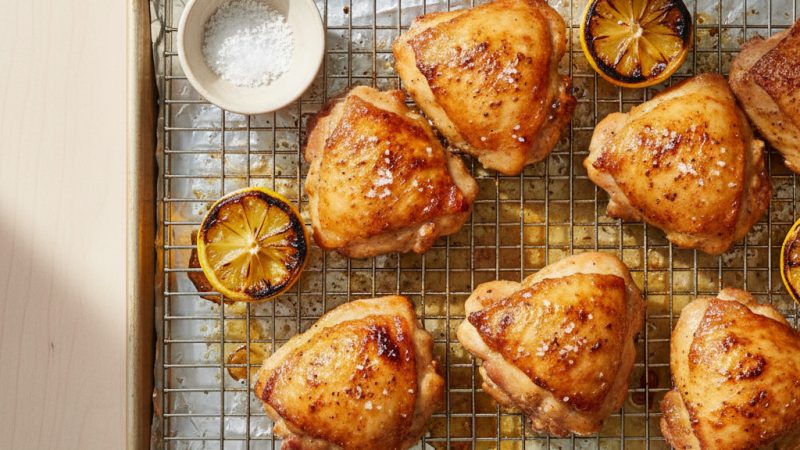
| 24-inch wall or apartment range | Fits a 13×9-inch pan or 4 to 6 chicken thighs. A half sheet (18×13 inches) is often too wide; check interior dimensions. | 2 to 4 servings |
| 27-inch wall oven | 1 to 2 half sheets; Dutch ovens up to 7 qt | 4 servings |
| 30-inch range or wall oven | 2 half sheets side by side (in many), 13×9 plus a loaf pan; large Dutch oven; turkey up to about 14 to 16 lb | 4 to 6 servings |
| Double oven (upper + lower) | Two independent cavities; each often holds a half sheet or 9×13 | Great for baking and roasting at different temps at once. |
Materials
Electric (conventional), gas (conventional), convection (fan-assisted) or countertop toaster/air-fry oven?
| Compare | Electric (conventional) | Gas (conventional) | Convection (fan-assisted) | Countertop toaster/air-fry oven |
|---|---|---|---|---|
| Searing | Broil: good | Broil: good to excellent | Browning: excellent | Air-fry/broil: good |
| Heat | Even; steady temps | Moist heat; may run hotter near flame | Fan circulates; faster, more even | Small cavity; preheats fast |
| Oven | Top broiler element in many ranges | Powerful bottom heat; broiler may be separate drawer | Fan can be true convection (with extra heater) or simple fan | Strong top elements; close to food |
| Care | Keep the bottom clean; spills can smoke at preheat. | Check door gasket; flame needs clear vents. | Keep fan area and vents clear. | Wipe crumb tray often; avoid foil near elements. |
| Best for | Baking, roasting, broiling fish and thin cuts | Roasting meats, pizza, broiling steaks (drawer broilers vary) | Roasting veggies, sheet-pan meals, multi-rack cookies | Small-batch bakes, toast, reheating, garlic confit and roasts |
Care
How to clean and care for an oven
General
- Preheat for 15 to 20 minutes for stable heat. Even if the preheat indicator turns off sooner, waiting ensures the oven walls are fully heated.
- Wipe spills after the oven cools; sugar and cheese bake on hard if left.
- Use an oven thermometer to check actual temperature.
- Do not line the oven floor with foil; it blocks airflow and can damage finishes.
- Keep door gasket clean so the seal stays tight.
Self clean
- Remove racks before a self-clean cycle unless the manual says they are self-clean safe.
- Ventilate well; the cycle runs very hot and can smoke.
- Use self-clean sparingly; heavy use can stress older components.
Non self clean
- For baked-on grime: make a paste of baking soda and water, spread, rest 30 to 60 minutes, then scrub and wipe.
- For greasy walls: use a degreasing oven cleaner as labeled; avoid spraying heating elements or the fan assembly.
- Soak racks in hot, soapy water (bathtub or a large bin) 2 hours; scrub with a non-scratch pad.
Techniques
Get the most out of your oven
Each technique has one short video. The same clip plays inside every recipe step that uses it.
No oven?
What to use instead of an oven
| Instead | What changes |
|---|---|
| Countertop toaster oven | Bake or roast small batches; reduce time because it heats faster and is closer to the food. |
| Gas or charcoal grill, lid closed (indirect heat) | Roast meats and veggies at approximate oven temps; monitor with a probe thermometer. |
| Air fryer | Works like a tiny convection oven; reduce temp by 25°F and check early. |
| Slow cooker | For braises or roasts that cook low and slow; no browning without a separate sear. |
Buying
What to look for
- Measured by cavity size and cutout; 30-inch is standard in US kitchens
- True convection (fan with a heating element) for even multi-rack baking
- Fast preheat and a reliable thermostat (check with a thermometer)
- Self-clean or steam-clean option; removable racks
- At least 2 sturdy racks with multiple positions; a third rack helps for baking
- Broiler strength and location (drawer vs in-cavity)
- Probe thermometer jack and good oven light
- Hidden bottom element (electric) for easier cleaning
Affiliate links are always labeled. RecipeTag may earn a commission, which never changes what we recommend.
FAQ
Oven questions
What is a good oven to buy?
Pick the size that fits your space (30-inch is standard). Look for true convection, strong in-cavity broil, reliable temperature, at least two sturdy racks, and a self-clean or steam-clean option. Gas vs electric is preference and hookup; both can bake well.
How often should you clean your oven?
Wipe spills after each use once cool. Deep-clean every few months, or when you see smoke during preheat. If you roast fatty foods often, clean more often.
What is convection baking?
A fan circulates hot air so food heats and browns more evenly. Reduce the set temperature by 25°F and start checking doneness earlier.
What oven is best for baking bread?
Any steady, well-preheated oven works. Electric ovens often hold steady temps; gas adds moisture that can help oven spring. Use a preheated Dutch oven or add steam for crusty loaves.
Which oven do bakers use?
Home bakers use 30-inch electric or gas ovens, often with true convection. Pros use deck or combi ovens, but you can mimic results at home with good preheat, steam, and steady temps.
Can you put glass in the oven?
Yes - only if it is labeled oven-safe. Do not use glass under the broiler or on the stovetop. Avoid thermal shock: do not add cold liquid to hot glass or move hot glass to a cold surface. Check the maker’s max temperature.
Which brand of oven is best?
Many brands make reliable ovens. Instead of focusing on one brand, compare models based on the features you need: true convection, a strong broiler, reliable temperature, sturdy racks, and good cleaning options. Read recent reviews for models in your price range.
Is there a downside to a convection oven?
Airflow can brown and dry food faster. Delicate batters can drift. Use low-sided pans, reduce temp by 25°F, or switch convection off for custards and some cakes.
Can I put aluminum foil in my convection oven?
On a sheet pan, yes. Do not cover the oven floor or block racks and vents; that traps heat and can damage the oven. Keep foil away from fan shrouds and elements.
What is the best way to deep clean the inside of an oven?
Remove racks. Scrape loose debris. Use a baking-soda paste on baked-on spots; rest 30 to 60 minutes, then scrub and wipe. For grease, use a degreasing oven cleaner as labeled. Run a self-clean cycle only as the manual directs, with good ventilation.
Related

