Equipment · Pans
Roasting Pan
A heavy pan with tall sides for roasting meat and vegetables, often with a rack for airflow and pan drippings. For a 20 to 24 lb turkey, use a large 16x13-inch roasting pan with a V-rack and sturdy handles.
enameled steel
cast iron

Roasting Pan recipes
What to cook in a roasting pan
1 recipe

Size
Which size roasting pan do you need?
| Size | Cooking surface | Fits | Good for |
|---|---|---|---|
| 13x9-inch | About 11x7 inches | Baked ziti, lasagna, a 4 to 6 lb chicken, 3 lb pork loin | 6 servings |
| 15x10-inch | About 13x8 inches | Up to a 12 to 14 lb turkey, 2 chickens, large vegetable batches | 8 servings |
| 16x13-inch | About 14x11 inches | Large roasts and a 16 to 24 lb turkey with a rack | 10 servings |
| Disposable foil roaster | Varies; similar to 16x13 | Use for turkey only when set on a sturdy sheet pan | Flimsy; always support it with a rimmed sheet underneath. |
Materials
Which material for a roasting pan?
| Compare | Stainless steel (clad or heavy-gauge) | Enameled steel | Cast iron | Nonstick aluminum | Disposable foil |
|---|---|---|---|---|---|
| Searing | Good | Fair | Excellent | Fair | Poor |
| Pan sauces | Best | Good | Good | Weak | Weak |
| Heat | Even; resists warping | Heats fast; lighter weight | Slow; holds heat longest | Fast; can warp if thin | Uneven; bends |
| Acidic food | Yes | Yes | Short simmers only | Yes | Yes |
| Oven | Yes | Yes | Yes | Check the maker limit | Yes |
| Weight | 4–8 lb | 3–6 lb | 10–15 lb | 3–5 lb | 1–1 lb |
| Care | Soak and deglaze; Bar Keeper’s Friend removes stains. | Avoid chips; soak and use non-abrasive scrubbers. | Dry and oil after washing; heavy to lift when loaded. | Hand-wash; no metal tools or cooking spray. | Single-use; always support with a sheet pan. |
| Best for | Turkeys, beef roasts, pan gravy | Whole poultry, hams, casseroles | Prime rib, high-heat roasting, stove-to-oven gravies | Sticky glazes, easy cleanup | One-off holiday turkeys when you lack a rigid pan |
Care
How to clean and care for a roasting pan
Stainless
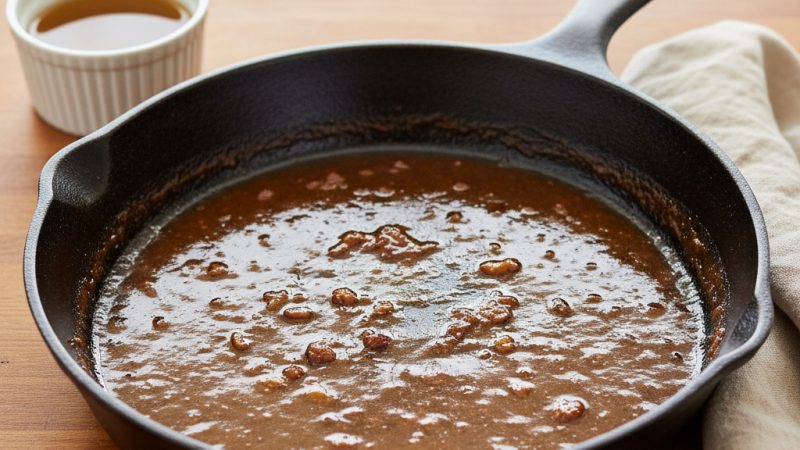
- After roasting, pour off excess fat and deglaze with broth or wine to lift fond.
- For brown or rainbow tints, scrub with a baking soda paste or a stainless cleaner.
- Avoid harsh scouring on polished surfaces to keep them shiny.
Enameled
- Soak in hot, soapy water; use nylon or soft scrub pads.
- Avoid metal tools that can chip enamel.
- Dry fully before storing to protect the rim.
Cast iron
- Wash while warm; a drop of soap is fine.
- Dry on low heat, then rub in a thin coat of oil and wipe almost dry.
- For rust: scrub, oil and bake upside down at 450°F for 1 hour.
Nonstick
- No metal tools or cooking spray.
- Do not heat empty on high.
- Replace when the coating scratches or flakes.
Techniques
Get the most out of your roasting pan
Each technique has one short video. The same clip plays inside every recipe step that uses it.
No roasting pan?
What to use instead of a roasting pan
| Instead | What changes |
|---|---|
| Rimmed sheet pan + rack | Roasts well; shallower sides brown faster but hold fewer drippings. |
| 13x9-inch baking dish | Great for casseroles like Baked Ziti; sides are usually higher and glass/ceramic doesn’t make good stovetop gravy. |
| 5- to 7-quart Dutch oven (no rack) | Fits a small chicken or pork roast; browns less on the sides and concentrates sauce more. |
| Disposable foil roaster on a sheet pan | Works in a pinch for a turkey; handle carefully and avoid lifting when full of hot drippings. |
Buying
What to look for
- Interior size you need: 16x13 inches fits most turkeys
- Stiff, warp-resistant base (fully clad or heavy-gauge)
- Riveted, upright handles you can grab with oven mitts
- V-rack included or sized to fit; rack feet that clear the pan bottom
- 3-inch sides to contain splatter but not block browning
- Fits your oven with space around it for airflow
- Flat bottom for stovetop deglazing; induction: a magnet sticks to the base
Affiliate links are always labeled. RecipeTag may earn a commission, which never changes what we recommend.
FAQ
Roasting Pan questions
What can I use if I don't have a roasting pan?
Use a rimmed sheet pan with a rack, or set vegetables like carrots and onions under the meat to lift it. For turkey, a disposable foil roaster set on a sturdy sheet pan works; lift it only when empty.
What size roasting pan do I need for a 24 lb turkey?
A large 16x13-inch roasting pan with 3-inch sides and a V-rack fits most 20 to 24 lb turkeys. Measure your oven’s interior height and depth, and allow space around the pan for airflow.
Does a roasting pan make a difference?
Yes. Tall sides and a rack promote airflow for even browning, and the sturdy base collects drippings you can deglaze for gravy. Shallow sheet pans brown a bit faster but hold fewer drippings.
Can you use a roasting pan for bread?
Yes for focaccia or pull-apart rolls. For sandwich loaves, use loaf pans. For crusty boules, a dutch-oven traps steam better than an open roaster.
Is there a difference between a baking pan and a roasting pan?
Yes. Baking pans (like 13x9 glass or ceramic) suit casseroles and cakes; roasting pans are metal, larger, and work with a rack to brown big cuts and make pan gravy on the stovetop.
Should a turkey roasting pan have a lid?
A lid is optional. Most turkeys roast uncovered for crisp skin. Use foil to tent if browning too fast, and rest the turkey 20 to 30 minutes before carving.
What do you cook in a roasting pan?
Turkeys, whole chickens, beef and pork roasts, hams, lamb legs, sheet-pan-style vegetables in large batches, and casseroles like Baked Ziti.
What's the difference between a slow cooker and a roasting pan?
A slow cooker heats gently in a sealed crock; it braises. A roasting pan cooks dry in the oven with airflow; it roasts and browns. Times and textures are different.
Are you supposed to put water in the bottom of a roaster?
No for oven roasting; you want dry heat for browning. Add a cup of broth or water only if drippings start to burn. For countertop roaster ovens, follow the maker’s manual.
Related

