Equipment · Pots
Stockpot
A tall pot with straight sides and a lid for boiling and long, gentle simmers. For 1 lb of pasta or a whole chicken, use at least an 8-quart stockpot so water returns to a boil fast.
enameled cast iron
hard-anodized aluminum

Stockpot recipes
What to make with a stockpot
4 recipes


Size
Which size stockpot do you need?
| Size | Fits | Good for |
|---|---|---|
| 6-quart | Soups and chili for 4 to 6; ½ lb pasta with room to boil | 4 servings |
| 8-quart | 1 whole chicken for stock or 1 lb pasta; big batches of soup | 6 servings |
| 12-quart | Large bone broth batches; corn on the cob for a crowd; 2 lb pasta (boil in lots of water) | 8 servings |
| 16-quart | Seafood boils and canning; very large stock batches | Large and heavy when full; make sure it fits your sink and stove. |
Materials
Stainless steel (clad or with disk base), enameled cast iron, hard-anodized aluminum or nonstick?
| Compare | Stainless steel (clad or with disk base) | Enameled cast iron | Hard-anodized aluminum | Nonstick |
|---|---|---|---|---|
| Searing | Fair | Good | Fair | Weak |
| Pan sauces | Good | Good | Good | Weak |
| Heat | Fast; even with a thick base | Slow; holds heat well | Fast and even | Fast |
| Acidic food | Yes | Yes | Usually; check maker notes | Yes |
| Oven | Usually; check handle and lid limits | Yes | Usually; check limits | Check the maker limit |
| Care | Soak, then scrub; Bar Keepers Friend lifts brown stains. | Soak; nylon scrubber only - no abrasives on enamel. | Hand-wash recommended by many makers. | No metal tools or cooking spray; hand-wash. |
| Best for | Stocks, soups, pasta, blanching | Steady simmers; serving at the table | Weeknight soups and pasta | Oatmeal, rice, easy cleanup. Use medium heat; high heat can damage the coating. |
Care
How to clean and care for a stockpot
Stainless
- Fill with hot water and a little dish soap; soak before scrubbing.
- Simmer water with a spoon of baking soda to loosen cooked-on food.
- Use Bar Keepers Friend or a baking soda paste for brown or rainbow tints.
- Avoid empty high heat; add liquid before turning the burner up.
Enameled cast iron
- Let it cool before washing to protect the enamel.
- Soak; use a nylon scrubber. Avoid steel wool and abrasives.
- For stains, simmer water with a spoon of baking soda, then rinse.
- Dry the rim to prevent rust where iron is exposed.
Hard anodized aluminum
- Let it cool; hand-wash with a soft sponge.
- Avoid bleach, oven cleaner, and harsh abrasives.
- Use wooden or silicone tools if interior is nonstick-coated.
Nonstick
- No metal tools or cooking spray.
- Do not preheat empty on high; use medium heat and liquid.
- Replace if the coating scratches, chips, or flakes.
Techniques
Get the most out of your stockpot
Each technique has one short video. The same clip plays inside every recipe step that uses it.
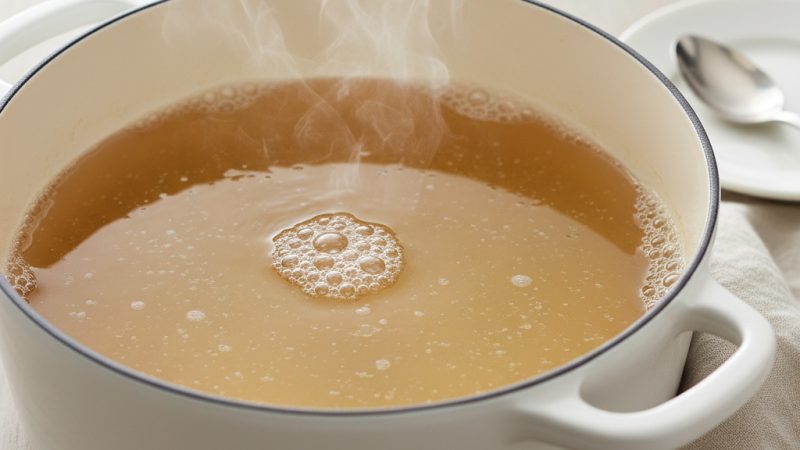
No stockpot?
What to use instead of a stockpot
| Instead | What changes |
|---|---|
| 5- to 7-quart Dutch oven | Works for smaller soups and stock; heavier and slower to boil. |
| 4- to 5-quart saucepan | Fine for ½ lb pasta or small soup batches; less room to prevent boil-overs. |
| Electric pressure cooker | Makes stock faster; less evaporation changes flavor - use less water and season at the end. |
| Slow cooker (6-quart) | Hands-off stock; lower heat extracts flavor slowly but won’t boil pasta. |
Buying
What to look for
- Capacity marked in quarts (and inside measuring marks help)
- Thick, flat base (clad or heavy disk) to prevent scorching
- Tall, straight sides to limit evaporation
- Snug, vented lid
- Large, riveted handles you can grip with oven mitts
- Induction: a magnet sticks to the base
- Oven-safe handles and lid (check maker limits)
Affiliate links are always labeled. RecipeTag may earn a commission, which never changes what we recommend.
FAQ
Stockpot questions
What is the best material for cooking pots?
For most home cooks, stainless steel with a thick, heavy base is the most versatile: it heats evenly, handles acids, and cleans well. Enameled cast iron holds heat for steady simmers. Hard-anodized aluminum heats fast. Nonstick is easy to clean but not ideal for high-heat boiling or long simmers.
What is the difference between a saucepan and a stockpot?
A saucepan is shorter with a single long handle, good for sauces, grains, and small batches. A stockpot is taller with two side handles and a lid, built for boiling pasta, blanching, and long, gentle simmers like stock.
Are expensive stock pots worth it?
It depends on how often you cook. An expensive pot is worth it if you make stock or boil pasta often, because its thick, heavy base resists scorching and heats evenly. A well-made stainless pot can last for years. For occasional use, a mid-priced pot with a heavy disk base works well.
How big is a normal stockpot?
Most home kitchens use 6- to 8-quart. An 8-quart pot comfortably boils 1 lb pasta or holds a whole chicken for stock. Larger (12- to 16-quart) pots are for big batches and seafood boils.
What is the best stockpot to buy?
Choose an 8-quart stainless steel pot with a thick, heavy base, a snug lid, and sturdy side handles. If you cook huge batches, step up to 12-quart. Make sure it works on your stove (magnet test for induction).
What makes a good stockpot?
Even heating from a thick base, tall straight sides, a snug lid, sturdy handles you can lift when full, and a capacity that fits your stove and sink. Interior measuring marks are a plus.
How to clean outside of a dirty pan?
Let it cool. Soak in warm, soapy water. Use a non-scratch scrubber. For stainless, a little Bar Keepers Friend on the exterior lifts grease and brown marks. Rinse and dry.
Is a scorched pan ruined?
Usually not. Fill with water, add a spoon of baking soda, and simmer 10 to 15 minutes. Let it cool, then scrub. Repeat as needed. Deep pitting or warped bases are signs to replace.
How to clean cooked food from stainless steel?
Soak first. Then simmer water with a spoon of baking soda to loosen stuck bits. Scrape with a wooden spoon. Finish with a stainless cleaner if needed.
How do I get the black stuff off my burnt pan?
For stainless or enameled pans: make a paste of Bar Keepers Friend (or baking soda) and water, rub gently, then rinse. Avoid abrasives on nonstick; if residue won’t come off, replace the pan.
How do I clean a badly burnt saucepan?
Cover the burnt area with water, add a spoon of baking soda, and simmer 10 to 15 minutes. Let cool. Scrape with a wooden spoon, then use a non-scratch scrubber. Repeat; use a stainless cleaner for the last stains.
How do I get the brown off the bottom of my pans?
For stainless, use Bar Keepers Friend or a baking soda paste and a damp sponge; rub with the grain. For enameled exteriors, use a nylon scrubber and mild cleaner. Rinse and dry.
Related


