Ingredient · Stocks and Broths
Chicken Broth
Use low-sodium broth so you control the salt. Some broths contain wheat or soy. Check the label if you avoid them.

Chicken Broth recipes
What to cook with chicken broth
3 recipes


Forms and products
Which chicken broth should you buy?
| Form | Type | Best for |
|---|---|---|
| Regular | Product | Everyday soups, grains and sauces |
| Low sodium | Product | Soups and sauces; lets you season to taste |
| Unsalted | Product | When you need full control of sodium |
| Bone broth | Product | Sipping and stews; richer body. Often higher protein and sodium than regular broth |
| Bouillon cube | Product | Quick pan sauces and soups. Usually quite salty; taste before adding more salt |
| Base paste | Product | Small amounts and meal prep; keeps well. Check the label for sodium and allergens |
| Powder granules | Product | Dry mixes and rubs; dissolves fast |
| Homemade | Preparation | Best flavor and fat control; freezer-friendly |
Regular broth
Clear, light body, usually salted. Made by simmering chicken and aromatics briefly. Good all-purpose cooking liquid.
Low-sodium/unsalted
Same use, less or no added salt. Gives you control over seasoning and reductions.
Chicken stock
Longer simmer from bones; more body and gelatin, often unsalted. Swap 1:1 for a richer result.
Bone broth
Marketed for sipping. Long-simmered bones with pronounced gelatin and savory flavor; can be salty.
Buy and store
How to pick and store chicken broth
At the store
- Choose low-sodium or unsalted if you’ll reduce the liquid or add salty ingredients like capers or Parmesan.
- Scan the ingredient list: chicken, vegetables, herbs and spices. Shorter is usually cleaner-tasting.
- Cartons reseal and are handy for the fridge; cans are budget-friendly. Transfer opened cans to a container.
- If you want a richer mouthfeel, pick stock or bone broth; for a clear, light base, choose regular broth.
| How it's kept | Where | About how long |
|---|---|---|
| Unopened can or carton | Pantry, cool and dry | Until the best-by date on the package |
| Opened store-bought broth | Fridge, airtight container | 3 to 4 days |
| Homemade broth | Fridge, shallow containers | 3 to 4 days |
| Frozen broth | Freezer, airtight containers or cubes (leave headspace) | 2 to 3 months |
| Concentrated base (unopened/opened) | Check label; most keep in fridge after opening | Follow the label |
Food safety. Refrigerate broth within 2 hours of cooking or opening. Chill in shallow containers so it cools fast. Reheat leftovers to 165°F (74°C).
Food safety. When making broth, keep raw chicken separate from ready-to-eat foods. Wash hands, knives and boards after handling raw poultry.
Food safety. Only pressure canning is safe for meat broths. Use a tested process from a trusted source; boiling-water canning is not safe.
Prep
How to use chicken broth
Each technique has one short video. The same clip plays inside every recipe step that uses it.
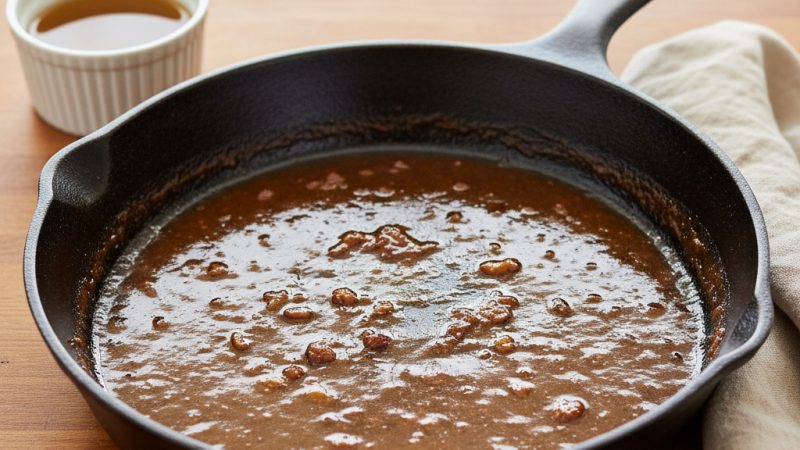 0:12How to Deglaze
Pouring liquid into a hot pan to loosen the browned bits stuck to the bottom.
Clip used in 1,960 recipe steps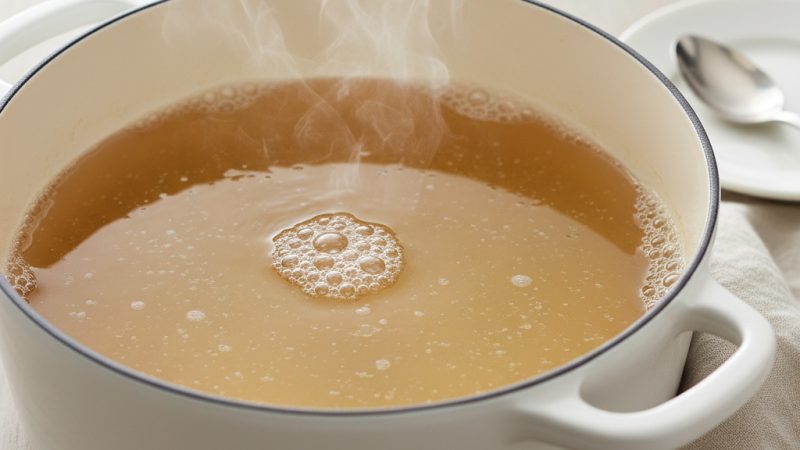 0:12How to Simmer
Cooking a liquid just below a boil so it gently bubbles.
Techniques
Tools that help
Equipment links may become affiliate links, always labeled as such.
Substitutes
Out of chicken broth? Use this instead
| Substitute | For 1 cup | What to know |
|---|---|---|
| Chicken Stock | 1 cup | Richer, often unsalted. Great for sauces and risotto; season to taste. |
| Bouillon Cube | 1 cube + 1 cup water | Fast pantry swap. Usually saltier; reduce added salt. |
| Chicken Base | 1 tsp base + 1 cup water | Similar to bouillon with deeper flavor. Check label for allergens and sodium. |
| Vegetable Broth | 1 cup | Lighter, neutral swap in soups, grains and braises. |
| Water | 1 cup | Use in a pinch. Add a pinch of salt and a splash of white wine or soy sauce for body; adjust for allergens. |
Nutrition and allergens
Nutrition per cup
Per cup (240 g)
| Calories | 14 |
| Carbohydrates | 1 g |
| Protein | 2 g |
| Fat | 0.5 g |
| Fiber | 0 g (1% DV) |
| Sodium | 890 mg (39% DV) |
| Vitamin C | 0 mg (1% DV) |
Calculated from USDA FoodData Central.
Allergens and diets
- Not a major US allergen
Not one of the nine major allergens. Some brands add ingredients like wheat or soy; bone broths and bases vary. Always read the label. - Fodmap: high
Most broths include onion and garlic. For low-FODMAP, choose a broth made without them or make your own with green leek tops and herbs. - Blends
Sodium varies widely; low-sodium or unsalted gives you control. “Natural flavors,” bases and bouillon can include allergens - check labels.
Flavor pairings
What goes with chicken broth


FAQ
Chicken Broth questions
What goes well with chicken broth?
Use it for soups, risotto, pan sauces, gravy, braises and to cook rice or noodles. It pairs well with garlic, onion, celery, carrots, mushrooms, thyme, parsley, lemon, white wine, butter and Parmesan. In quick dinners, splash it in the pan to deglaze browned bits.
Can you freeze chicken broth?
Yes. Cool it fast, then freeze in 1- to 2-cup containers or ice cube trays for small amounts. Leave headspace so containers don’t crack. Label and date. It keeps 2 to 3 months. Thaw in the fridge, or add frozen cubes directly to hot pans and soups.
How long does chicken broth last in the fridge?
Opened store-bought and homemade broth both keep for 3 to 4 days in the fridge. Store in airtight containers. If it smells sour, looks slimy or shows mold, discard it. Reheat leftovers to 165°F (74°C).