Ingredient · Stocks and bases
Vegetable Bouillon
Concentrated vegetable stock in cube, powder, or paste form. You dissolve it in hot water to make broth, or use it dry to season dishes. Most brands use 1 cube or 1 tsp powder or paste per 1 cup water for broth. Start there, then salt to taste.
Vegetable Bouillon recipes
What to cook with vegetable bouillon
1 recipe

Forms and products
Which vegetable bouillon should you buy?
| Form | Type | Best for |
|---|---|---|
| Cube | Product | Soups, stews, grains; easy to keep in the pantry. Cubes vary in size and salt. Taste and adjust |
| Powder | Product | Quick broths, seasoning rubs and blends. Stirs in fast. Good for dry mixes |
| Paste | Product | Pan sauces, risotto, soups; dissolves smoothly. Refrigerate after opening. Scoop with a clean spoon |
| Low sodium | Product | When you want control of salt. Often needs a little extra salt in the dish |
| Homemade powder | Preparation | If you avoid additives or want a set flavor |
Cubes
Compact and shelf-stable. Great for travel or a work drawer.
Powder
Easy to measure by the teaspoon. Blends into dry rubs.
Paste/base
Jarred concentrate (like Better Than Bouillon). Strong flavor; keep refrigerated after opening.
Low-sodium
Reduced salt. Lets you season to taste.
Organic/MSG-free
Made without certain additives. Check the label for what matters to you.
Buy and store
How to pick and store vegetable bouillon
At the store
- Check the directions: most say 1 cube or 1 tsp per 1 cup water. That helps compare strength.
- Compare sodium. Standard versions are salty; low-sodium gives you more control.
- Read the ingredient list for onion/garlic, yeast extract/MSG, gluten, soy, or dairy if you avoid them.
- Pick formats that fit how you cook: cubes for portability, powder for dry mixes, paste for rich, smooth broths.
| How it's kept | Where | About how long |
|---|---|---|
| Cubes or powder, unopened | Cool, dry pantry | Up to 1 to 2 years; follow the date on the package |
| Cubes or powder, opened | Cool, dry pantry; tightly sealed | About 1 year; best flavor if used sooner |
| Paste/base, unopened | Cool, dry pantry | Up to the date on the jar |
| Paste/base, opened | Fridge, tightly closed | Up to 6 months; follow the product label. Always use a clean spoon to scoop it out. |
| Broth made from bouillon | Fridge, covered | 3 to 4 days |
| Broth made from bouillon, frozen | Freezer, airtight | 2 to 3 months; thaw in the fridge |
Food safety. Bouillon is salty. Taste before adding extra salt. People watching sodium should check labels and choose low-sodium styles.
Food safety. Use a clean spoon in jarred paste to avoid introducing mold or bacteria. If it smells off, looks moldy, or separates oddly, discard it.
Prep
How to use vegetable bouillon
Each technique has one short video. The same clip plays inside every recipe step that uses it.
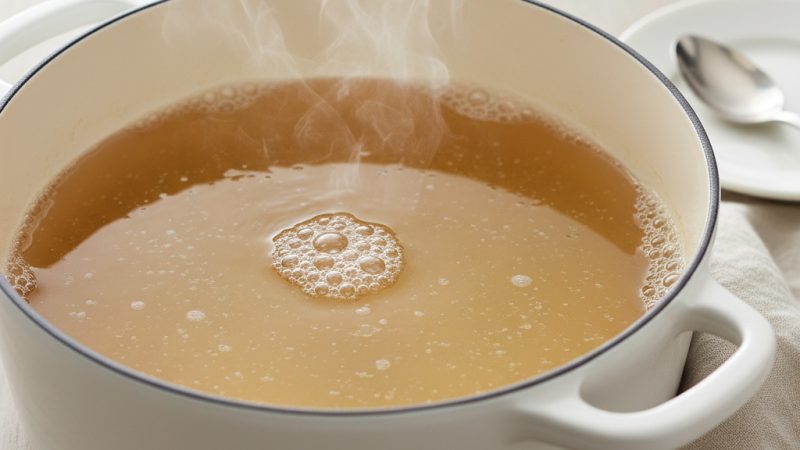 0:12How to Simmer
Cooking a liquid just below a boil so it gently bubbles.
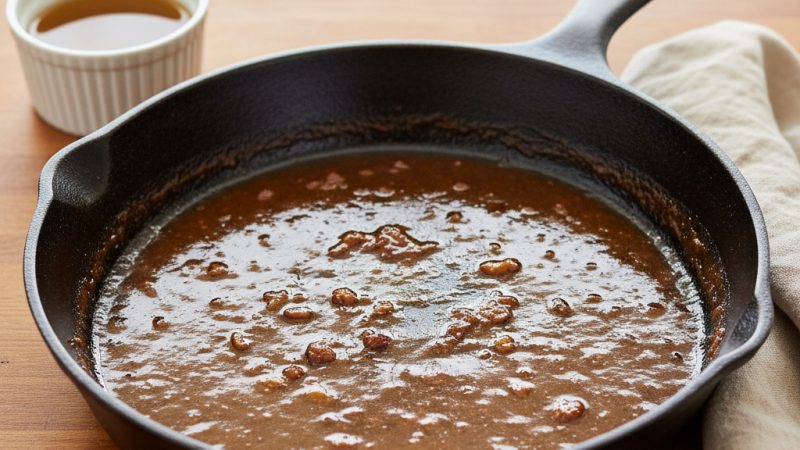 0:12How to Deglaze
Pouring liquid into a hot pan to loosen the browned bits stuck to the bottom.
Clip used in 1,960 recipe stepsTechniques
Tools that help
Equipment links may become affiliate links, always labeled as such.
Substitutes
Out of vegetable bouillon? Use this instead
| Substitute | For 1 unit | What to know |
|---|---|---|
| Vegetable Broth | 1 cup | Use ready-to-use boxed or canned broth for each 1 cup water + bouillon. |
| Miso Paste | ½ to 1 tsp + 1 cup water | Umami-rich veg base. Add at the end of cooking to keep flavor; salt to taste. |
| Tamari | 1 tbsp + 1 cup water | Adds salt and umami. Good in pan sauces and grains; add herbs or aromatics if you can. |
| Chicken Broth | 1 cup | Only if not vegetarian. Similar salt/umami profile in many recipes. |
| Nutritional Yeast | 1 to 2 tbsp + 1 cup water | Savory boost in vegan dishes. Add salt and a bay leaf/onion powder to taste. |
Nutrition and allergens
Nutrition per 100 g
Per 100 g
| Calories | 82 |
| Carbohydrates | 19 g |
| Protein | 3 g |
| Fat | 0.2 g |
| Fiber | 3 g (12% DV) |
| Sodium | 20 mg (1% DV) |
| Vitamin C | 8 mg (9% DV) |
Calculated from USDA FoodData Central.
Allergens and diets
- Not a major US allergen
Not one of the nine major allergens by default, but many brands include or may be made with wheat, soy, milk, or sesame. Onion/garlic are common. Always read the label. - Vegan
Usually vegan. Some brands include dairy or butter flavor; check labels. - Fodmap: high
Most vegetable bouillons contain onion and garlic. - Sodium
Standard bouillon is high in sodium. Look for low-sodium versions if needed.
Flavor pairings
What goes with vegetable bouillon


FAQ
Vegetable Bouillon questions
Is a bouillon cube the same as broth?
A bouillon cube is concentrated seasoning. You dissolve it in hot water to make broth. Most brands use 1 cube per 1 cup water. Broth is the ready-to-use liquid. In recipes, you can swap 1 cup broth for 1 cup hot water plus 1 cube (or 1 tsp powder/paste).
What are the ingredients in Better Than Bouillon Seasoned Vegetable Base?
It’s a concentrated paste made from vegetables, salt, and flavoring ingredients such as sugar, oil, and yeast extract. Exact ingredients vary by product and size. Check the specific jar’s label for the full list, allergens, and nutrition, and follow the “1 tsp per 1 cup water” direction.
What can you use instead of vegetable bouillon powder?
Use 1 cup boxed or canned vegetable broth for each 1 tsp powder + 1 cup water the recipe calls for. Or use ½ to 1 tsp miso paste in 1 cup water, or 1 tbsp soy sauce in 1 cup water. Taste and add herbs, onion powder, or garlic powder as needed.
Is vegetable broth actually healthy?
It hydrates and can add potassium and small amounts of vitamins, but packaged broth and bouillon can be high in sodium. If you watch salt, pick low-sodium products and season to taste. Broth isn’t a meal on its own; its role is flavor and cooking liquid.
How long does homemade vegetable broth last in the refrigerator?
3 to 4 days in the fridge, covered. Cool it quickly, refrigerate within 2 hours, and reheat leftovers to 165°F (74°C). For longer storage, freeze it in airtight containers for 2 to 3 months. Label containers with the date.
Do bouillon cubes go bad?
Unopened cubes keep in a cool, dry pantry for up to 1 to 2 years, per the package date. They don’t spoil easily but lose flavor over time. If a cube is soft, discolored, smells off, or shows mold or moisture damage, discard it.
What is the healthiest vegetable broth?
Homemade vegetable broth is often the healthiest because you control all the ingredients, especially salt. When buying packaged broth or bouillon, look for low-sodium or no-salt-added versions. Reading the ingredient list can help you avoid additives or preservatives if that's a concern.
How do you know if broth has gone bad?
Discard any broth that has an off smell, flavor, or appearance. Signs of spoilage include mold, a cloudy look in clear broth, or a slimy texture. If a can is bulging, leaking, or rusted, or a box is puffy or leaking, throw it out without opening or tasting it.