Technique
How to boil potatoes
Cook potatoes in salted water until a fork slides in easily. Start in cold water, salt the water well, then simmer gently - not a rolling boil - for even, tender potatoes.

Step by step
How to boil potatoes for mash or salad
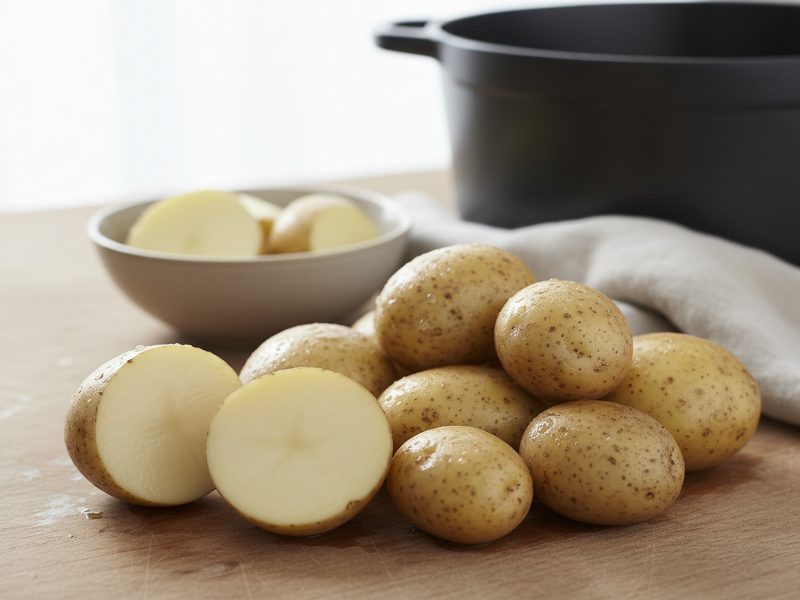
- Step 1. Scrub the potatoes. Peel if you like. Cut into even 1-inch pieces, or leave small potatoes whole.
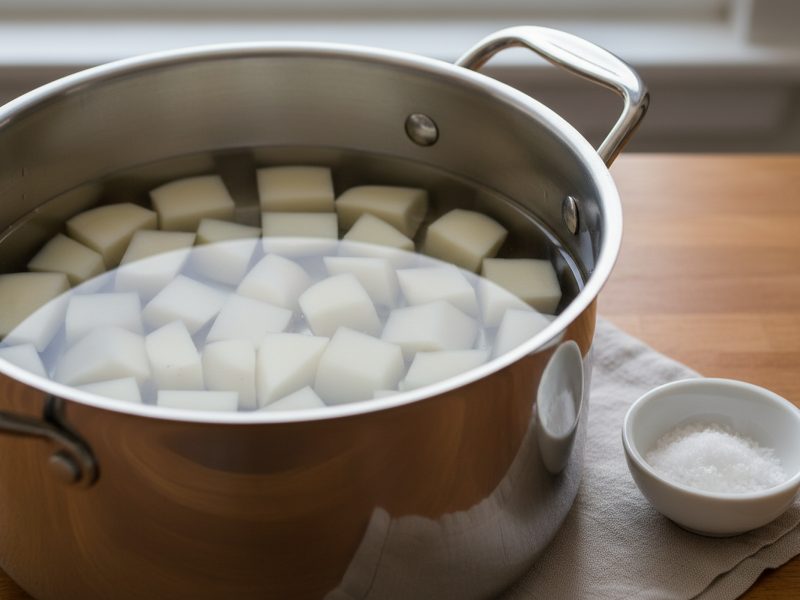
- Step 2. Put the potatoes in a large pot. Add cold water to cover by 1 inch. Stir in 1 tbsp kosher salt per quart of water.
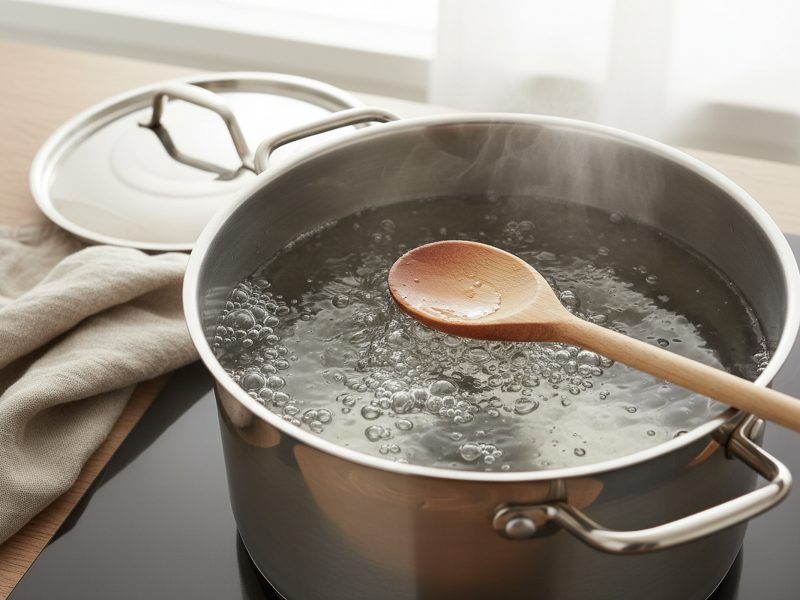
- Step 3. Bring to a boil over high heat, then lower to a gentle simmer.
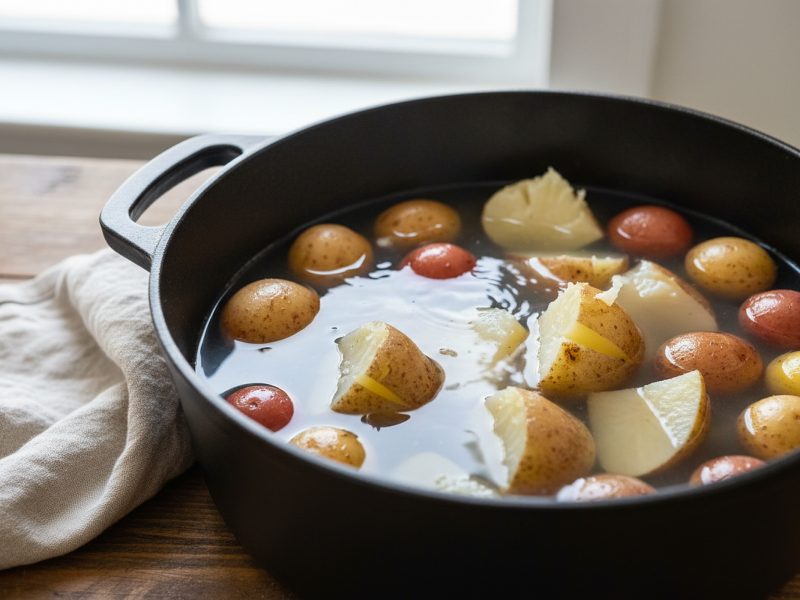
- Step 4. Cook until tender: 1-inch chunks 10–12 minutes; baby potatoes 12–15; whole medium potatoes 20–25; large russets 25–30. Sweet potato chunks 10–12; whole 30–40.
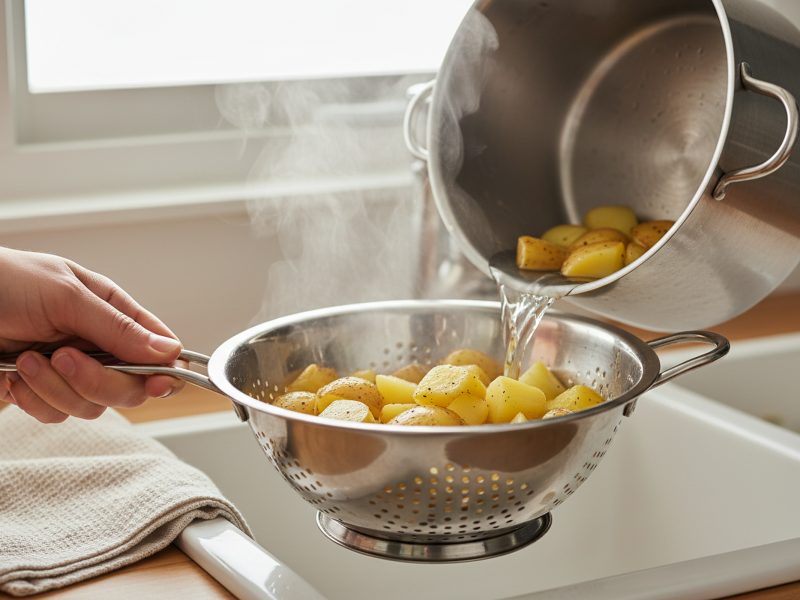
- Step 5. Drain in a colander. Let steam off for 1–2 minutes before mashing, dressing, or chilling.


How you know it worked
- A fork slides into the center with little resistance.
- The water is bubbling gently, not splashing hard.
- After draining, the surfaces look dry and fluffy, not wet and slick.
Troubleshooting
Common mistakes when you boil potatoes
| What goes wrong | Fix |
|---|---|
| Starting potatoes in boiling water gives overcooked outsides and firm centers. | Start with cold water so the potatoes heat evenly. |
| A rolling boil breaks edges and makes waterlogged potatoes. | Reduce to a gentle simmer once the water boils. |
| Water isn’t salted, so the potatoes taste flat. | Use about 1 tbsp kosher salt per quart of water. |
| Uneven pieces finish at different times. | Cut potatoes into even 1-inch chunks or choose similar-sized whole potatoes. |
| Draining and using right away makes watery mash or salad. | After draining, let potatoes steam in the colander 1–2 minutes to dry. |
Tools
What you need
Boil Potatoes recipes
Recipes that use this technique
1 recipe

FAQ
Common questions
Why put salt in water when boiling potatoes?
Salt seasons the potatoes from the inside as they cook and helps the cells hold their shape. Use about 1 tablespoon kosher salt per quart of water. You’ll drain most of it away, but the potatoes will taste properly seasoned.
Do I put potatoes in before or after water starts boiling?
Before. Put potatoes in a pot, add cold water to cover by 1 inch, then bring it up together. This cooks the outsides and centers evenly and prevents mealy edges.
Is it better to put potatoes in cold water or boiling water?
Cold. Starting in cold water heats the potatoes gradually, so the outsides don’t overcook before the centers are tender. Save dropping into boiling water for quick-cooking vegetables.
How do I boil potatoes?
Cut into even 1-inch pieces (or leave small potatoes whole). Cover with cold water by 1 inch and add 1 tbsp kosher salt per quart. Bring to a boil, then simmer until a fork meets little resistance: chunks 10 to 12 minutes; baby 12–15; whole medium 20–25. Drain and let steam 1 to 2 minutes.
Do you boil your potatoes before baking them?
For whole baked potatoes, no - bake raw russets at 400°F until the center is 205 to 210°F. For roasted wedges or extra-fluffy roast potatoes, yes - parboil in salted water 7 to 10 minutes until edges just soften, drain and rough up, then roast. Parboiling shortens oven time and improves texture.
Do potatoes go up in calories when cooked?
Cooking doesn’t create calories. A plain potato has about the same calories before and after cooking. Water loss can make calories per ounce seem higher, and adding butter or oil raises calories. Cooling increases resistant starch slightly, but not enough to change calorie counts for home cooking.
What happens if you overboil potatoes?
Overboiled potatoes become mushy and waterlogged. If you boil them too vigorously, they can fall apart in the pot. It's best to simmer them gently and start checking for doneness early.