Ingredient · Fermented vinegars
Malt Vinegar
A sharp, toasty vinegar brewed from malted barley. Classic with fish and chips and great on fries, slaws and quick pickles. Splash it on hot fries or fish and chips just before serving. For quick pickles, it adds a toasty flavor to brines, which are often a mix of equal parts vinegar and water.
Malt Vinegar recipes
What to cook with malt vinegar
2 recipes


Forms and products
Which malt vinegar should you buy?
| Form | Type | Best for |
|---|---|---|
| Brewed brown | Preparation | Table use on fries, slaws, cooked vegetables; classic fish-and-chips |
| Distilled malt | Preparation | Sharper, cleaner taste; good in dressings and pickles |
| Malt flavored condiment | Product | Used at some chip shops; acetic acid with color. Harsher; not a 1:1 flavor match to brewed |
| Malt vinegar powder | Product | Dry rubs, snack seasoning, dredges; add to taste. Strength varies by brand; not a 1:1 swap with liquid |
Brewed brown malt vinegar
Amber-brown, toasty and malty. Made from fermented barley malt. Traditional on fish and chips (fries) and for splashing over fried or roasted foods.
Distilled malt vinegar
Clear, sharper, and lighter in malt flavor. Works in vinaigrettes and pickles when you want a cleaner look.
Malt-flavored non-brewed condiment
Acetic acid plus caramel coloring. Common in some takeaways. Harsher, simpler taste than brewed malt vinegar.
Buy and store
How to pick and store malt vinegar
At the store
- Choose “brewed” malt vinegar for real malt flavor; it’s made from barley malt.
- Look for 5% acidity on the label for cooking and pickling balance.
- Glass bottles protect flavor best. Avoid dented caps and sticky leaks.
- Need gluten-free? Skip malt vinegar; choose apple cider, rice, or distilled white vinegar instead.
| How it's kept | Where | About how long |
|---|---|---|
| Unopened bottle | Cool, dark pantry; cap upright | Keeps indefinitely, but use within 2 years for the best flavor. |
| Opened bottle | Pantry or fridge, tightly capped | Keeps for years, but the flavor is best within 1 year of opening. |
| For pickling brines | Use at labeled strength (typically 5%) | Follow your recipe; acidity must stay at 5% or higher |
| Powder | Airtight, cool, dry | Many months; it clumps if damp |
Food safety. Malt vinegar is brewed from barley and is not gluten-free. People with celiac disease or gluten sensitivity should use another vinegar.
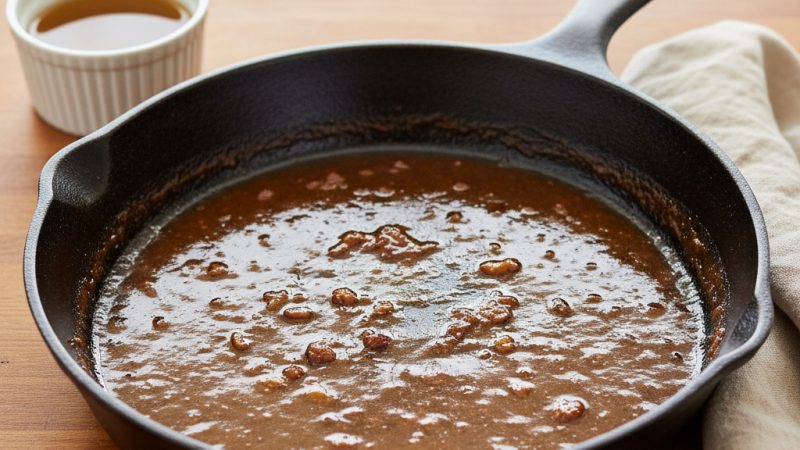
Food safety. Vinegar can react with aluminum, cast iron and copper. Use non-reactive pans and jars (stainless steel, glass, enamel) for mixing and storing.
Food safety. Never mix vinegar with bleach or products containing bleach; it releases toxic chlorine gas.
Prep
How to use malt vinegar
Each technique has one short video. The same clip plays inside every recipe step that uses it.
Techniques
Tools that help
Equipment links may become affiliate links, always labeled as such.
Substitutes
Out of malt vinegar? Use this instead
| Substitute | For 1 unit | What to know |
|---|---|---|
| Apple Cider Vinegar | 1 tbsp | Fruity and bright. Add a pinch of sugar to mimic malt’s roundness. |
| Red Wine Vinegar | 1 tbsp | Sharper and more winey; good for dressings and slaws. |
| Sherry Vinegar | 1 tbsp | Nutty and smooth; closest complexity among wine vinegars. |
| Rice Vinegar (Unseasoned) | 1 tbsp | Milder; add a splash more to reach the same bite. |
| Lemon | 1 tbsp juice | Fresh acid in a pinch. Lacks malt flavor; add a tiny bit of sugar if desired. |
Flavor pairings
What goes with malt vinegar


FAQ
Malt Vinegar questions
What's the difference between black vinegar and malt vinegar?
Black vinegar (Chinese) is aged from grains like rice, wheat, or sorghum. It’s dark, mellow, and slightly sweet-sour - great for dumplings and braises. Malt vinegar is brewed from barley malt, sharper and toastier, and is the classic splash for fish and chips and fries. They aren’t direct swaps.
Does Sarson’s vinegar go off?
Sarson’s is brewed malt vinegar. Vinegar is self-preserving due to its acidity, so it doesn’t spoil in a way that makes it unsafe. Over time it can develop sediment or a cloudy “mother,” which is harmless. Keep the cap tight and store it in a cool, dark place for best flavor.
What is the shelf life of malt vinegar?
It keeps for years. For best flavor, use opened bottles within 1 to 2 years and store tightly capped in a cool, dark pantry. Sediment or slight cloudiness is normal and harmless. If off odors or contamination are present, discard the bottle.
Can distilled vinegar be used for cleaning?
Yes. Distilled white vinegar (about 5% acidity) cuts mineral deposits and some grime on glass, faucets, and coffee makers. It is not an EPA-registered disinfectant, so don’t rely on it to sanitize surfaces. Never mix vinegar with bleach; it makes toxic chlorine gas.
What bacteria is killed by vinegar?
Vinegar can reduce some microbes on surfaces, but it’s not a reliable disinfectant and isn’t EPA-registered. Use it for general cleaning, not for sanitizing or food safety. For disinfection, use an EPA-listed product and follow its label directions.
Is it better to store vinegar in plastic or glass?
Glass is best for long-term storage. Vinegar can slowly interact with some plastics and with reactive metals. If your vinegar comes in plastic, keep it cool and use it within a reasonable time. For pickling or long storage, use glass jars with nonreactive lids.