Ingredient · Beef
Low-Sodium Beef Broth
A seasoned liquid made by simmering beef and aromatics, then strained. Low-sodium versions keep salt way down so you can season to taste. “Low sodium” on US labels means 140 mg of sodium or less per serving. You can always add salt later; you can’t take it out.

Low-Sodium Beef Broth recipes
What to cook with low-sodium beef broth
2 recipes


Forms and products
Which low-sodium beef broth should you buy?
| Form | Type | Best for |
|---|---|---|
| Carton | Product | Everyday cooking; easy to pour and store |
| Can | Product | Pantry backup; smaller amount |
| Powder | Product | Packable and shelf-stable; mix with hot water. Follow the label for how much powder per cup |
| Concentrate | Product | Stronger flavor; dilute to taste. Stir into hot water per label |
Low-sodium broth
Light body. Gentle beef flavor. Salt kept low; you season in the pan.
Unsalted/No-salt-added
No salt added by the maker. Flavor is mild; build salt and acids in the dish.
Beef stock (low sodium)
Simmered longer with bones. More body and gelatin; richer mouthfeel than broth.
Beef bone broth (low sodium)
Marketed for sipping. Cooked long for collagen; varies by brand in flavor and body.
Buy and store
How to pick and store low-sodium beef broth
At the store
- Check the Nutrition Facts. “Low sodium” is 140 mg or less per serving; “unsalted/no salt added” often has even less.
- Scan the ingredient list. Water, beef stock/broth, and aromatics should lead. Spices and natural flavors are common.
- Pick the size you’ll use in 4 to 5 days after opening: cans for small jobs, 32- to 48-fl oz cartons for batches.
- If you need stronger flavor, choose low-sodium beef stock or a low-sodium concentrate and dilute to taste.
| How it's kept | Where | About how long |
|---|---|---|
| Unopened, shelf-stable carton or can | Pantry, cool and dry | Until the best-by date |
| Opened carton or can | Fridge, tightly covered | 3 to 4 days |
| Frozen portions | Freezer, in 1-cup containers or ice cube trays | 2 to 3 months for best quality; thaw in the fridge |
| Homemade, unsalted | Fridge or freezer as above | Same as opened store-bought |
Food safety. Never use broth from bulging, leaking, or badly dented cans, or if it spurts when opened.
Food safety. Refrigerate leftover broth within 2 hours. Reheat to a rolling boil or 165°F (74°C).
Food safety. Discard if it smells sour, tastes off, looks cloudy with sediment, or grows mold.
Prep
How to use low-sodium beef broth
Each technique has one short video. The same clip plays inside every recipe step that uses it.
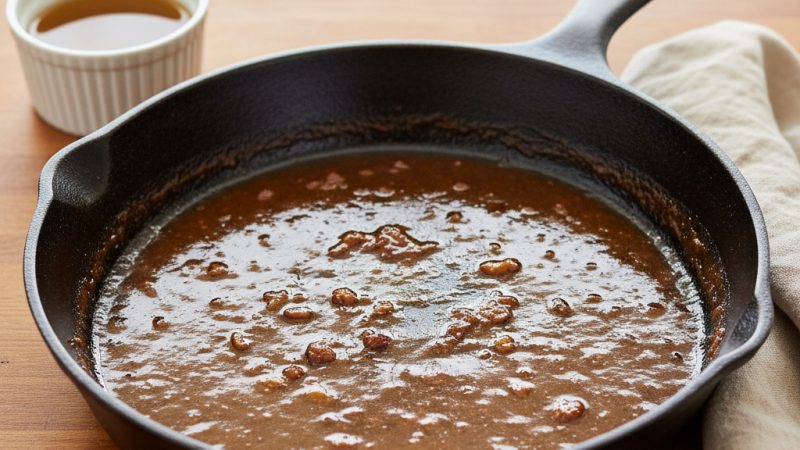 0:12How to Deglaze
Pouring liquid into a hot pan to loosen the browned bits stuck to the bottom.
Clip used in 1,960 recipe steps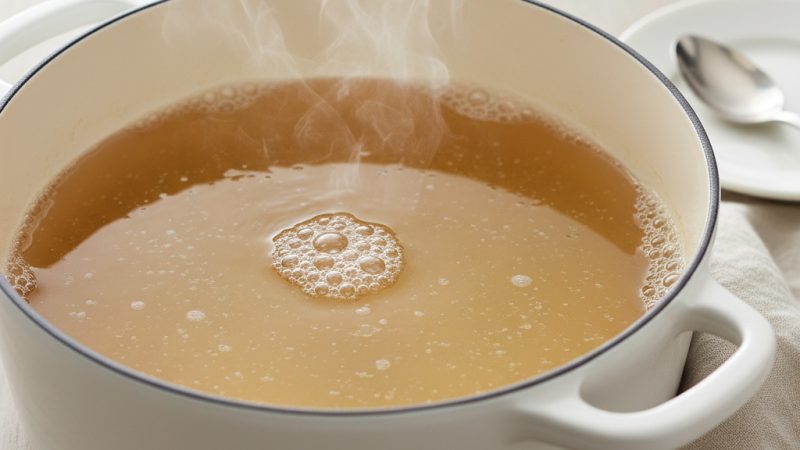 0:12How to Simmer
Cooking a liquid just below a boil so it gently bubbles.
Techniques
Tools that help
Equipment links may become affiliate links, always labeled as such.
Substitutes
Out of low-sodium beef broth? Use this instead
| Substitute | For 1 cup | What to know |
|---|---|---|
| Beef Stock | 1 cup | Low-sodium beef stock gives more body. If it’s unsalted, add salt at the end to taste. |
| Chicken Broth | 1 cup | Use low-sodium chicken broth in a pinch; beef flavor will be lighter. |
| Mushroom Broth | 1 cup | Deep savory flavor without beef; good in gravies and risotto. |
| Water | 1 cup | For deglazing or long simmers. Add 1 to 2 tsp tomato paste or a dash of low-sodium soy sauce/Worcestershire to boost savoriness. |
| Beef Bouillon Low Sodium | 1 cup | Mix low-sodium bouillon with hot water per label. Taste and adjust salt. |
Nutrition and allergens
Nutrition per cup
Per cup (240 g)
| Calories | 38 |
| Carbohydrates | 3 g |
| Protein | 5 g |
| Fat | 1 g |
| Fiber | 0 g (1% DV) |
| Sodium | 72 mg (3% DV) |
| Vitamin C | 0 mg (1% DV) |
Calculated from USDA FoodData Central.
Allergens and diets
- Not a major US allergen
Not one of the nine major allergens. Some brands add ingredients like soy, wheat, or milk-derived flavors. Always check labels if you have allergies. - Fodmap: high
Often includes onion and garlic. Choose a product labeled onion- and garlic-free or make your own if needed. - Blends
Low-sodium still varies by brand. Flavor enhancers (yeast extract, MSG) and sweeteners may appear; read the label if you avoid them.
Flavor pairings
What goes with low-sodium beef broth


FAQ
Low-Sodium Beef Broth questions
What’s the difference between beef broth and beef stock, and which should I use?
Broth is lighter and often made from meat plus aromatics. Stock simmers bones longer, so it has more body and gelatin. For sipping or quick soups, use broth. For gravies, stews, and reductions, stock gives better mouthfeel. Low-sodium versions of either let you salt at the end.
How much sodium is in low-sodium beef broth?
In the US, “low sodium” means 140 mg of sodium or less per labeled serving. Brands vary in serving size and the exact amount. Check the Nutrition Facts panel, and remember you can season the dish later.
Is there unsalted beef stock?
Yes. Look for “unsalted” or “no salt added” on the label. It will taste very mild on its own, so build flavor with aromatics, acids (like a splash of vinegar), and salt to taste at the end.
Why does broth have so much sodium?
Salt seasons and preserves, so many broths are salty out of the box. Choosing low-sodium or unsalted broth gives you control. Layer flavor with sautéed aromatics, herbs, tomato paste, and a brief reduction, then add salt at the end if needed.
How long does beef broth last in the freezer?
Portion cooled broth into freezer-safe containers or ice cube trays. Freeze up to 2 to 3 months for best quality. Thaw in the fridge, or melt cubes straight into hot pans. Label with the date so you use the oldest first.
How can I tell if beef broth is spoiled?
Trust your senses. Discard broth that smells sour or yeasty, tastes off, looks unusually cloudy with sediment, or shows mold. If a can is bulging, leaking, badly dented, or spurts on opening, throw it away. When in doubt, toss it.
Can I just boil spoiled broth to make it safe?
No. While boiling to 165°F (74°C) kills bacteria, it does not destroy heat-stable toxins some bacteria leave behind. If broth smells off, looks strange, or is past its storage time, discard it. It is not safe to eat, even if boiled.